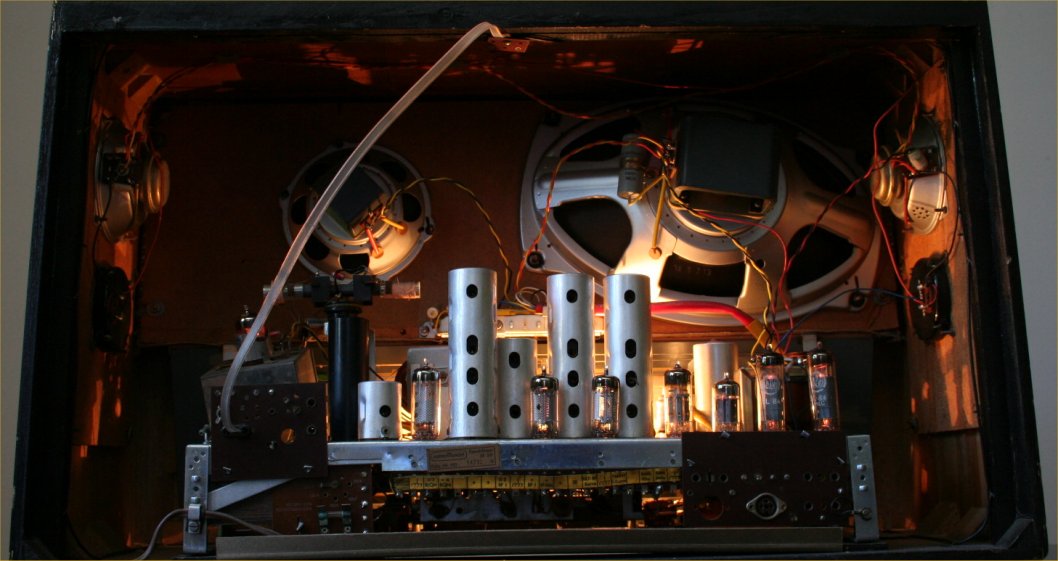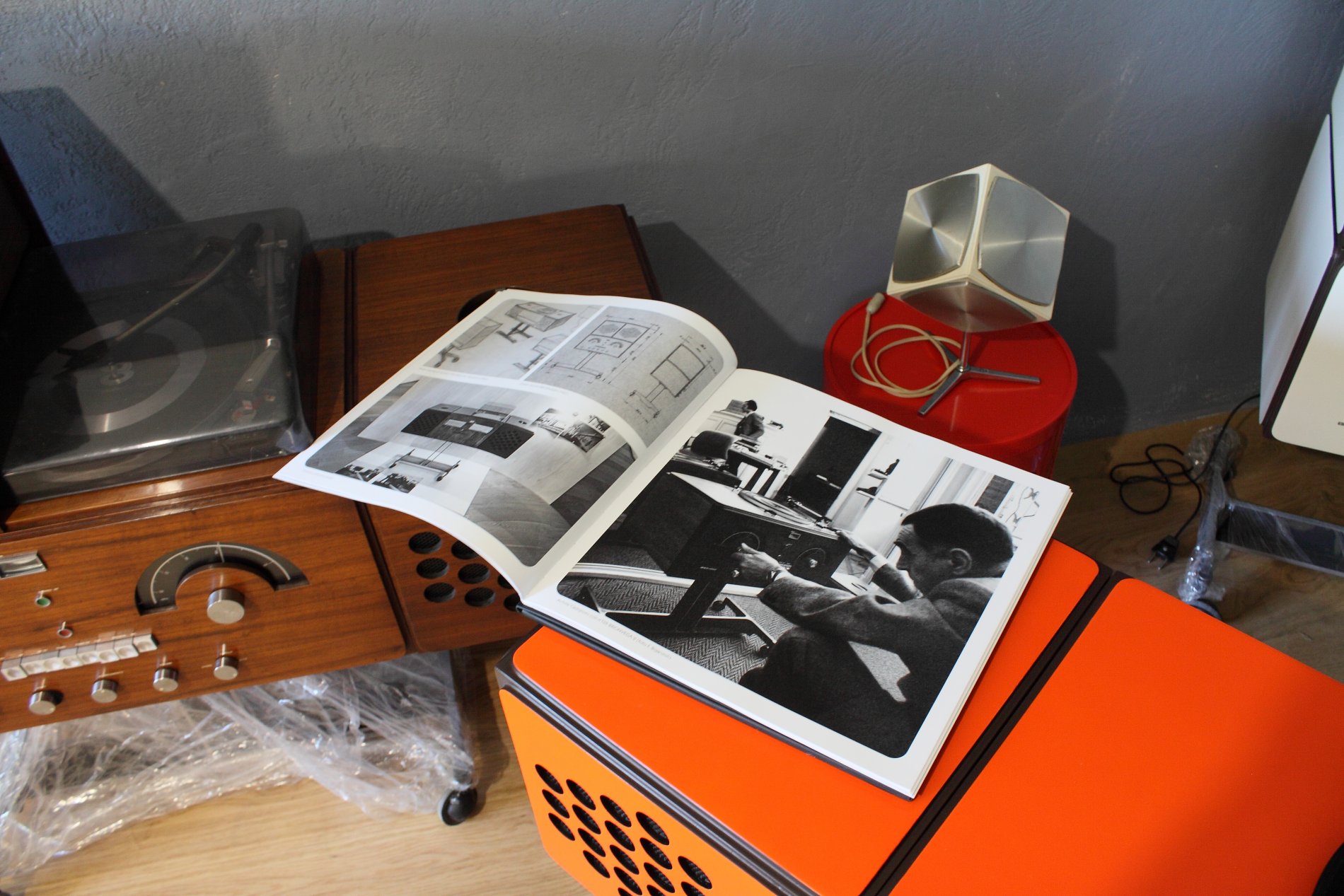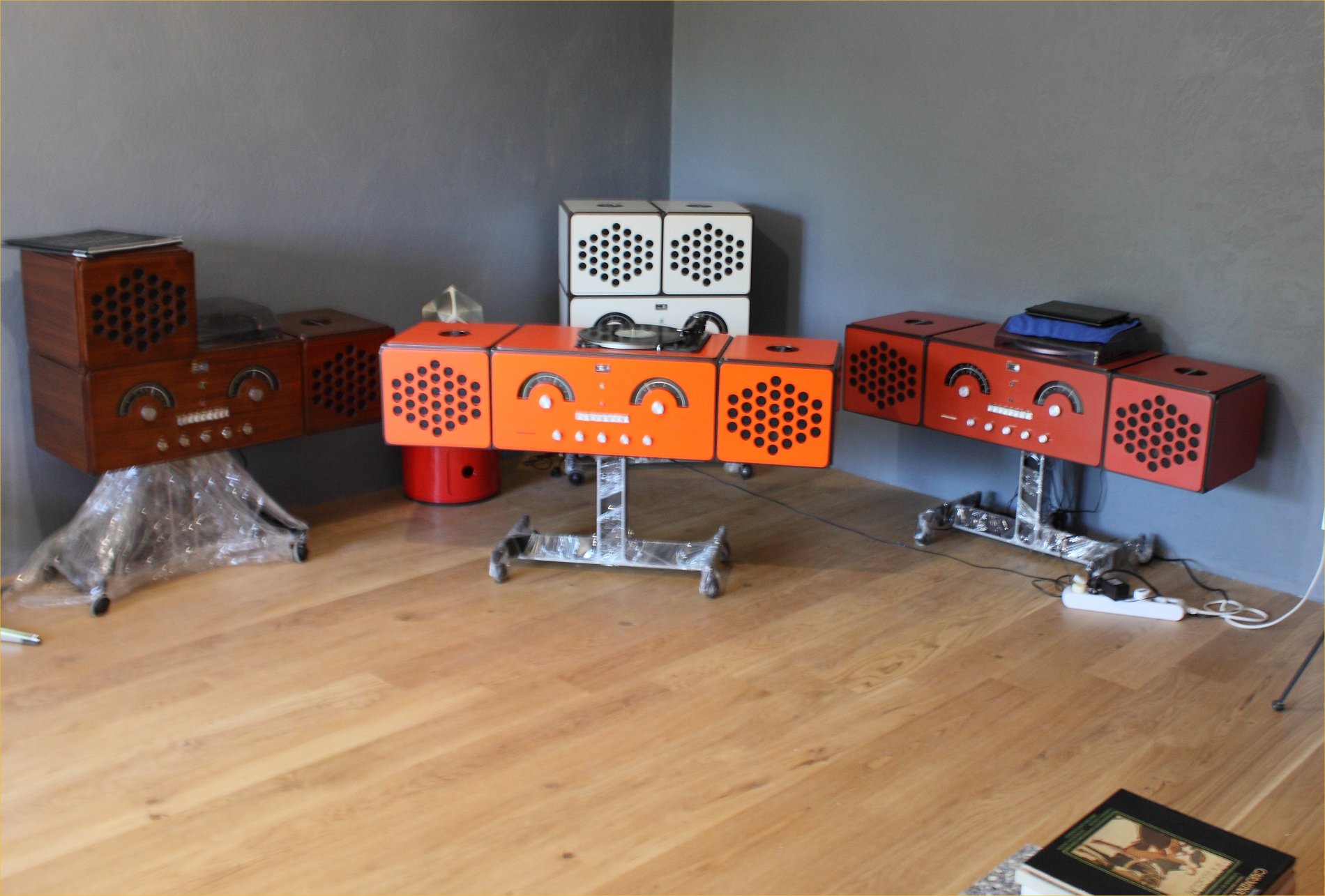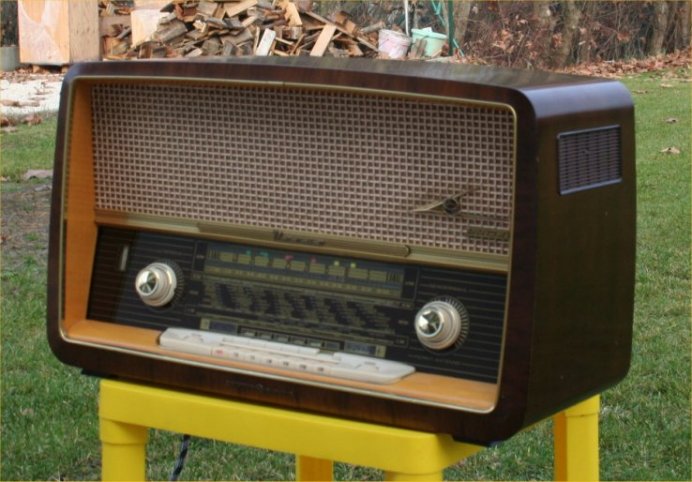
分类: ready for sale – cn

Philips Capella Reverbeo ready for sale - cn

Philips C…

.
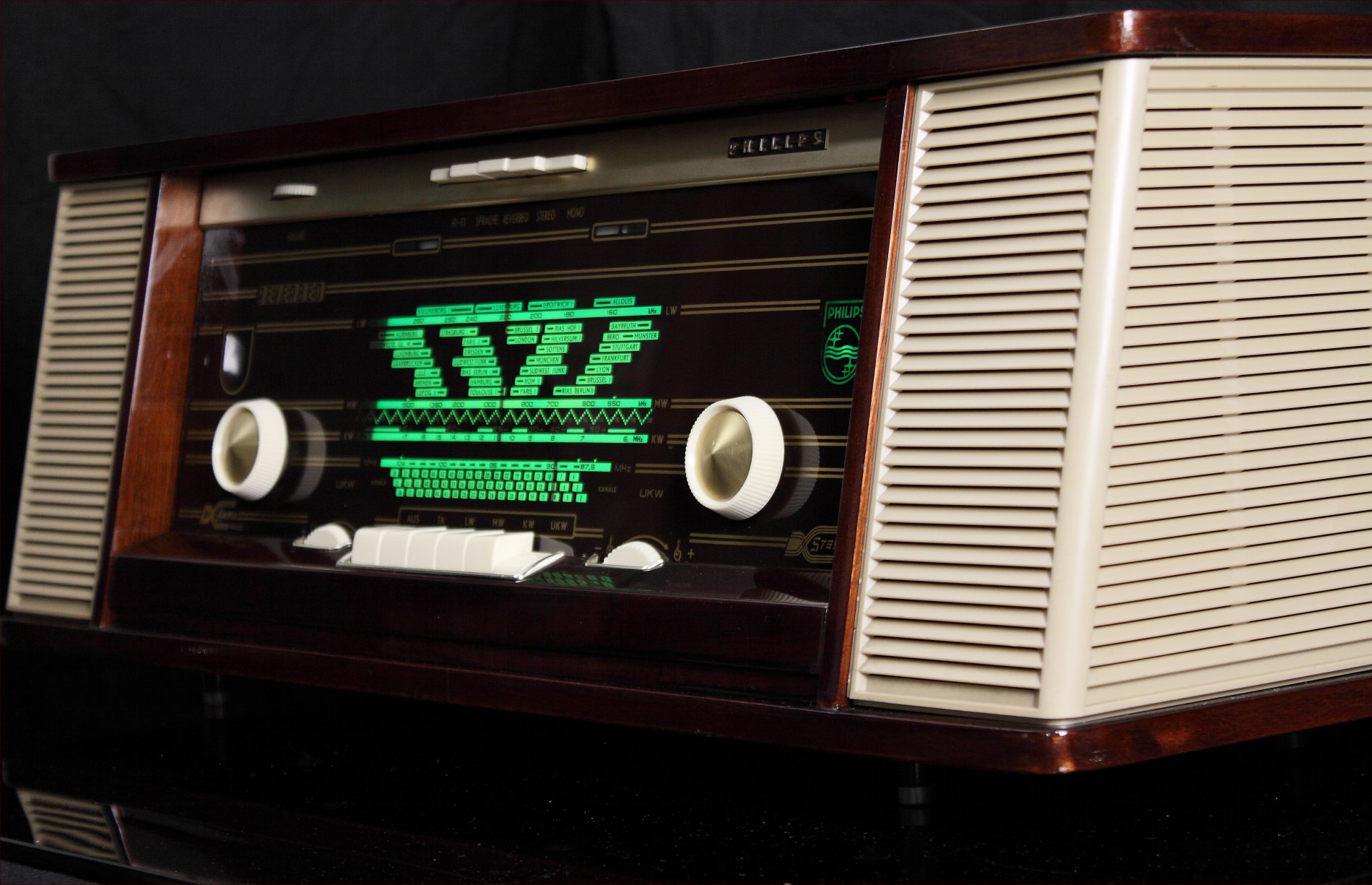
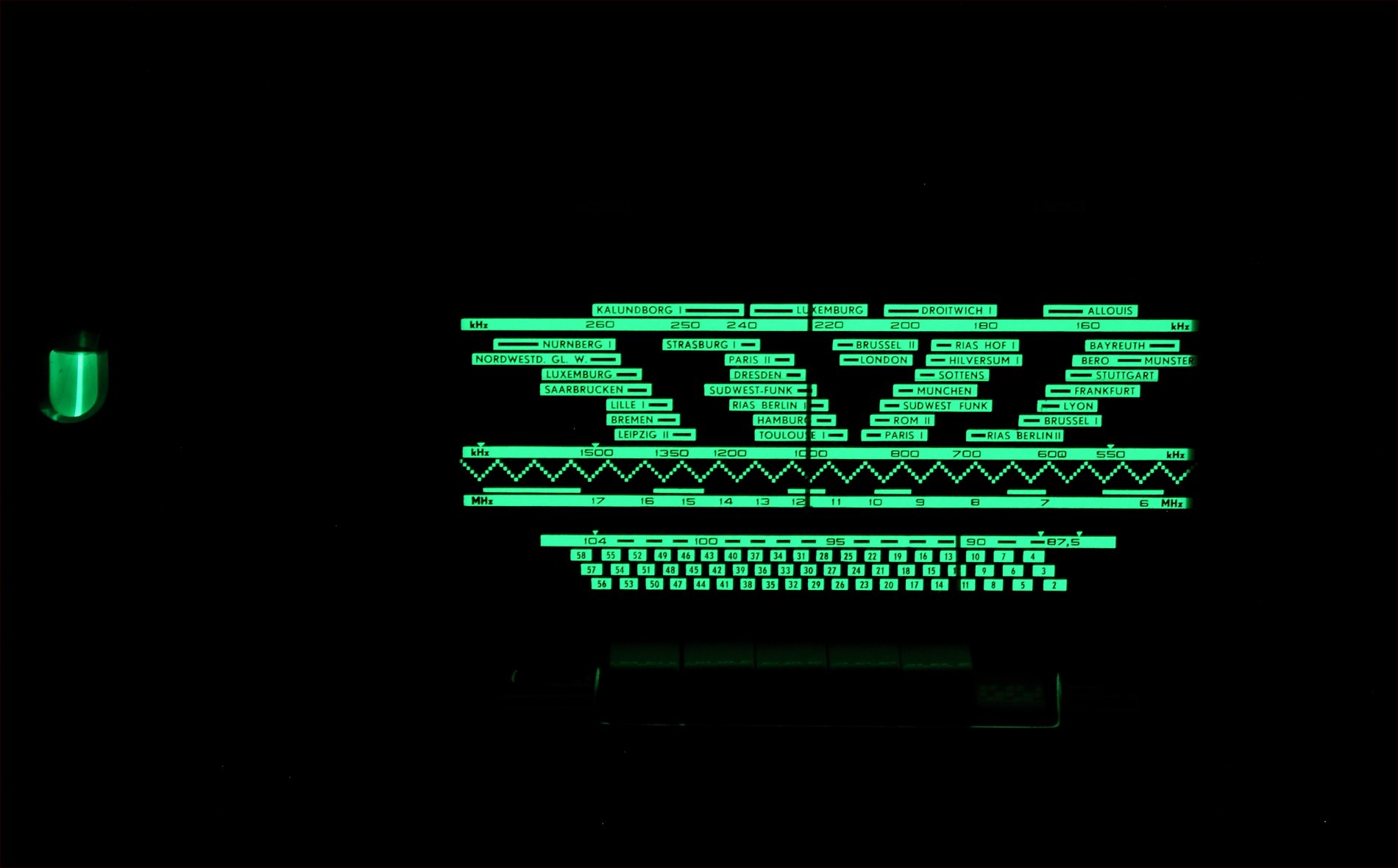
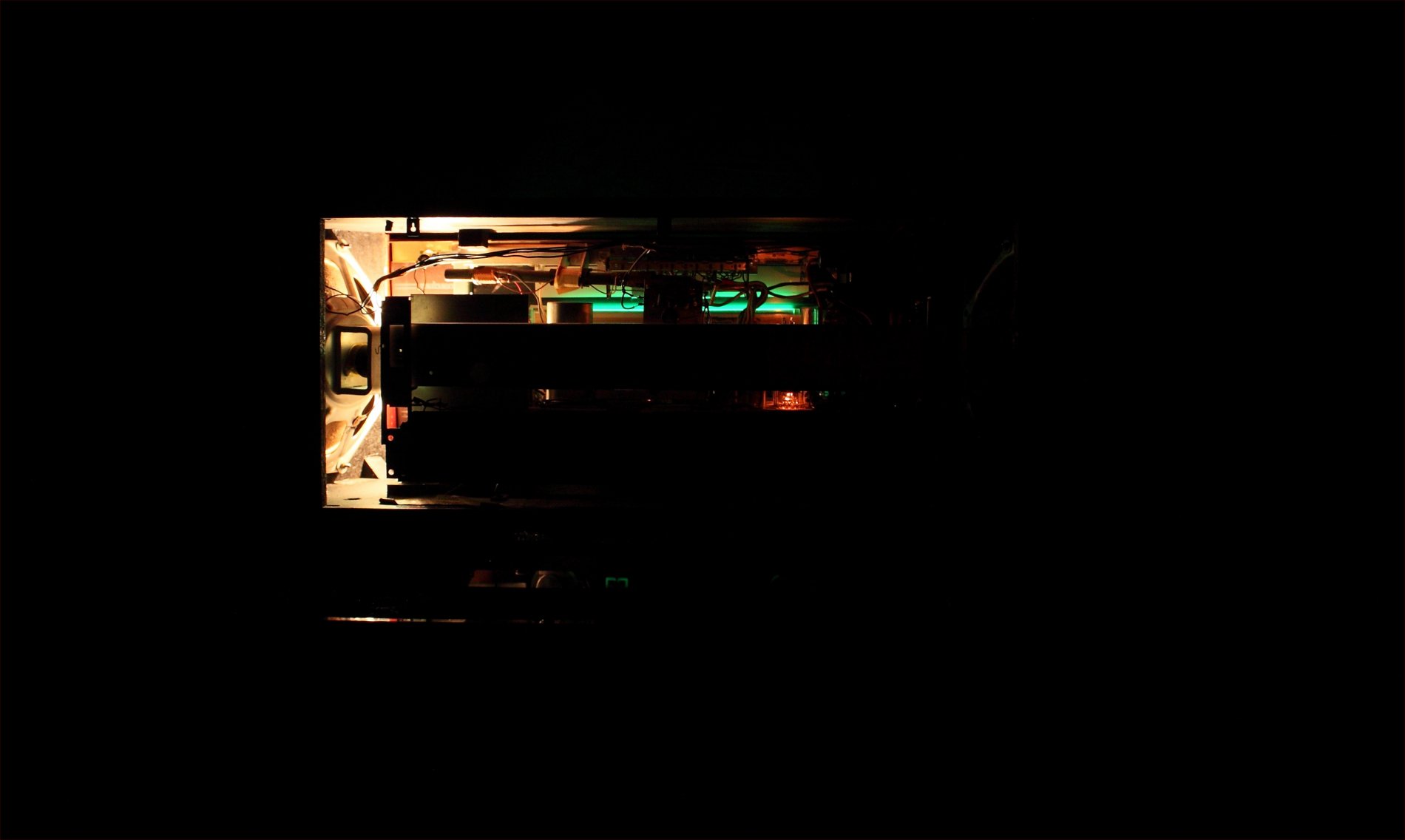
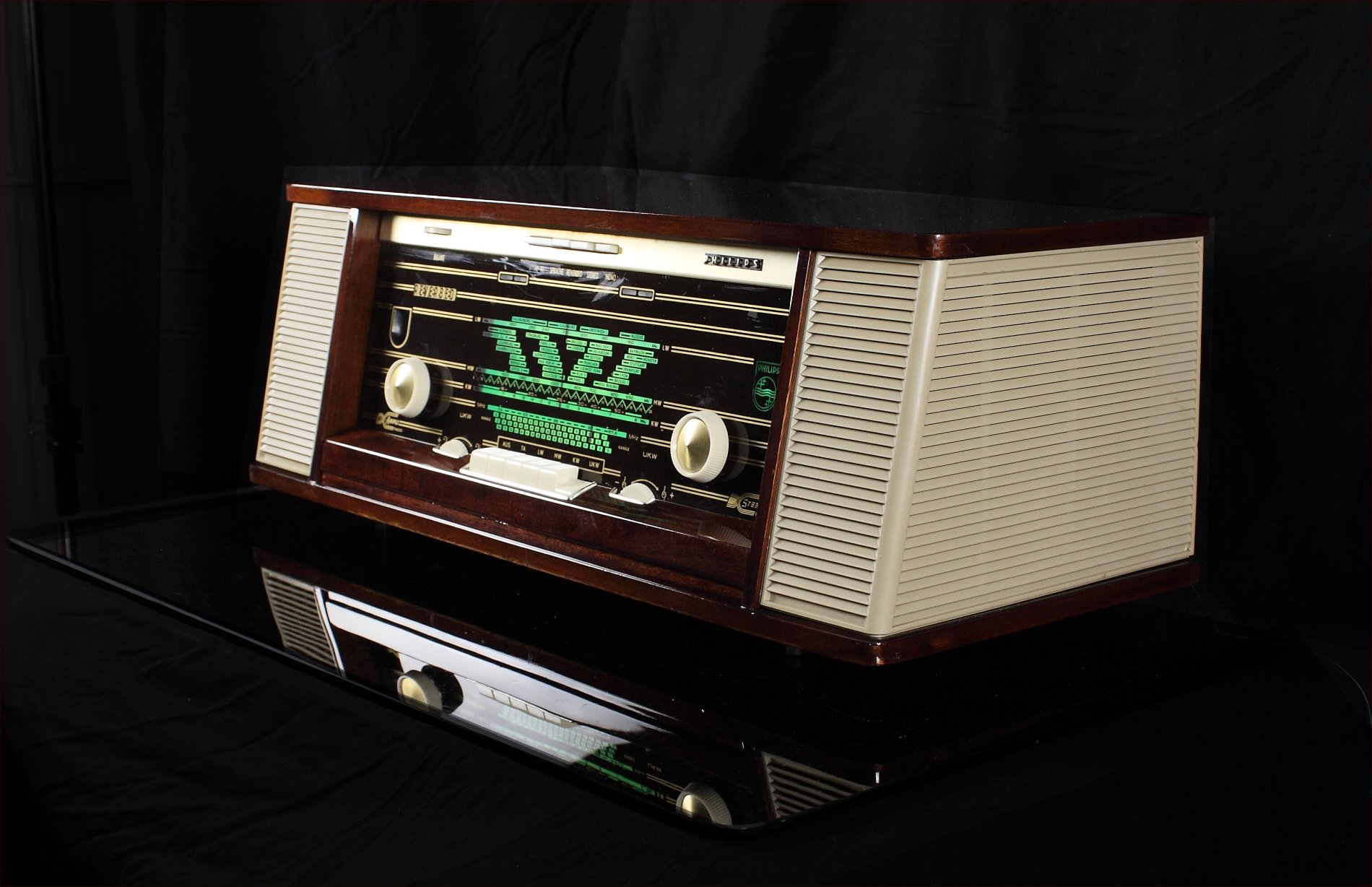
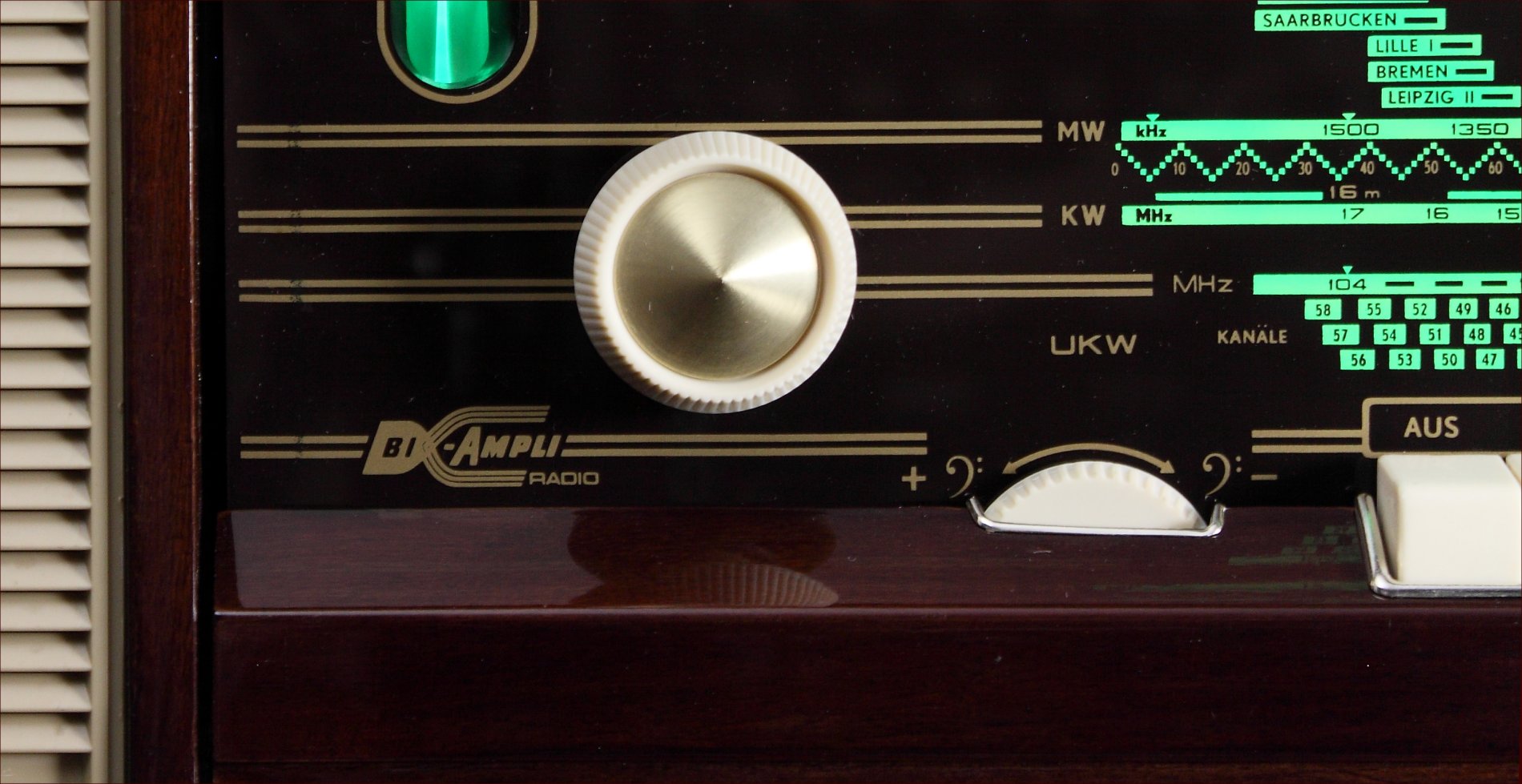
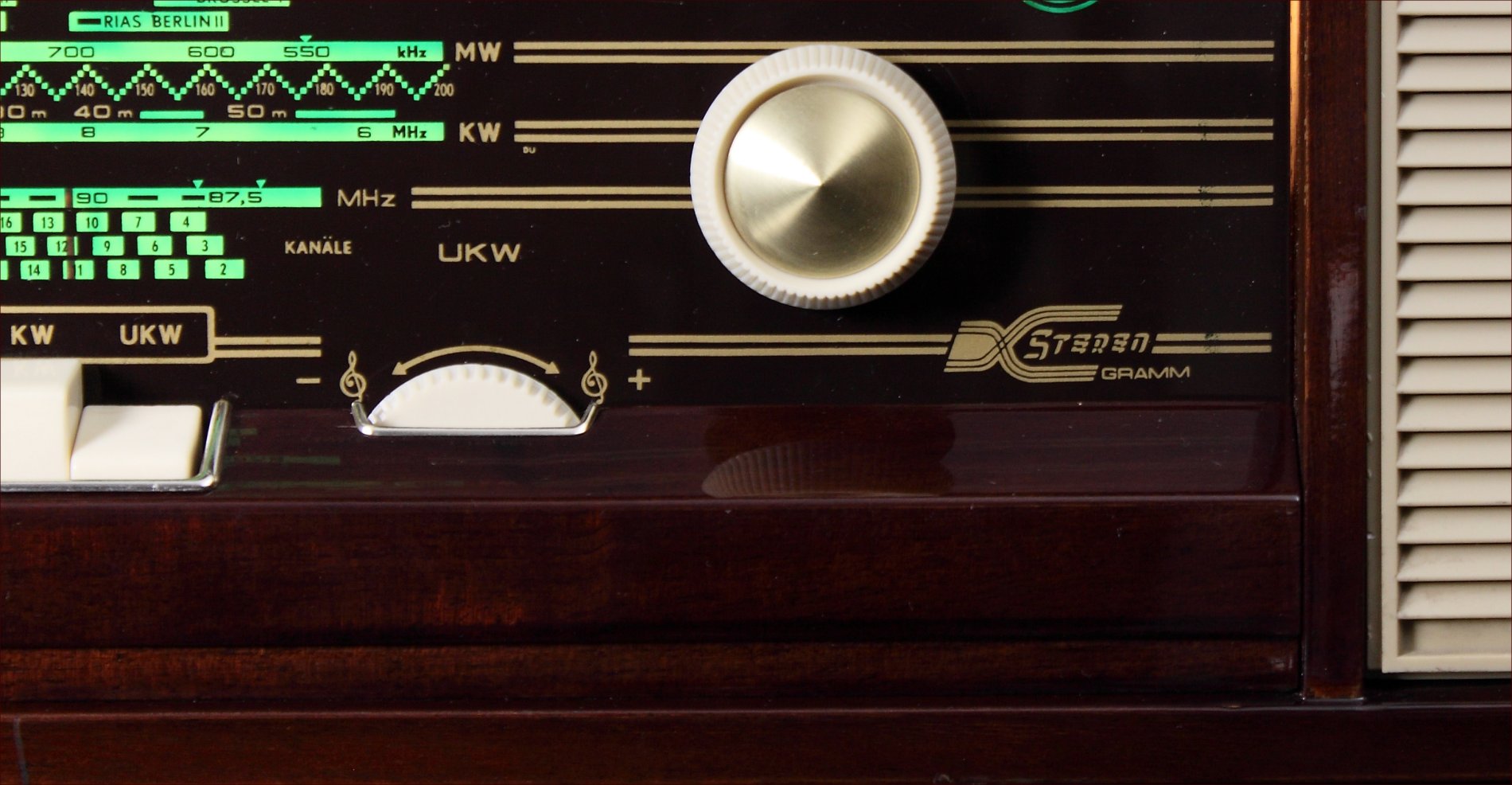
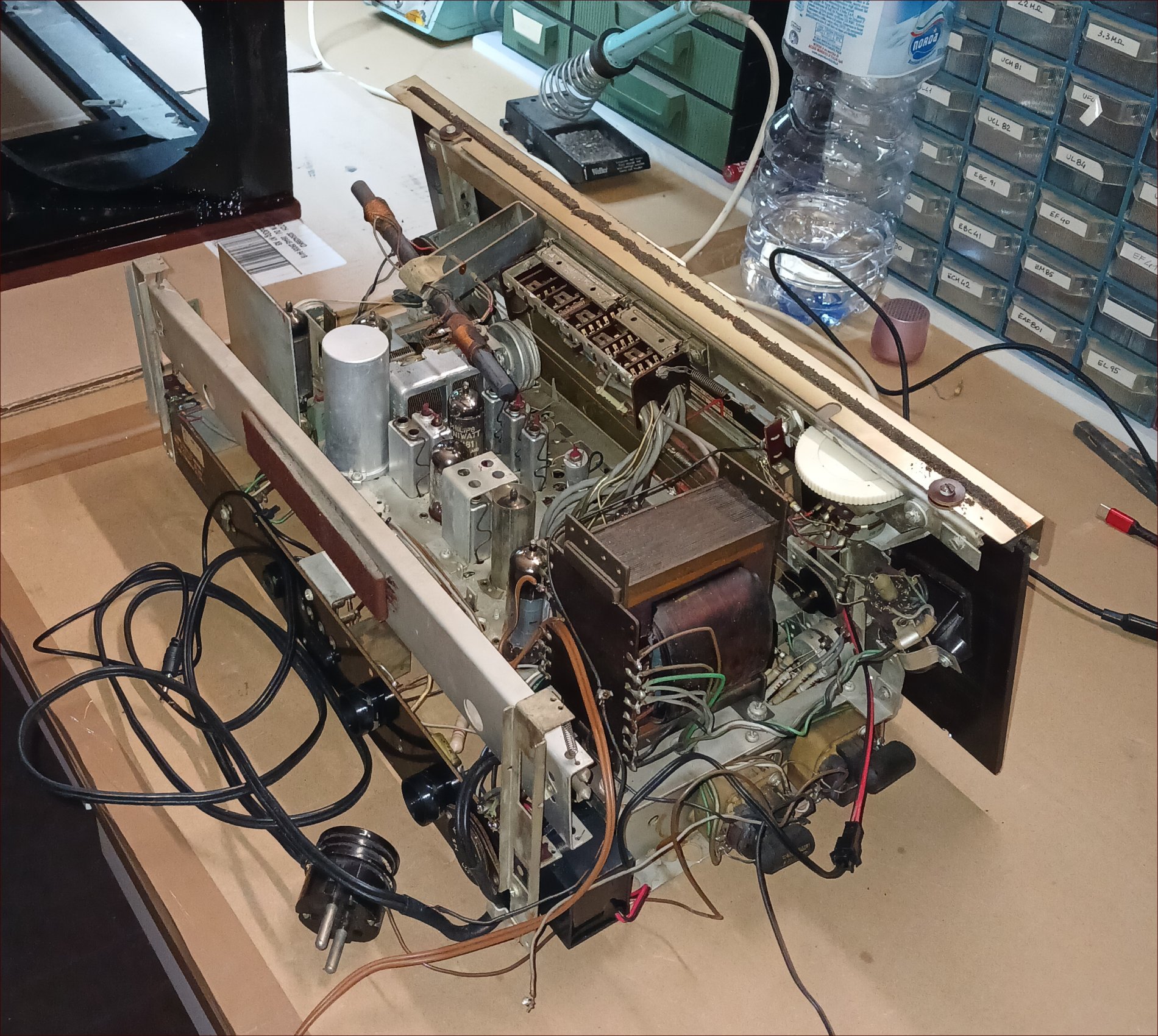
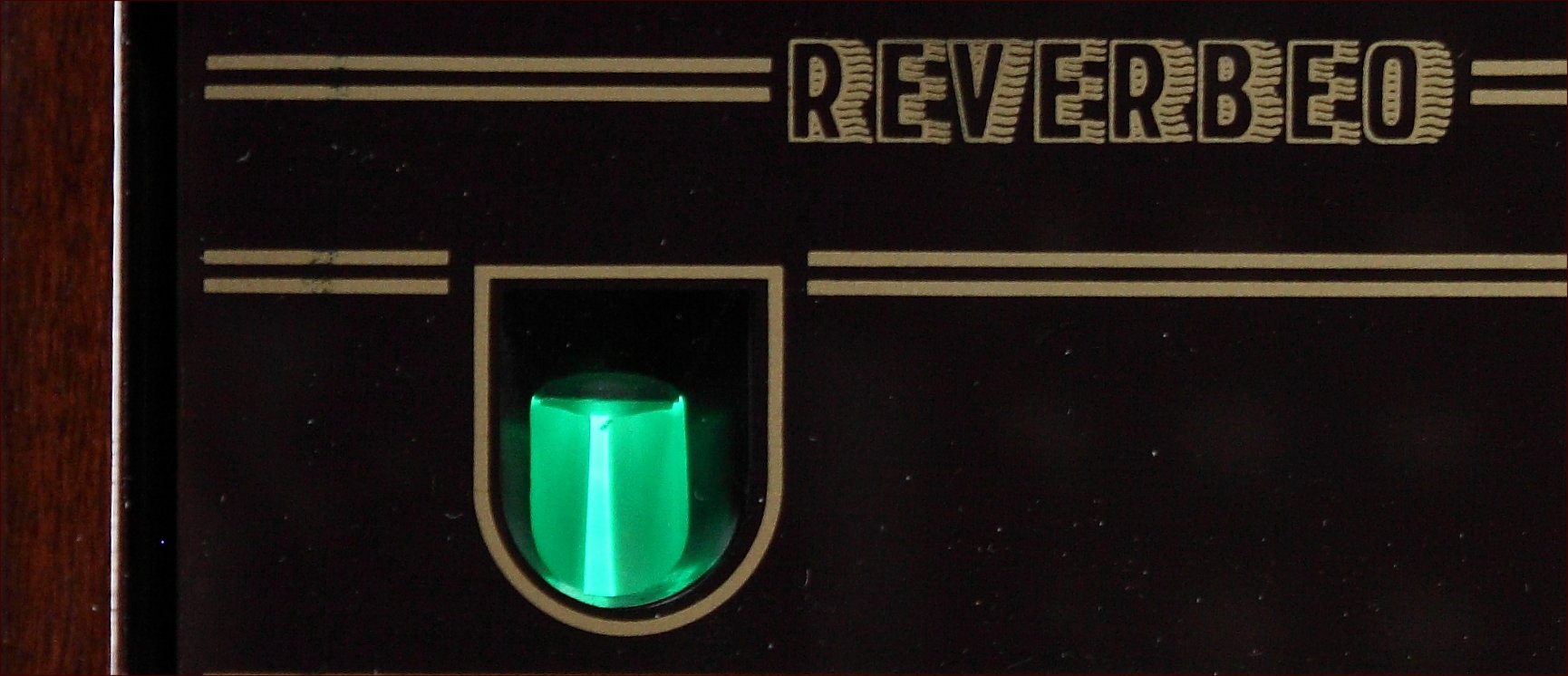
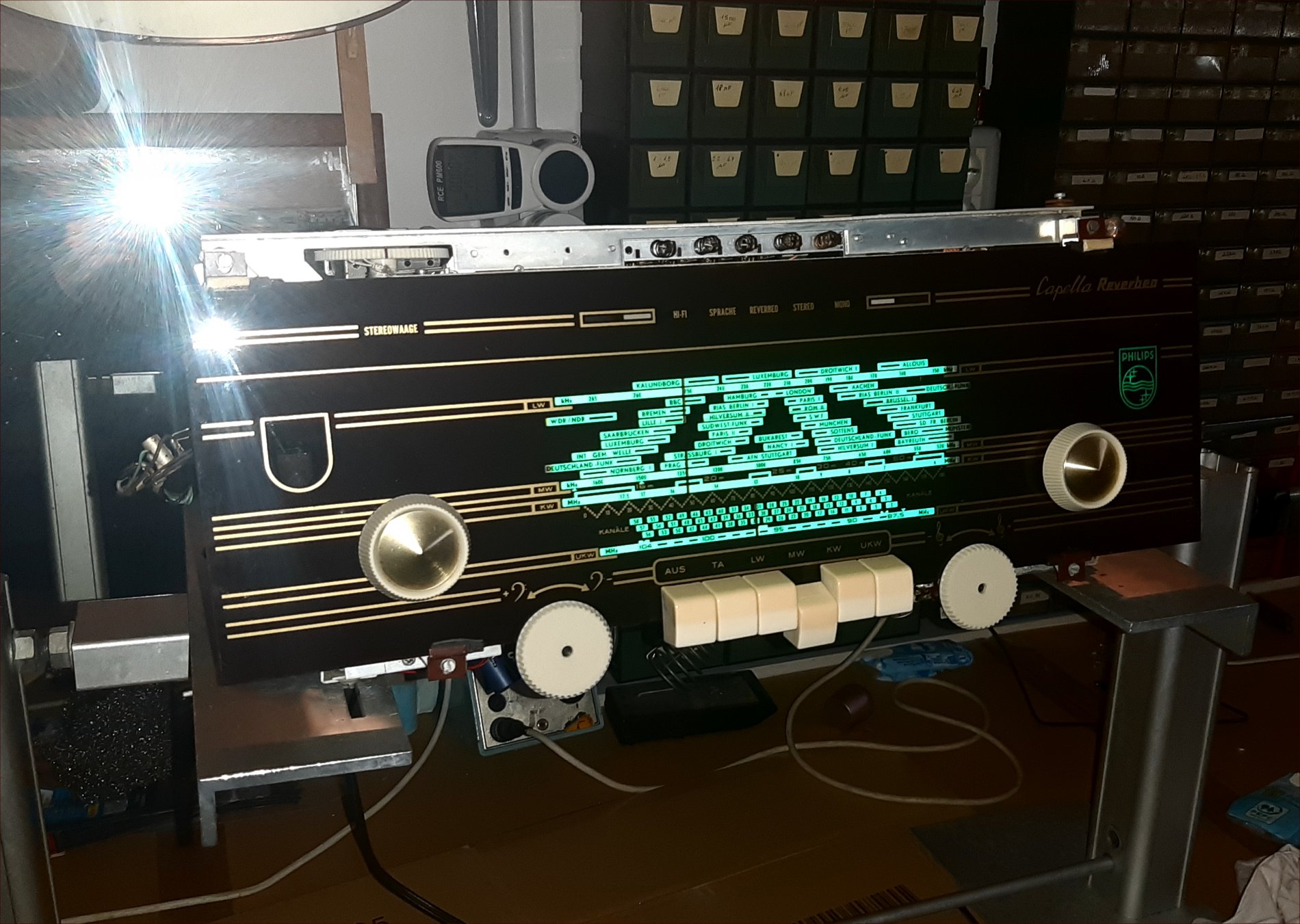
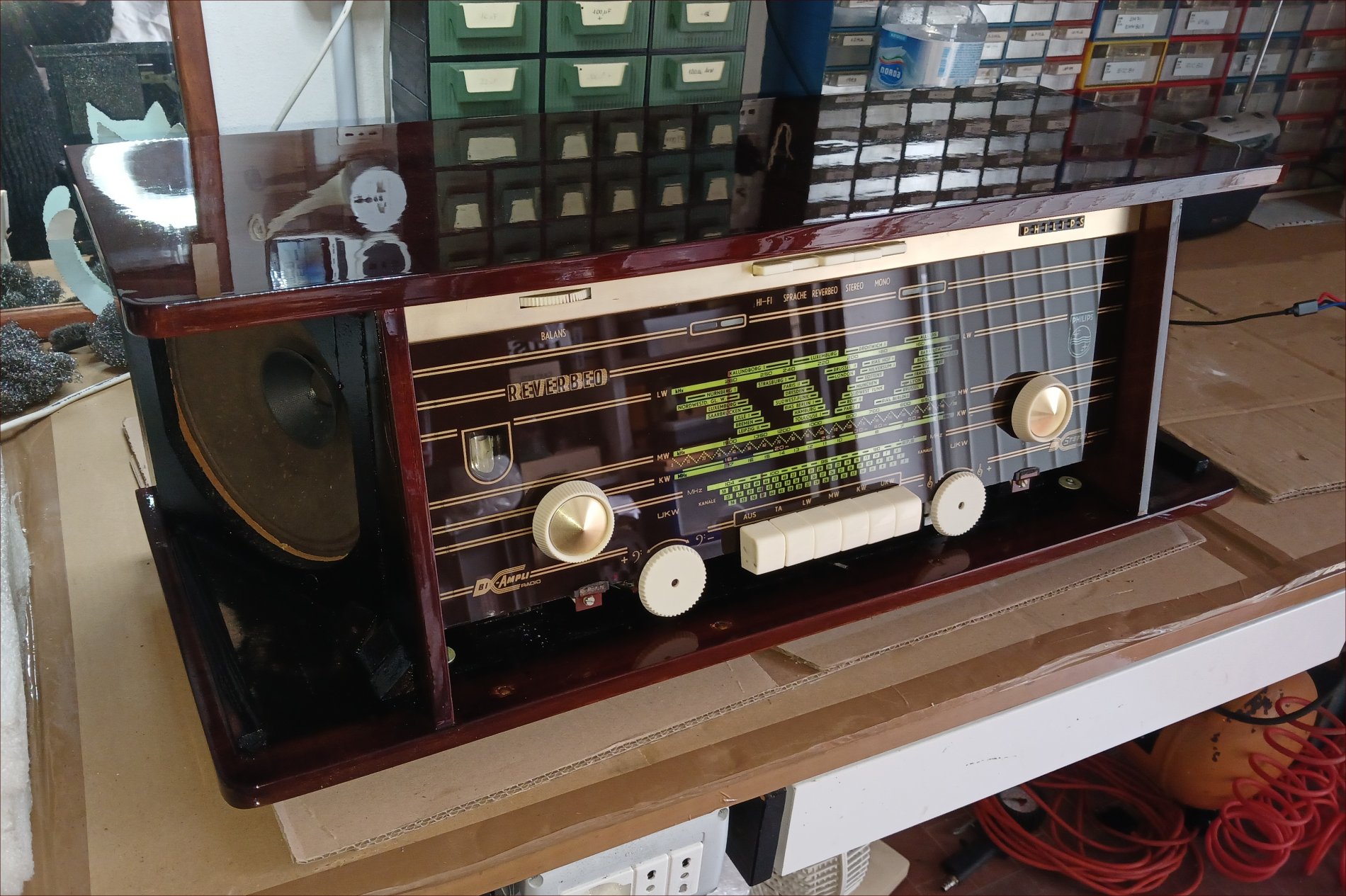
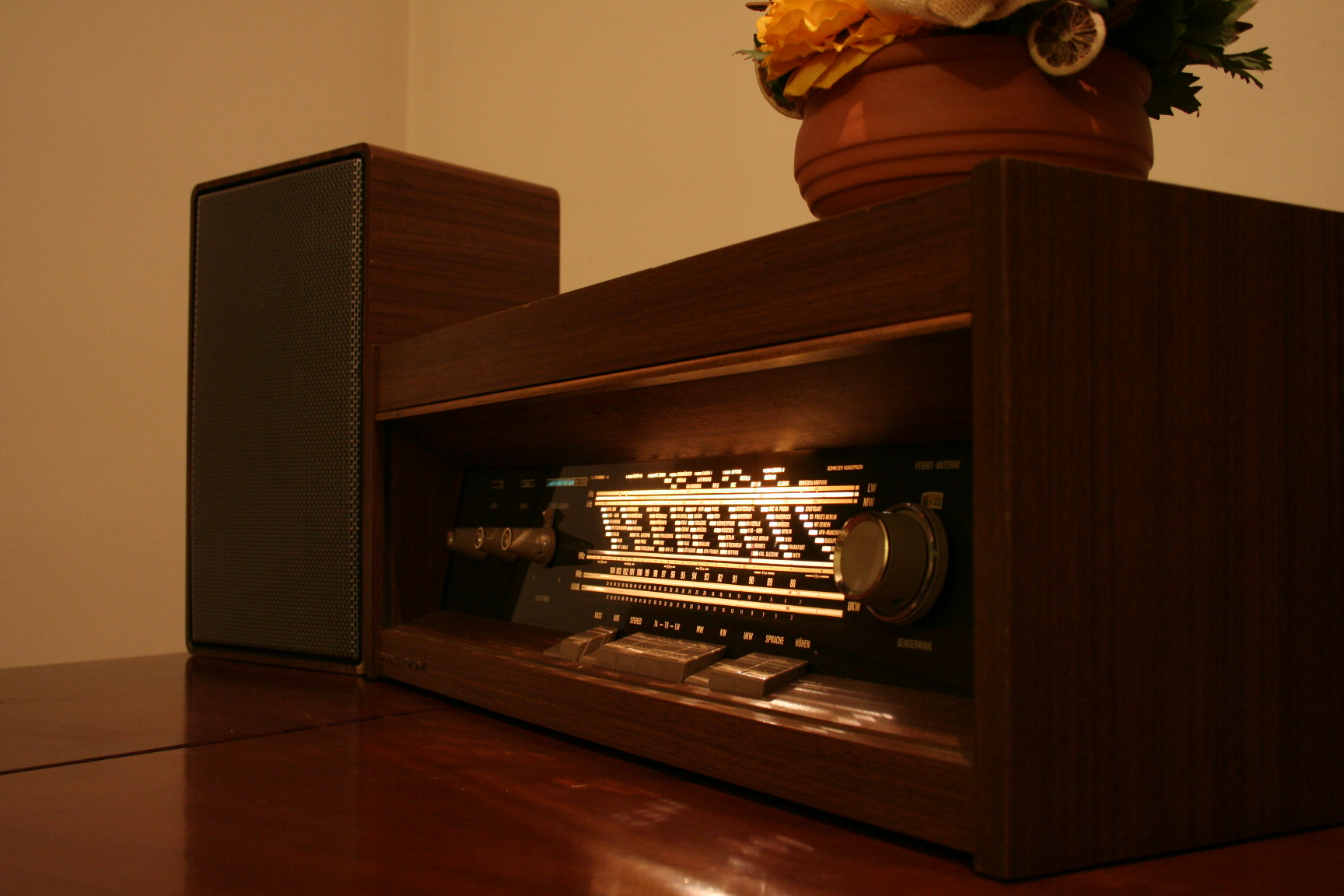
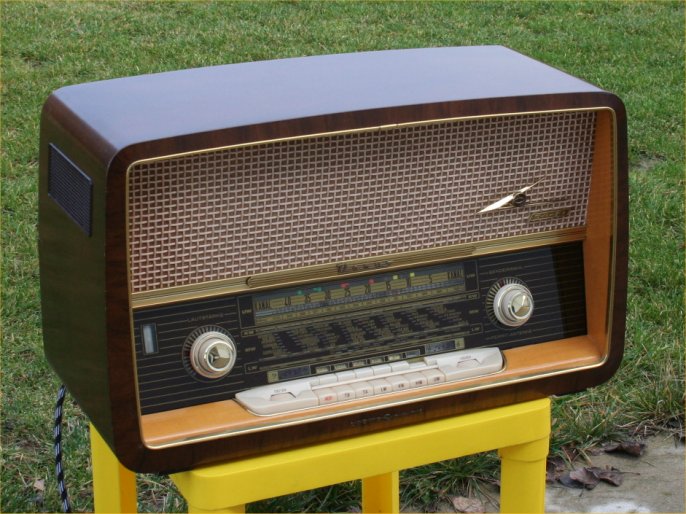
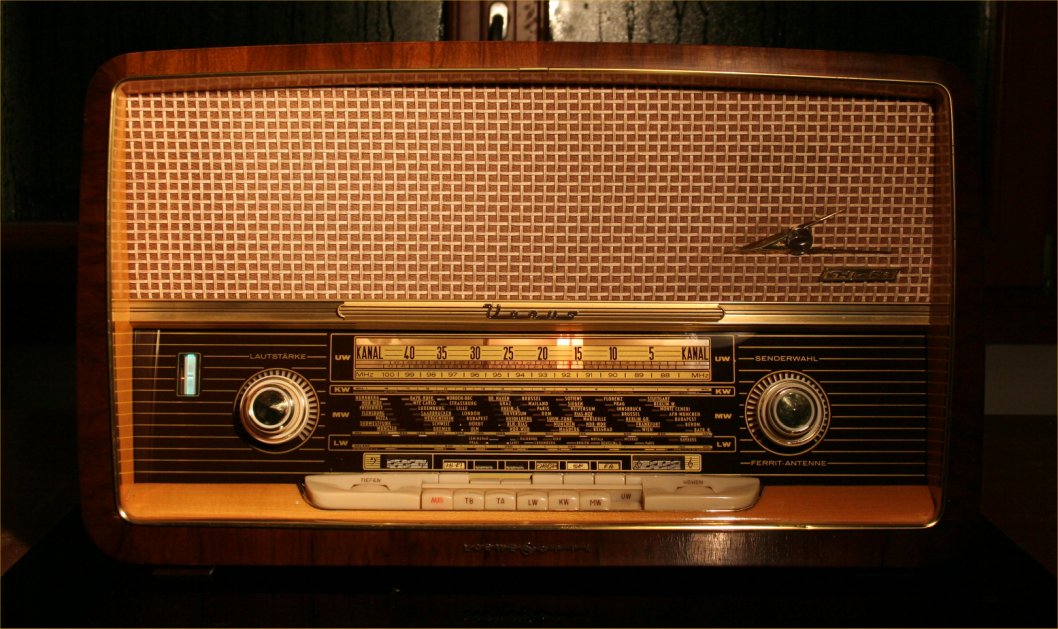
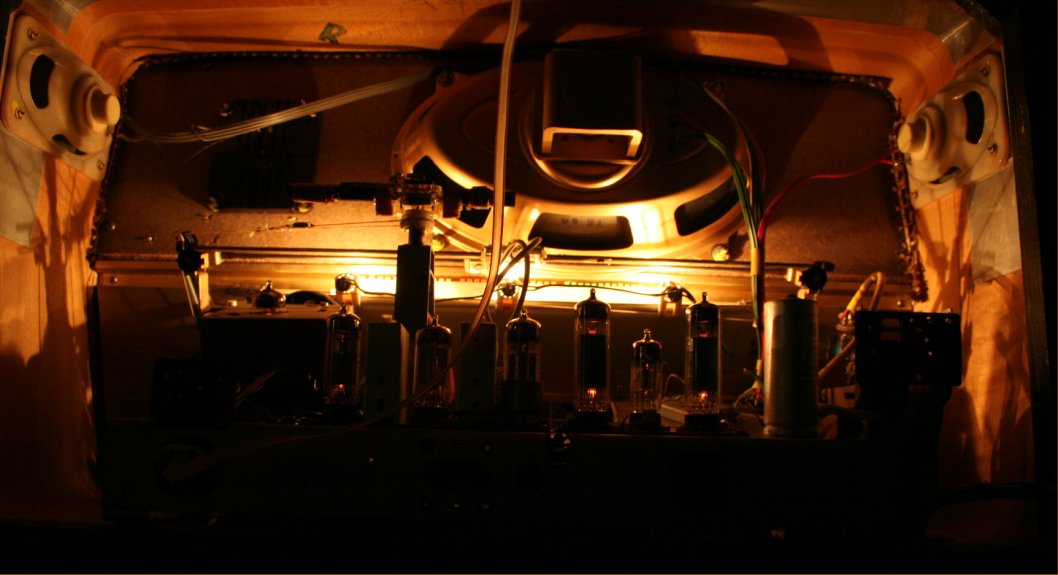
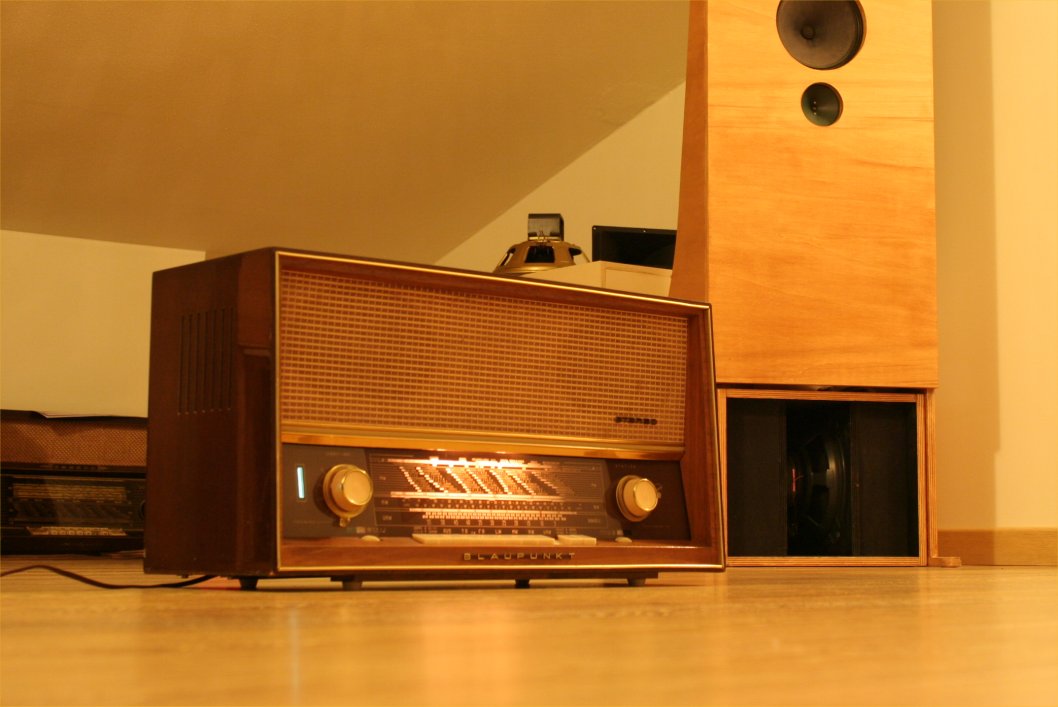
PHILIPS CAPELLA REVERBEO B7X43A and B7X14A
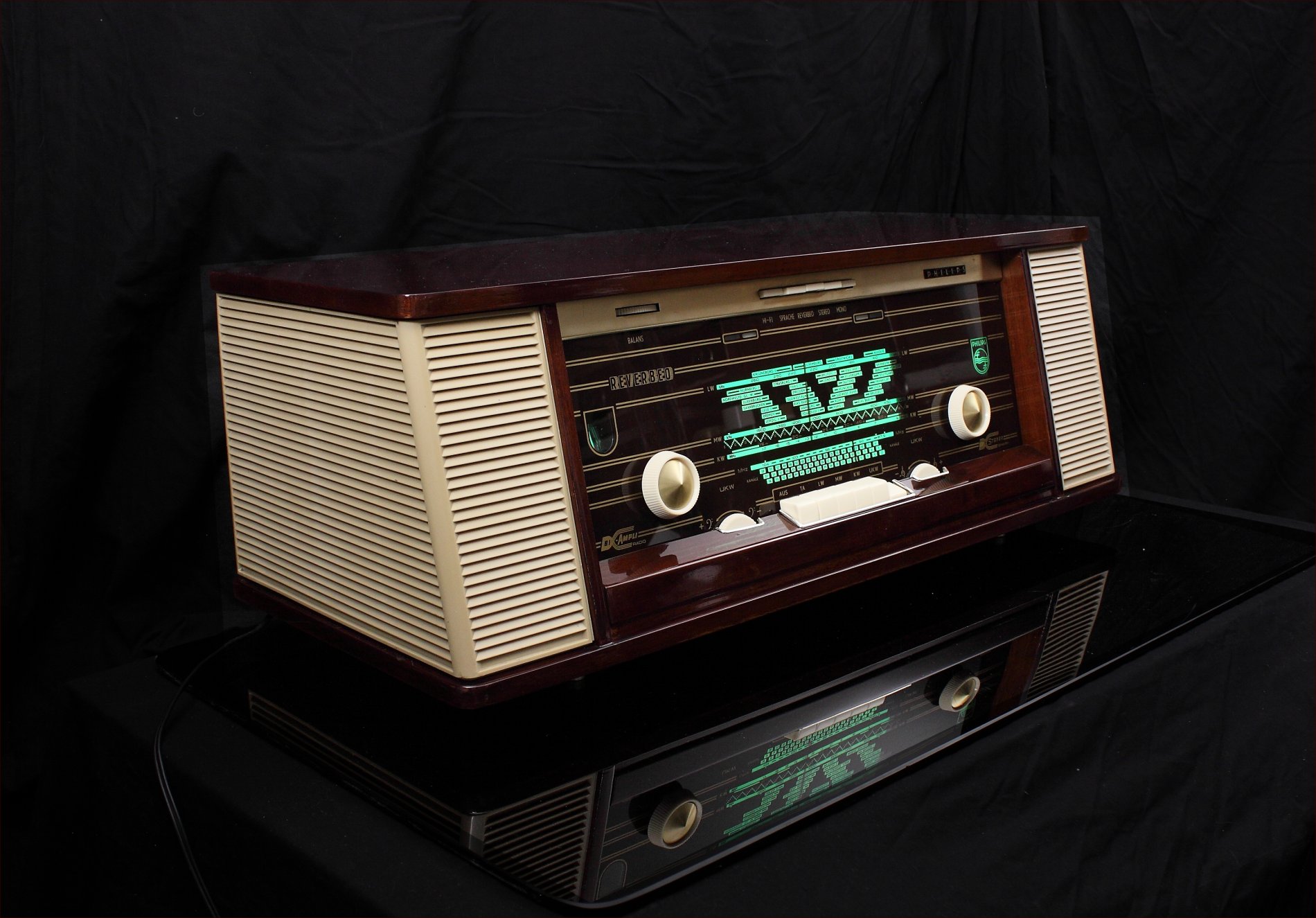
PHILIPS CAPELLA REVERBEO B7X43A - B7X14A

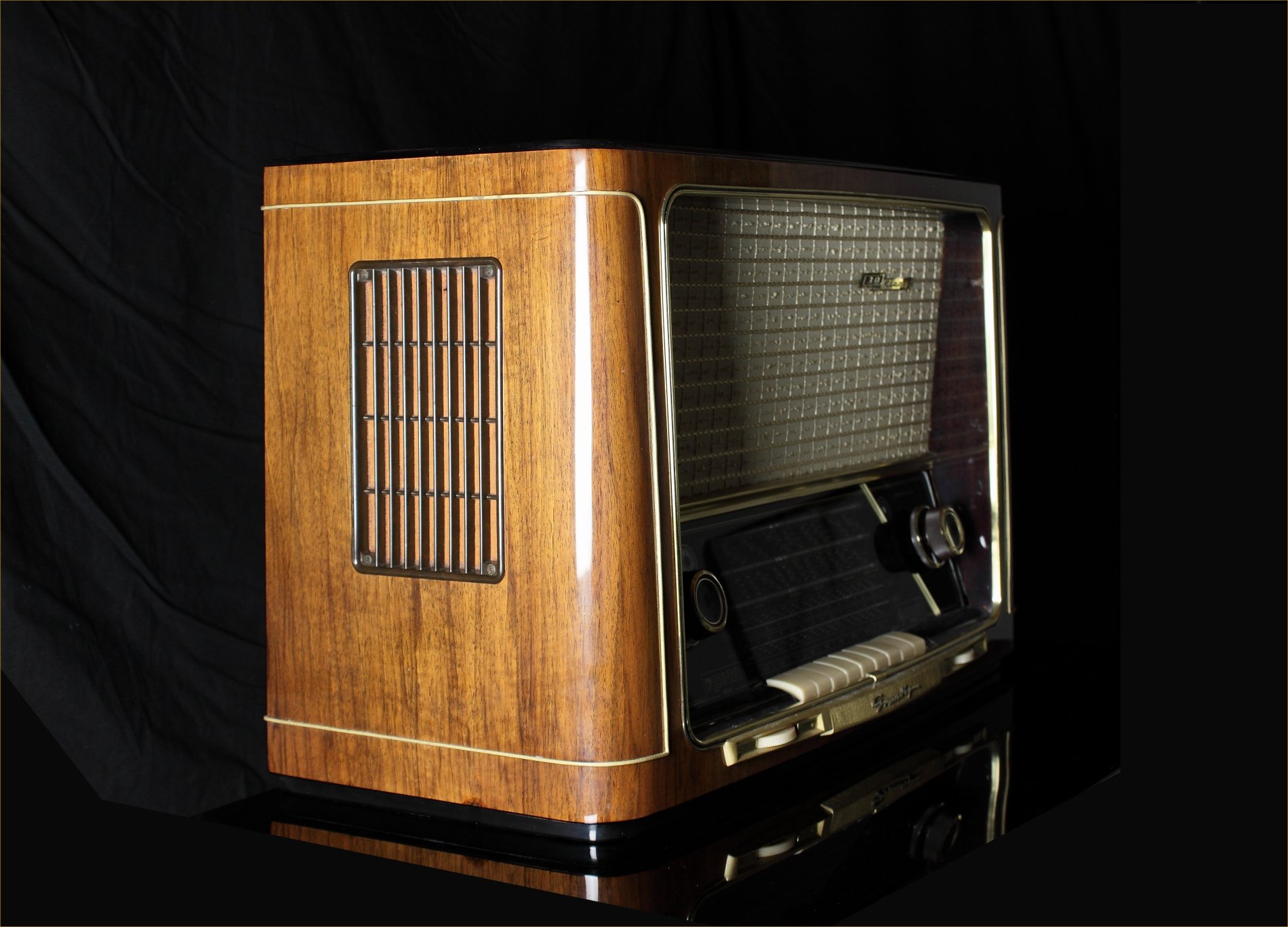
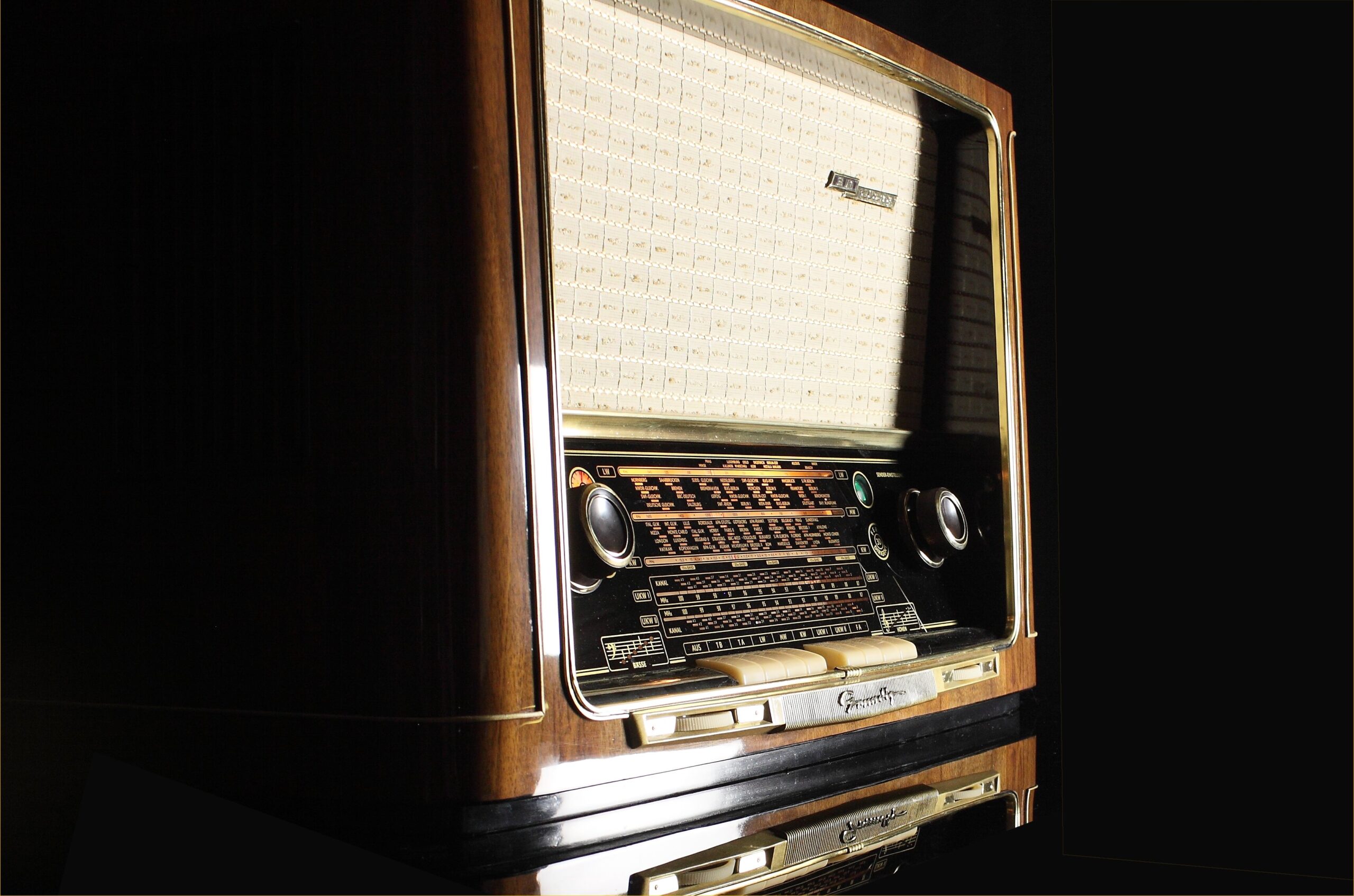
In this review we analyze two very similar devices, the Philips Capella Reverbeo B7X14A and the Philips Capella Reverbeo B7X43A.
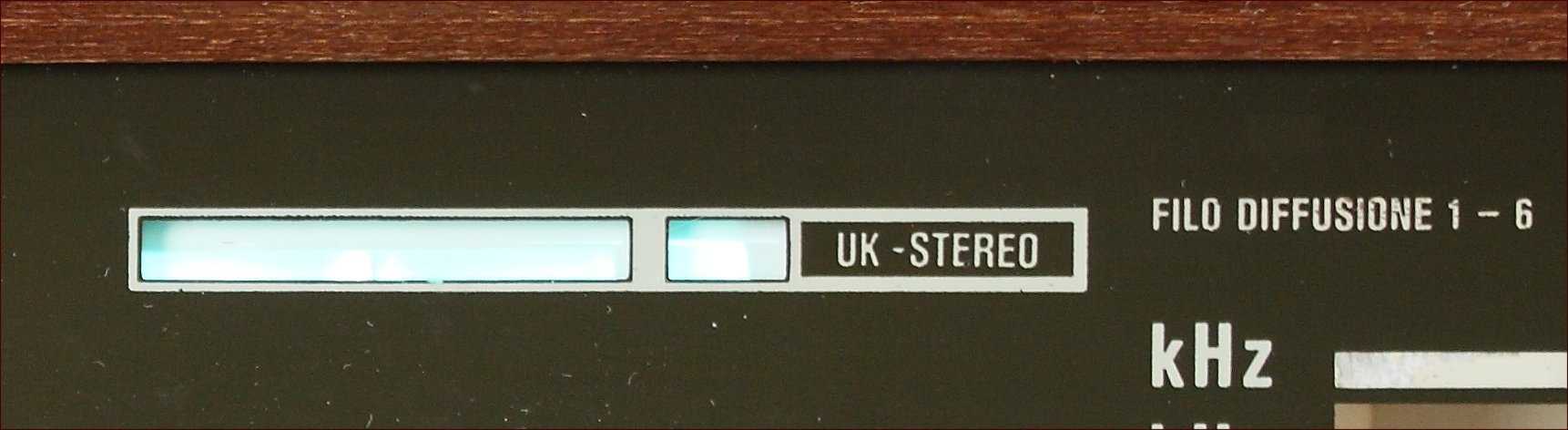
The two models are completely identical except for the fact that the B7X43A has a stereo decoder, while the B7X14A does not.
With the B7X14A, therefore, FM stereo transmissions are received in mono.
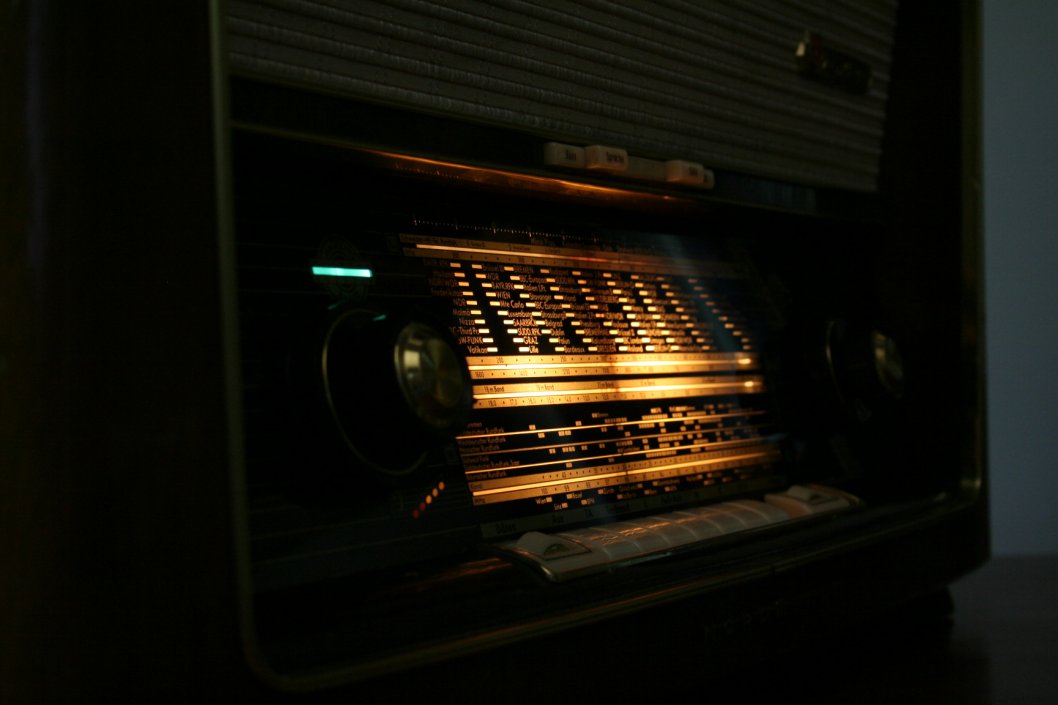
The front differs due to the presence of the stereo indicator in the B7X43A.
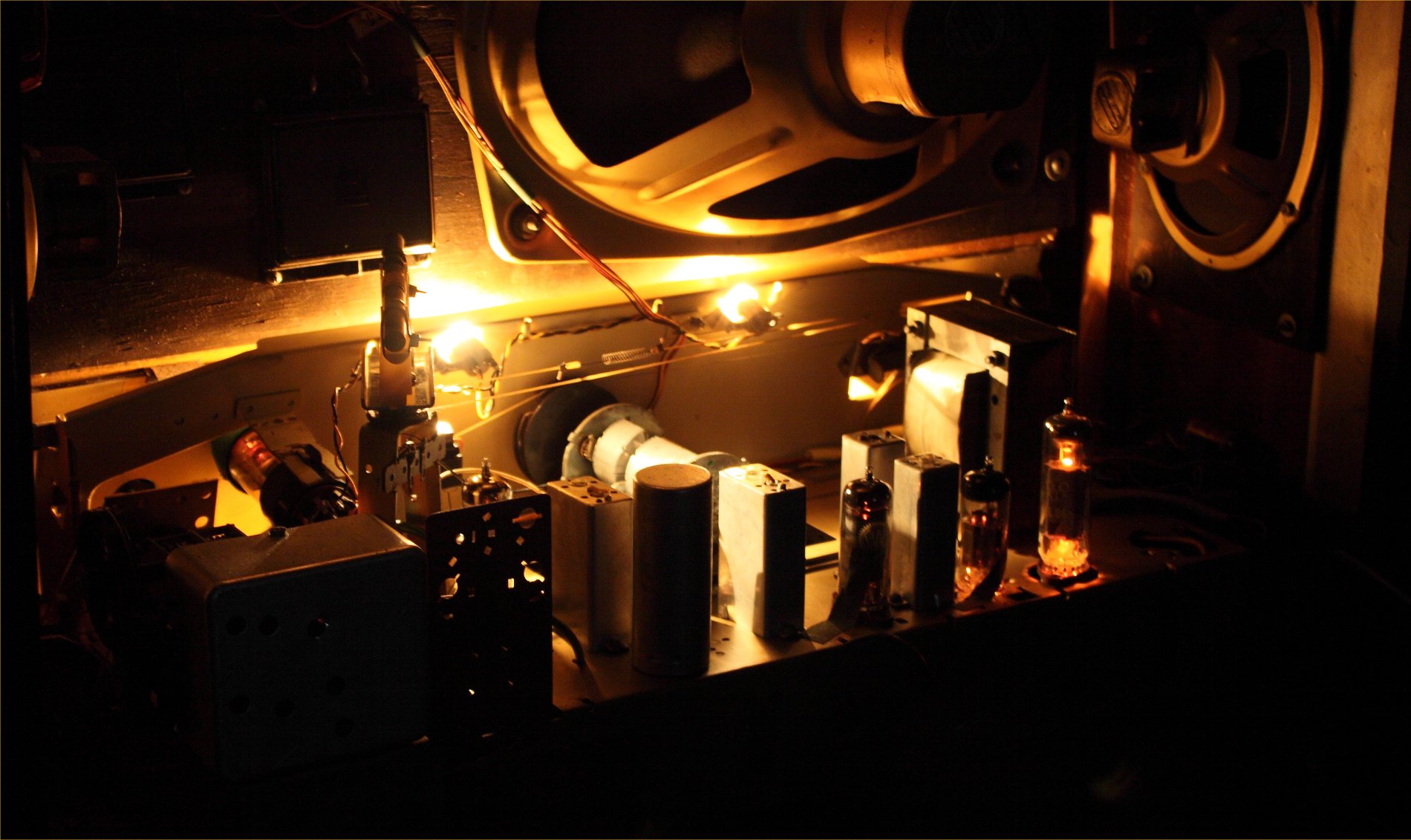
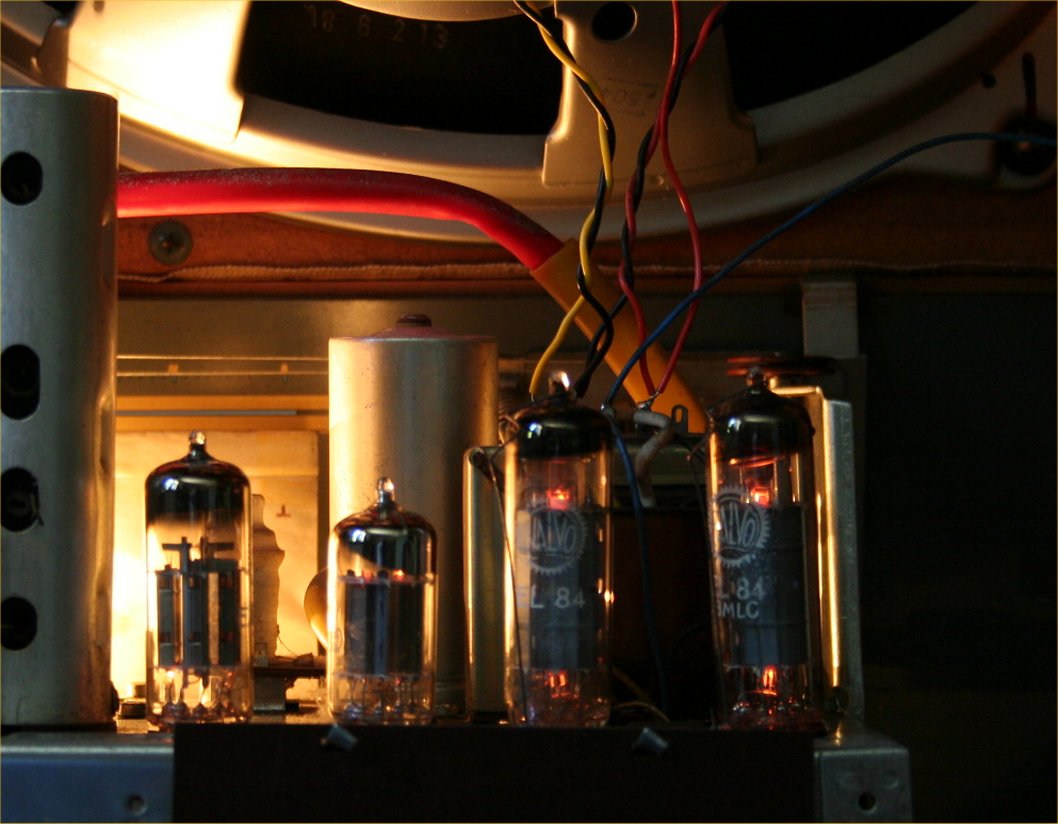
Both models are equipped with two Class A final stages, with an EL84 for each channel. Therefore, with both, stereo listening is provided when the source is a turntable, a tape recorder, a CD player or Bluetooth.

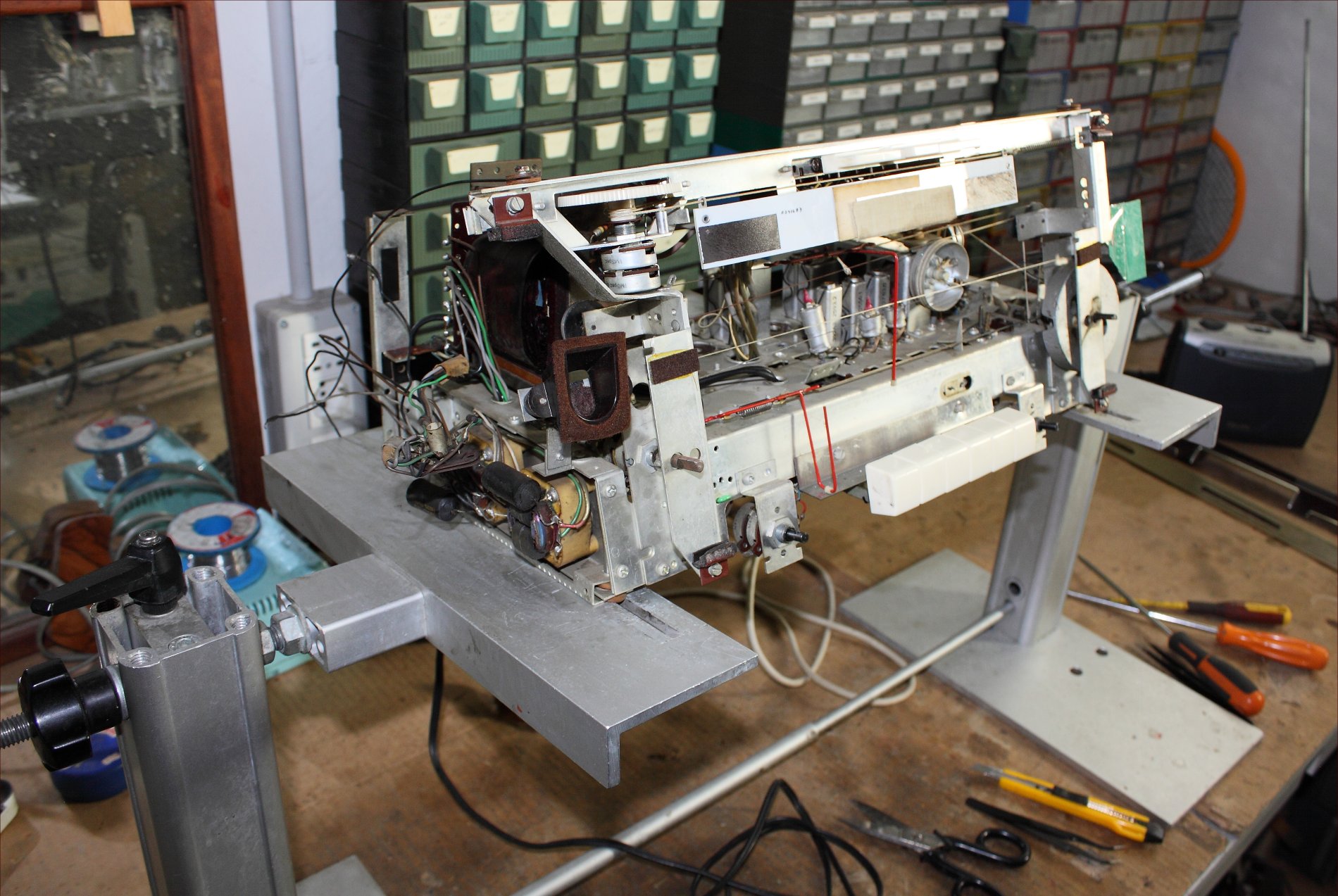
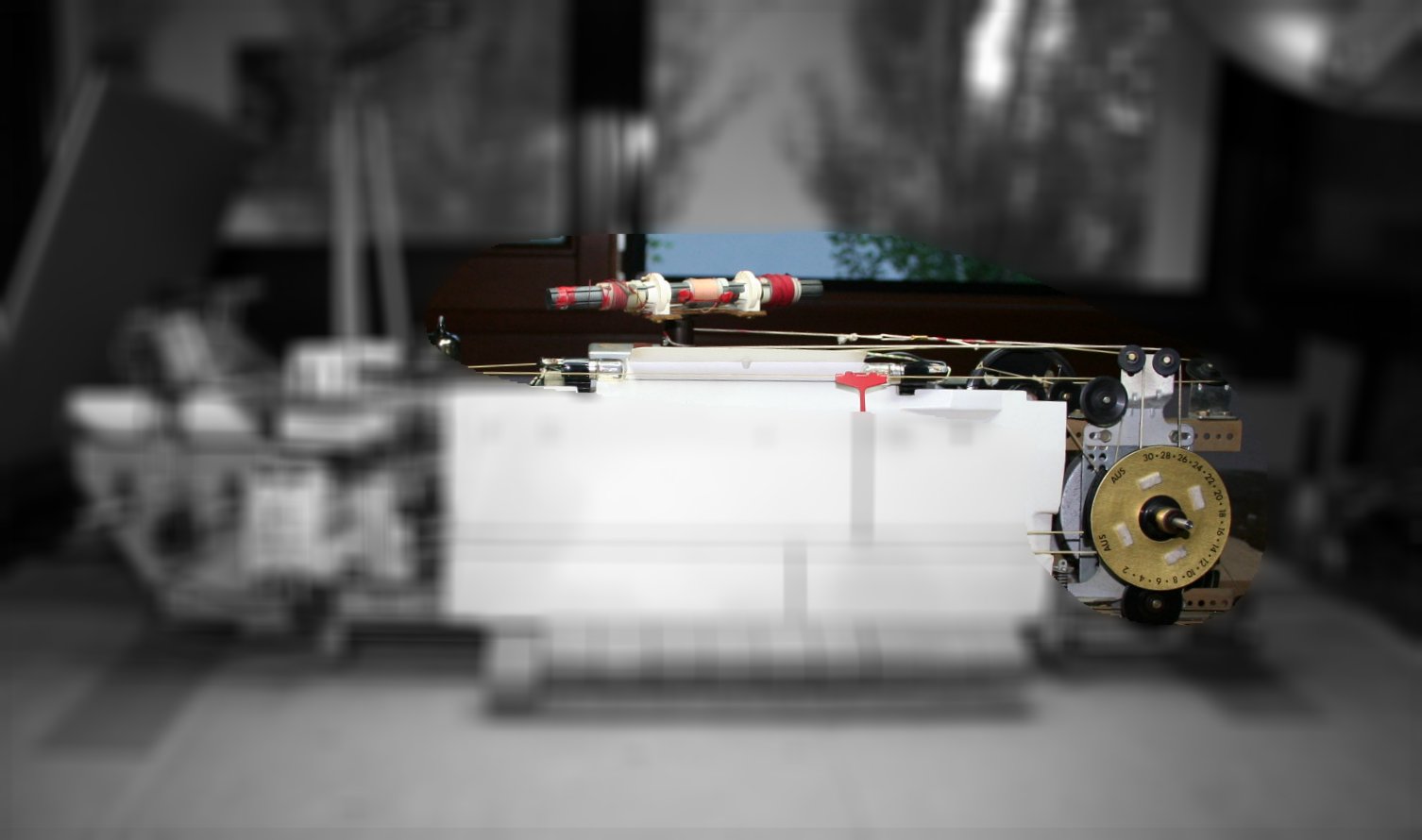
The most important feature on both models is the presence of the electro-mechanical reverb circuit, which can of course be excluded by a button on the front. The Philips reverb will be analyzed in detail below.
These two top-class Philips devices are the only German-made radios equipped with reverb. Saba, Grundig and Philips included reverb as an option on some rare top models of their large radio cabinets, but no classic radio was equipped with reverb.
The effect of reverb is very pleasant especially in sacred music, choirs and chamber music. In rock and jazz music, however, it generates excessive confusion in my opinion and it is preferable to exclude it with the appropriate button.

When you insert the reverb, the two channels are automatically connected and the playback becomes monophonic.
One last warning, pressing the HI-FI or SPRACHE buttons inserts equalizations set by the manufacturer, which are not configurable, and the Bass and Treble knobs no longer have any effect.

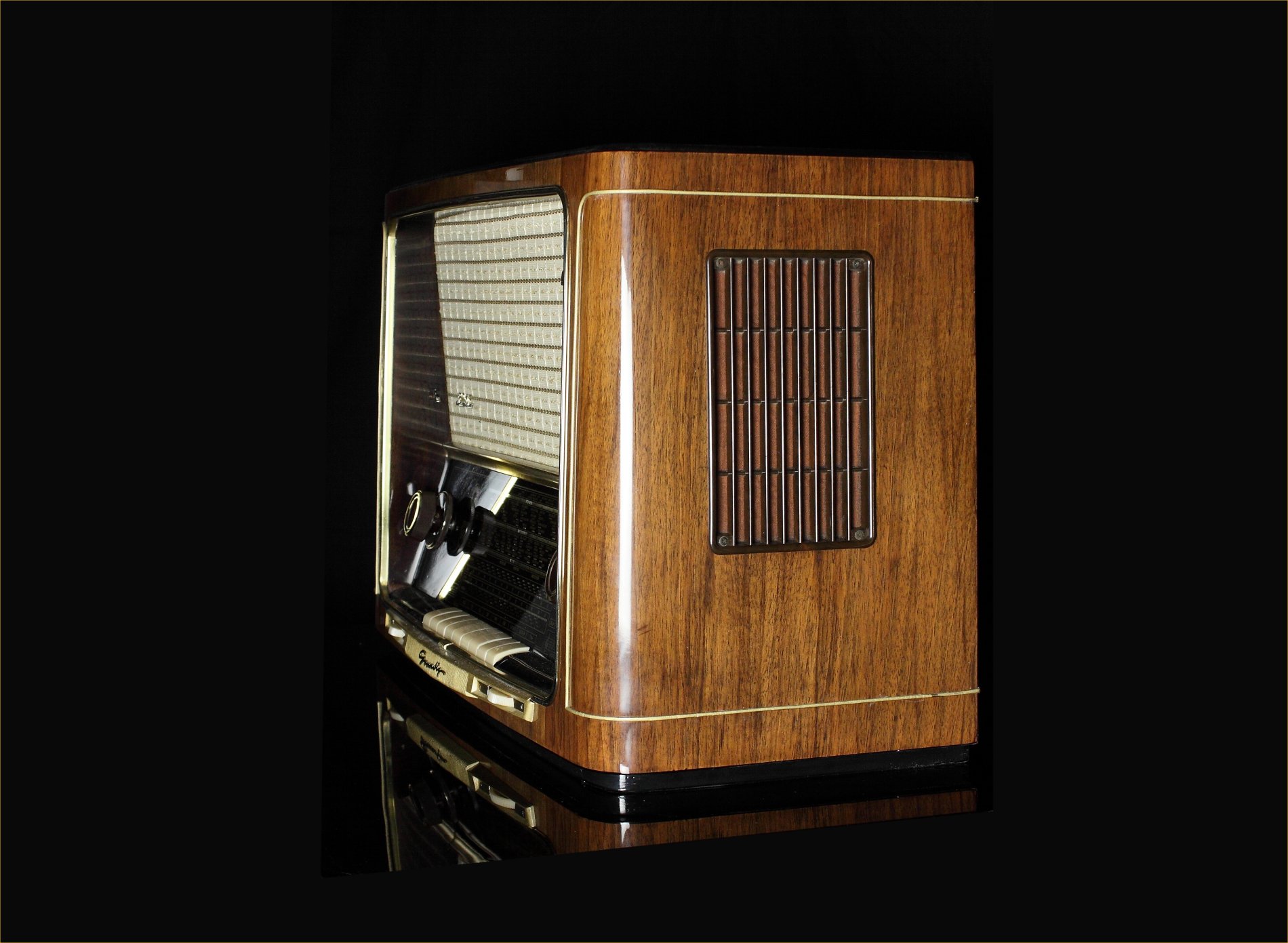
The presence of reverb, the double cone speakers arranged at an angle and the futuristic line for the time make it one of the most appreciated and sought-after devices of the Philips production of the time.


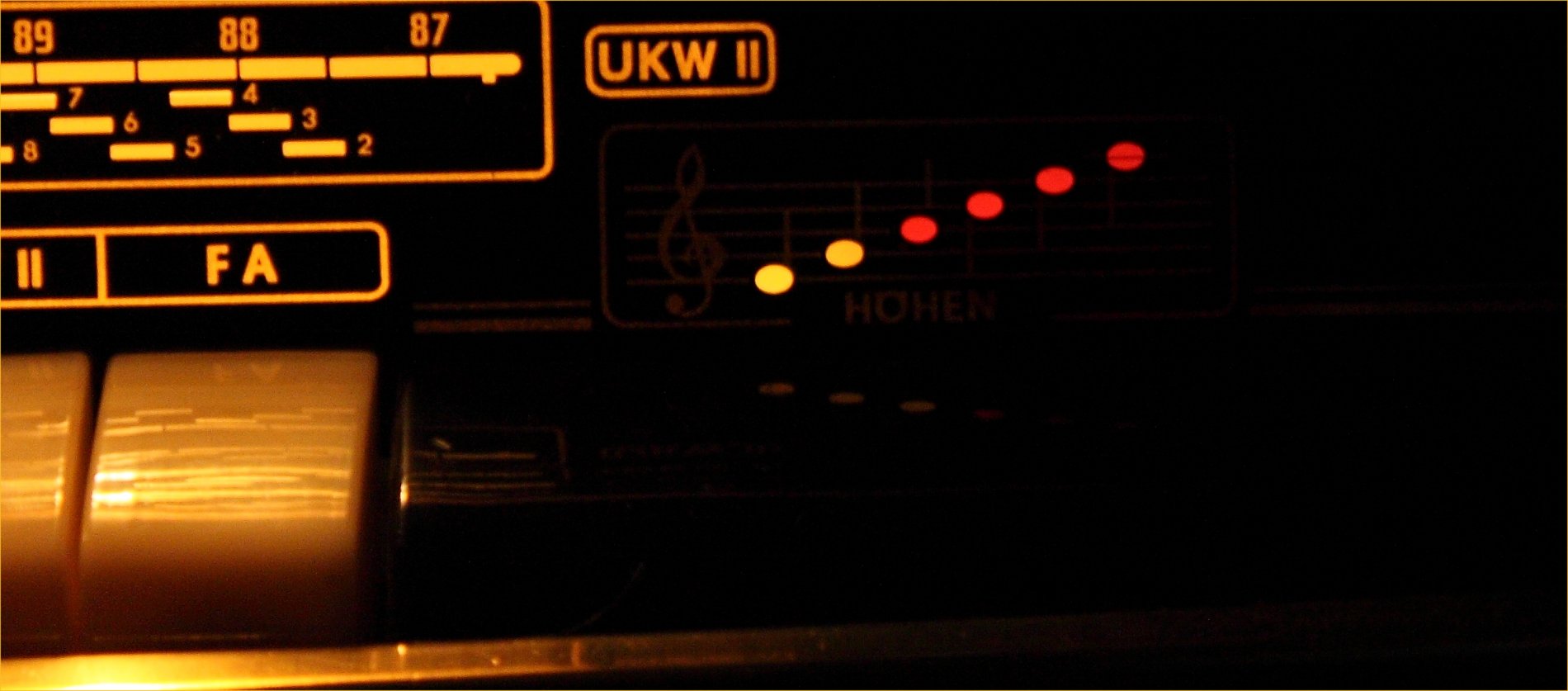
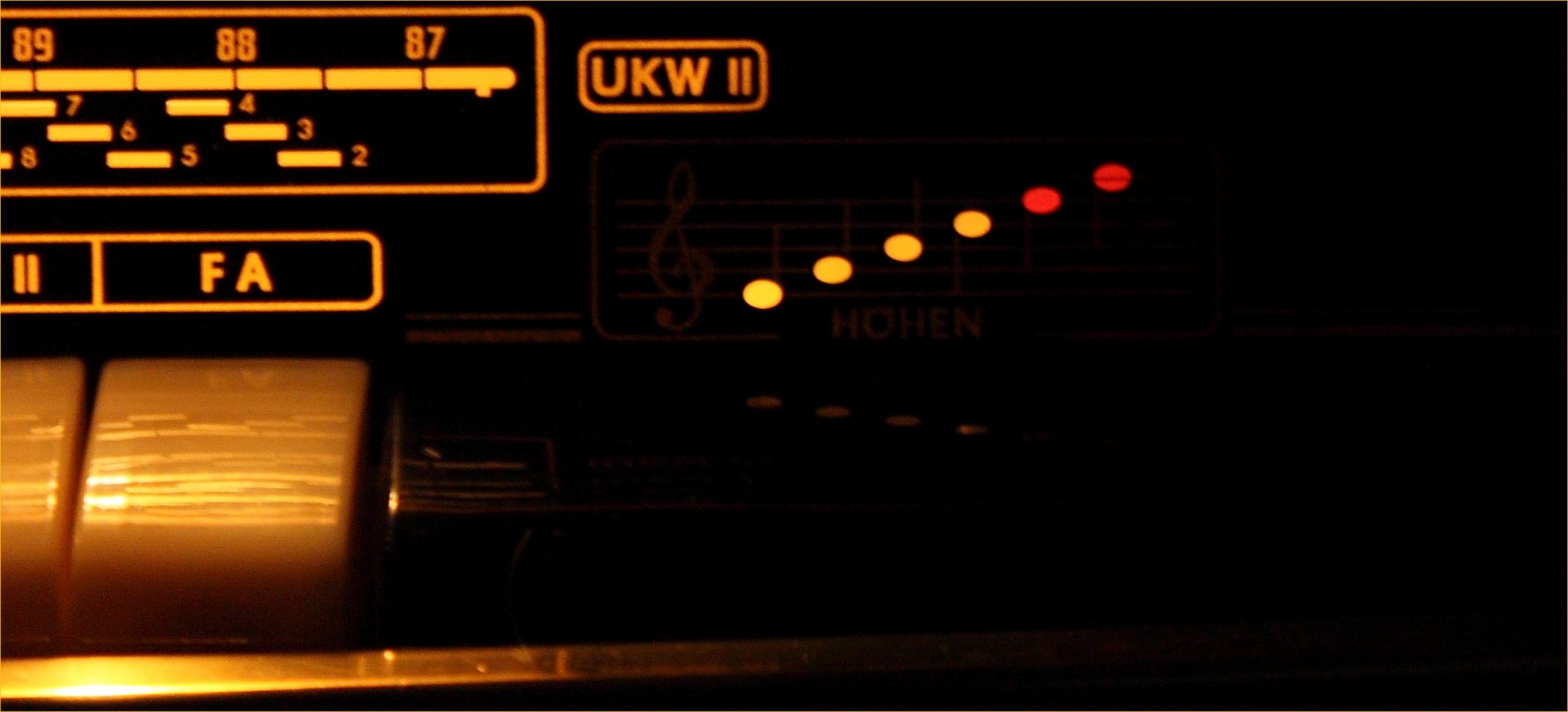
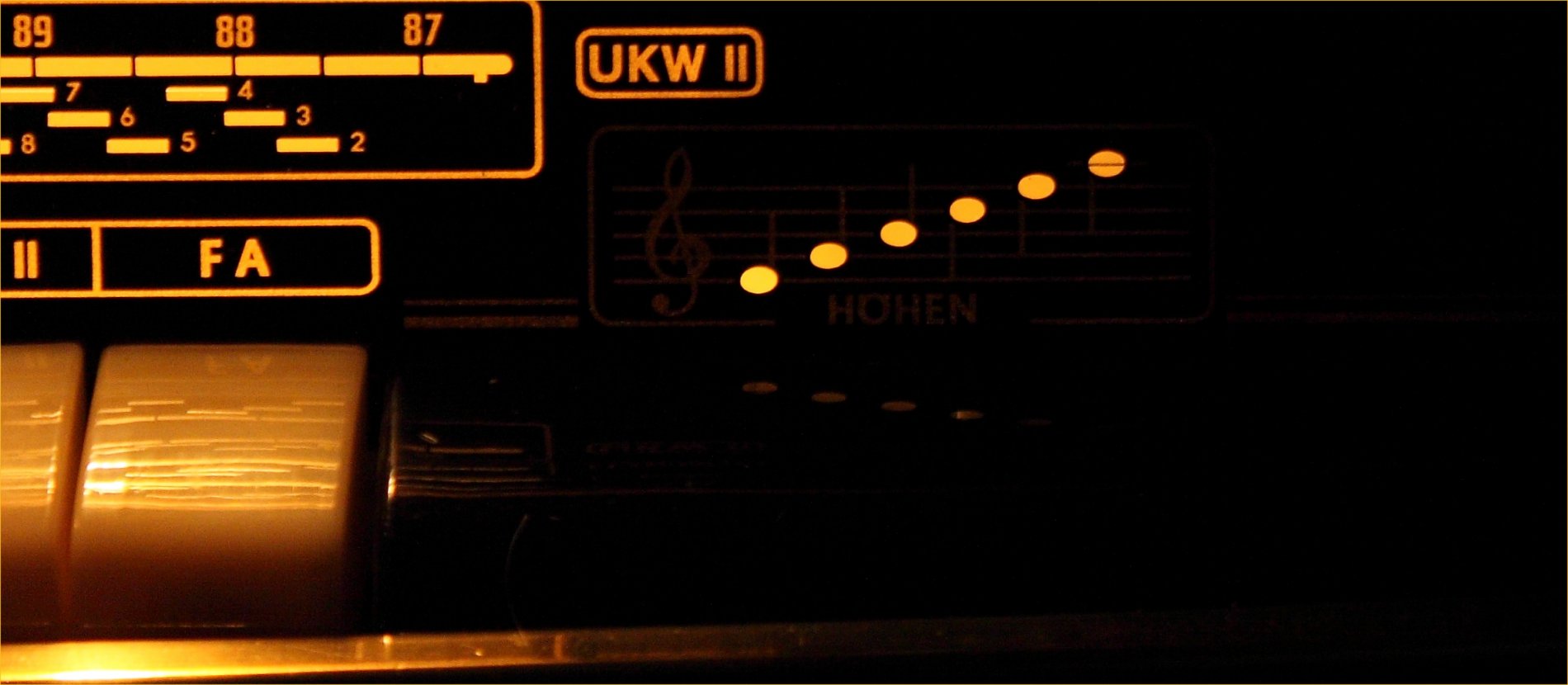
Philips Capella Reverbeo

The first track is a Reveberation Example. This is a recording of any FM broadcast where you want to hear the reverb effect. The recording starts with the reverb on, then you hear a "Stack!" and the reverb is turned off, then turned on again and so on. This way you can appreciate the level of reverb that Philips has planned for this device. In fact, although it is clearly a distortion of the sound, it is very interesting, the songs seem to come from inside a large room, or a church, and the effect is incredibly pleasant.

The second track performed by Abdullah Ibrahim is called Cape Town to Congo Square 1. Adolph Johannes Brand (Abdullah Ibrahim) is a South African pianist and composer. His music often draws inspiration from the music he listened to in his childhood in the multicultural port areas of Cape Town, ranging from traditional African songs to church gospel, Indian ragas, and more modern jazz. She manages to blend American jazz, Duke Ellington's big band compositions with the revolutionary innovations of Ornette Coleman and the avant-garde of the 60s.

The third song is performed by Ella Ronen & Sam Cohen, it is called I just want to see you. It is part of the album “The Girl With No Skin”. A very interesting project where the singer, poet and activist addresses the burning issue of being a woman today, with all the conflicts and contradictions, the rediscovered strength and weakness. "I just want to see you" talks about the couple and the difficulties of being yourself and being a couple when instead we are continuously encouraged to play roles. A very sweet song that gives energy and hope. "I don’t want to be your mother / I don’t want to be your muse / I don’t want to take your freedom / I don’t want to make you choose / I just want to see you"

The fourth song performed by Buena Vista Social Club is the famous Amor de loca juventud. (Love of the Crazy Youth) written and composed by Rafael Ortiz in the 30s is a song with influences from black music from the neighboring United States, very popular in Havana in those years. Buena Vista Social Club was the name of a club in Havana (Cuba), whose entrance was reserved for people of color. Almost forty years after the club closed, a group of Cuban musicians merged into the Afro-Cuban All Stars. The Californian guitarist Ry Cooder also participated in the initiative. The album Buena Vista Social Club was released in 1996. In 1999, Wim Wenders directed a documentary about the entire story of the production and the members of the orchestra, also entitled Buena Vista Social Club.

The fifth song performed by Francis Poulenc is his Stabat Mater Dolorosa. In late 1950 Francis Poulenc began writing the Stabat Mater, FP148 for soprano solo, mixed choir and orchestra dedicated to the memory of the stage designer Christian Bérard, a dear friend of Poulenc, who had died the previous year. s Poulenc had shared with Bérard the experience of rediscovering his faith after going on a pilgrimage to the Sanctuary of Rocamadour. This is one of Ozawa's historic Boston recordings. The pure and crystalline voice of the American soprano Kathleen Battle marries perfectly with Poulenc's sacred pieces. The Stabat Mater "Stava la madre" is a Catholic sequence from 1200 attributed to Jacopone da Todi. The first part of the sequence begins with the words Stabat Mater dolorósa and is a meditation on the sufferings of Mary, mother of Jesus, during the Passion and crucifixion of Christ.

  • BLUETOOTH

    Bluetooth receiver embed

    READ MORE >

  • MULTI PLATFORM CONNECTION

    Each radio is equipped with a cable for connection to any digital device.

    READ MORE >

TUBESOUND IMPROVEMENTS

Bluetooth receiver embed – The unit is equipped with a BLUETOOTH receiver powered directly by the receiver power supply. This makes it possible to control the amplifier from any external digital device as an IPAD, a Smartphone, or a sophisticated multimedia station. So you can hear your preferred web station or your lossesless file without cables on the room. Wireless Receiver can be equipped upon requests.
Multi Platform Connection – A customized adaptation cable to connect any digital device as Iphone, Smartphone, Laptop, CD Player etc. will be provided with this radio. This special cable suits the different impedances between the modern equipment and the receiver. Furthermore the two stereo channels flow into one without increasing the load to the input unit.
HISTORY

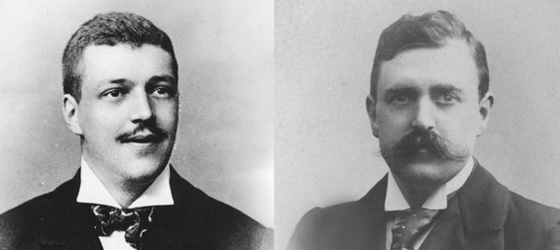
In 1891, the brothers Gerard and Anton Philips, started to produce the first incandescent bulbs in Eindhoven.
Later, Philips specialized in the production of electro- medical equipment, and in 1918 introduced the first X-ray tube.
In the following years, Philips began specializing in the broadcasting industry. In 1932 the company succeeded in selling over one million radio equipment and became the world’s first producer.
During the Second World War, Philips transferred to the Netherlands Antilles, and returned to the Netherlands at the end of the conflict.
In the second post- war period, began the production of the first televisions, then the launch of the music cassettes in 1963 and the production of the first integrated circuit in 1965.
In 1982 Philips launched with Sony the first compact disc player.
In 1984 Philips acquired the control of the German Grundig.
In the 90's Philips faced a financial crisis.
In 1991 it inserted on the market the Video CD and it is one of the first companies in the world to develop high definition television.
In 1999 Philips established a joint venture with LG Electronics, named LG Display, which ends in 2009.
In 2006 together with Sony launched the first Blu-ray.
In 2009 Phillips launched the first full-HD LCD TV in 21:9 format.
Phillips holds 48,000 registered patents.
Currently, the production is focused on low- energy lighting products and LED systems and services for diagnostics and production of medical devices.

MAIN FEATURES

Year of production: 1963/64
Superheterodyne IF 452/10700
6 AM Circuits
11 FM Circuits
Wavebands: Medium Waves (OM), Long Waves (OL), Short Waves (SW), FM (UKW)
Speakers:
2 double cone wideband
Dimensions (LW): 712 x 265 x 292 mm / 28 x 10.4 x 11.5 inch
Net weight: 14 kg / 30 lb 13.4 oz
10 Valves (Eq. 17): ECC85 ECH81 EF89 EBF89 EM80 EAA91 ECC83 2xEL84 EZ81

Rotating ferrite antenna.
Reverb switchable

Philips Capella Reverbeo

Philips Capella Reverbeo

REVERB

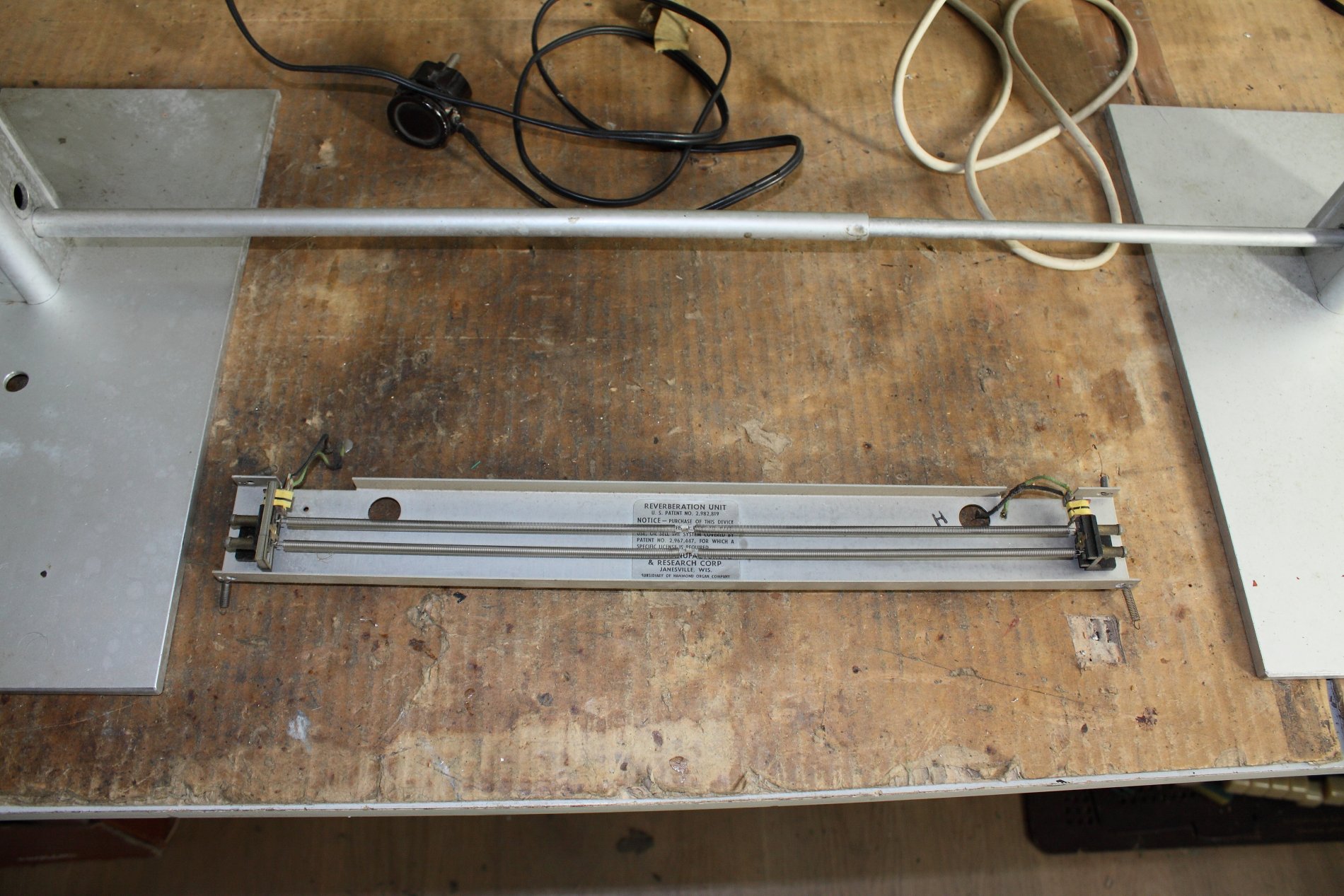
This type of reverb was developed by Bell Labs in the 30s for the organs of Laurens Hammond to obtain a spatial effect that aimed to replicate the natural reverb of a church even in the small rooms of a house. In the 60s and later they were used in the amplifiers for musical instruments of all the most famous manufacturers, Fender, Vox, Marshall and others.

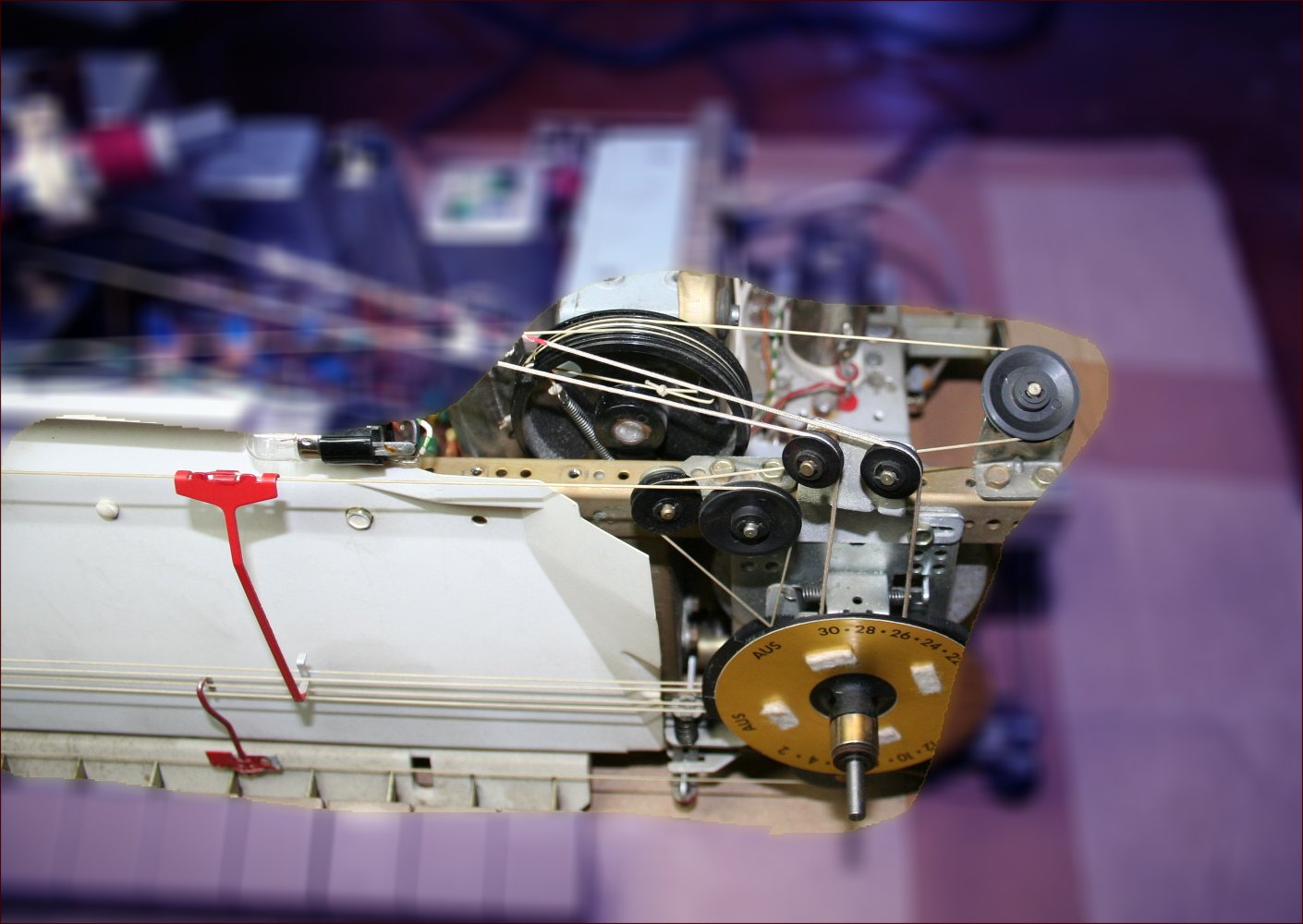
The mechanical part of the spring reverb is composed of three fundamental elements, the Input and Output Transducers, the Transmission Springs and the Suspension Springs. Essentially the audio signal is sent to the piezoelectric transducer located at one end of the transmission spring, the vibrations reach the transducer located at the other end of the springs after being subjected to oscillations, reflections and delays. The output of the transducer is sent mixed with the direct sound source to create the final output signal.

PHILIPS decided to implement this incredible mechanism in its most prestigious devices, the CAPELLA REVERBEO B7X43A and B7X14A.
The reverb units used by Philips are of the double spring type, which unlike the triple spring type return a more evanescent and characteristic sound, not obtainable with digital convolution reverb algorithms.
A button on the front allows you to insert/disinsert the reverb circuit. Inserting the reverb automatically switches the channels to monophonic. Listening to both music and speech with the reverb inserted is a fascinating and fun experience.

Philips Capella Reverbeo

Philips Capella Reverbeo

TONE CONTROLS

The tone control system is very efficient. The individual tone knobs act on both channels.

Philips Capella Reverbeo

Philips Capella Reverbeo

AERIALS

Inside the cabinet there is a dipole for FM reception and a ferrite antenna for AM reception.
The reception sensitivity with the internal antennas is very good.
Using an external antenna the sensitivity improves further.

Philips Capella Reverbeo

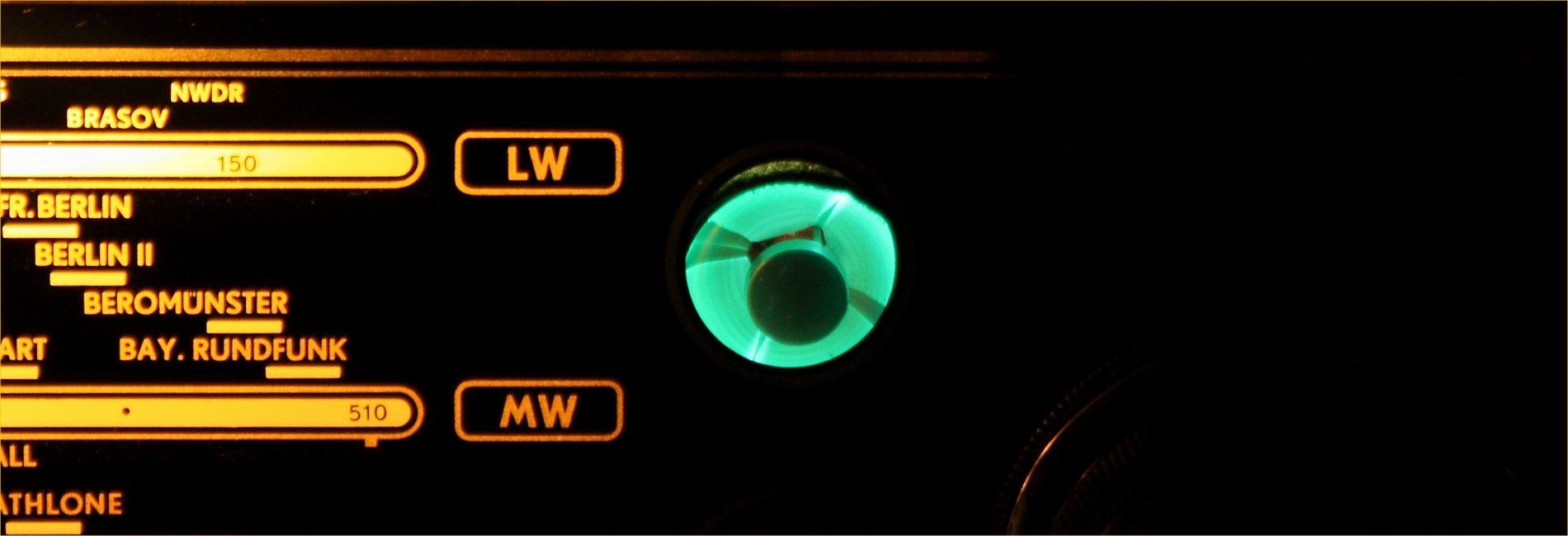
TUNING INDICATOR

The tuning indicator has been replaced with a new one.

Philips Capella Reverbeo


SPEAKERS

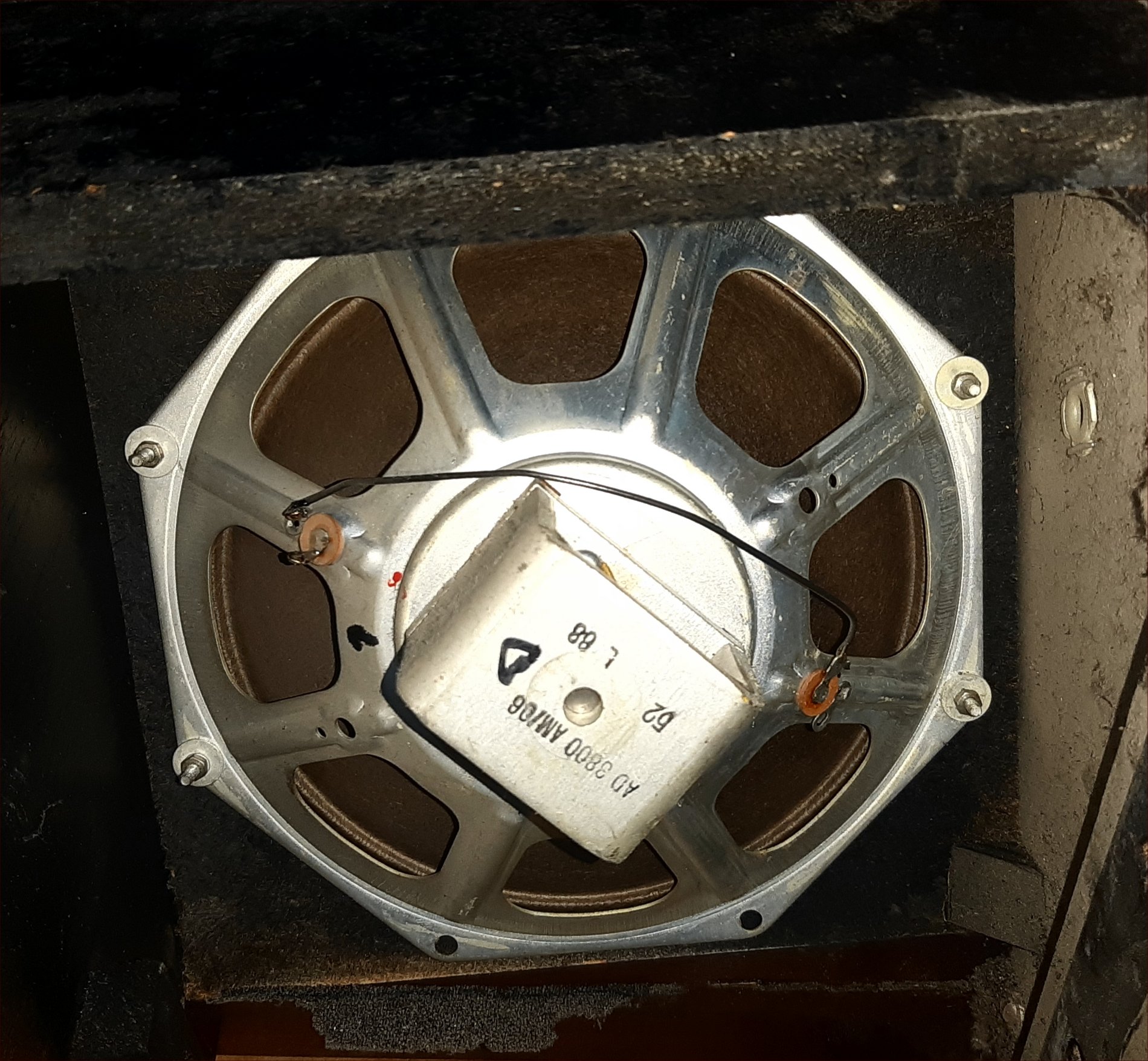
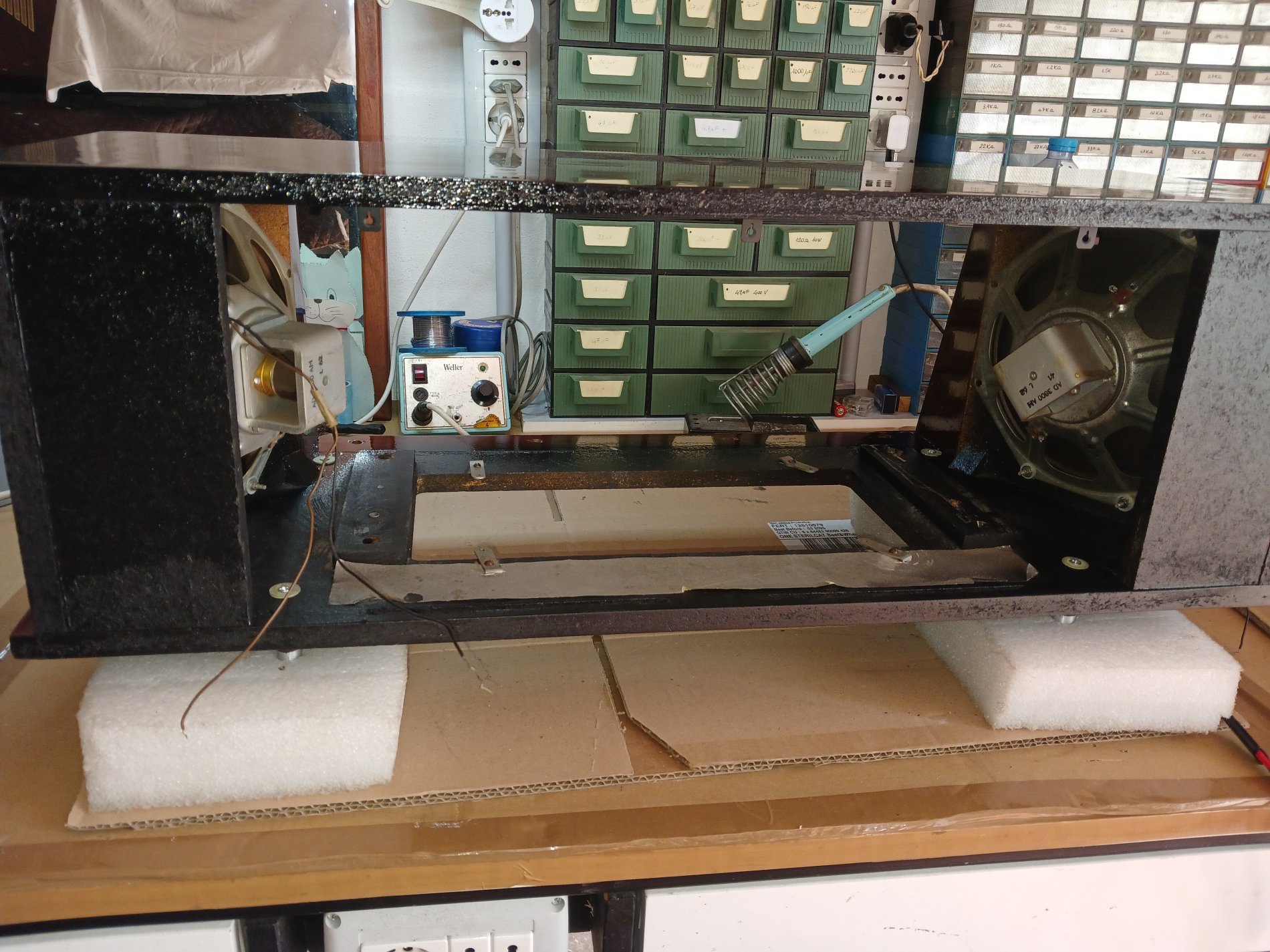
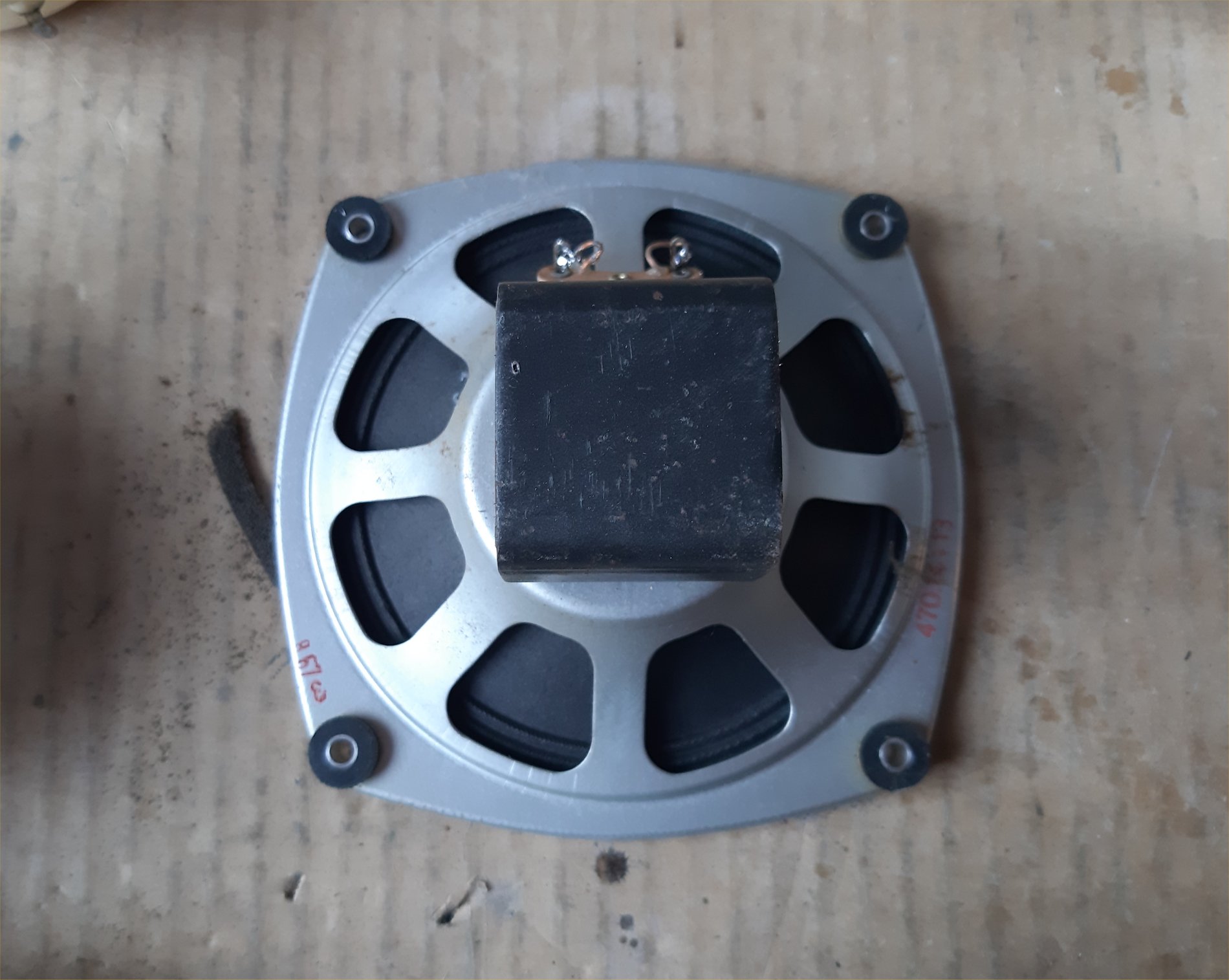
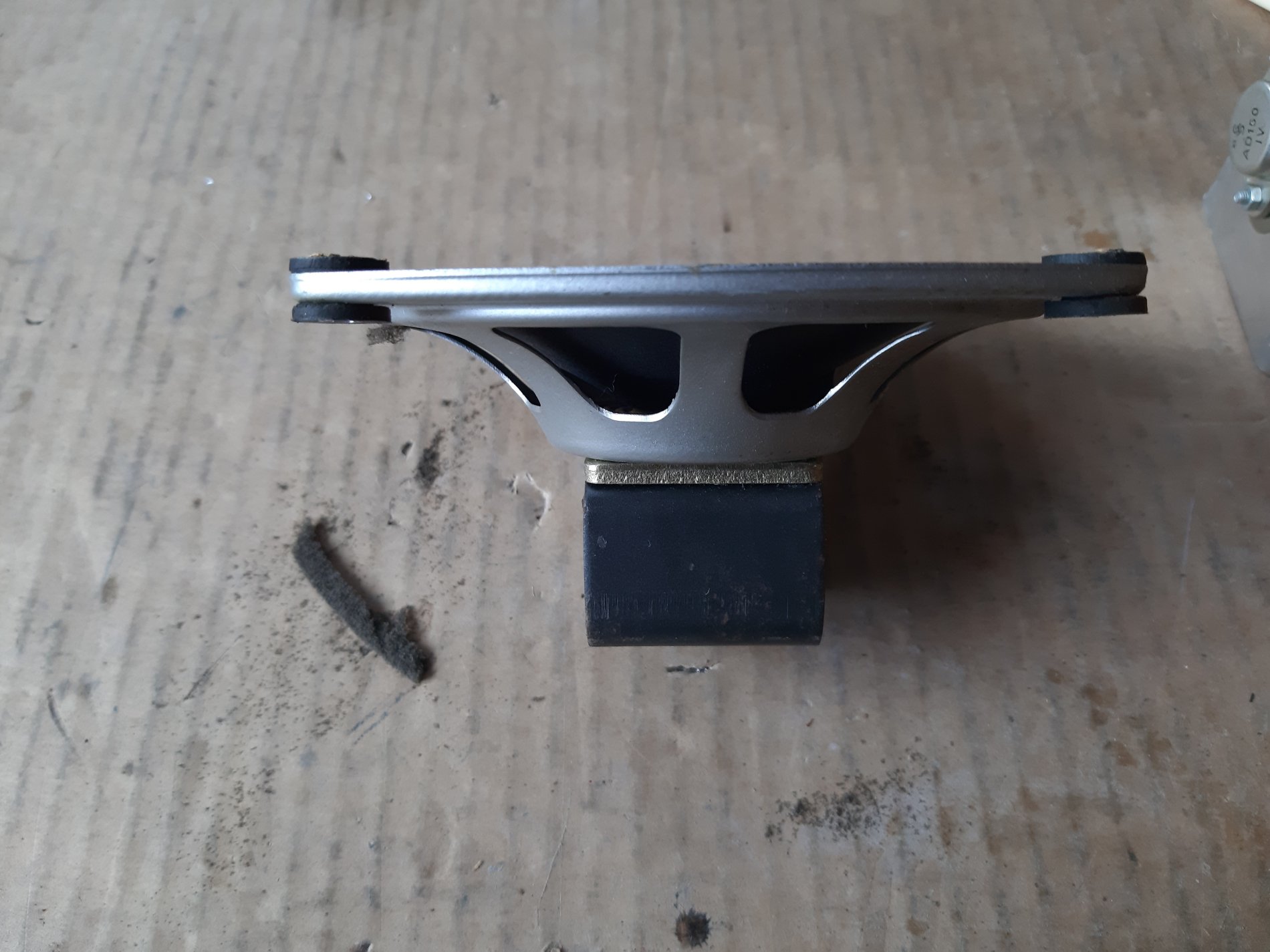
The speakers used on both channels are the very special AD3800AM.
These are 20 cm bicone speakers with an impedance of 800 ohms.
The frequency response extends from 70 to 18000 Hz, and they are equipped with a 9500 Gauss magnet.
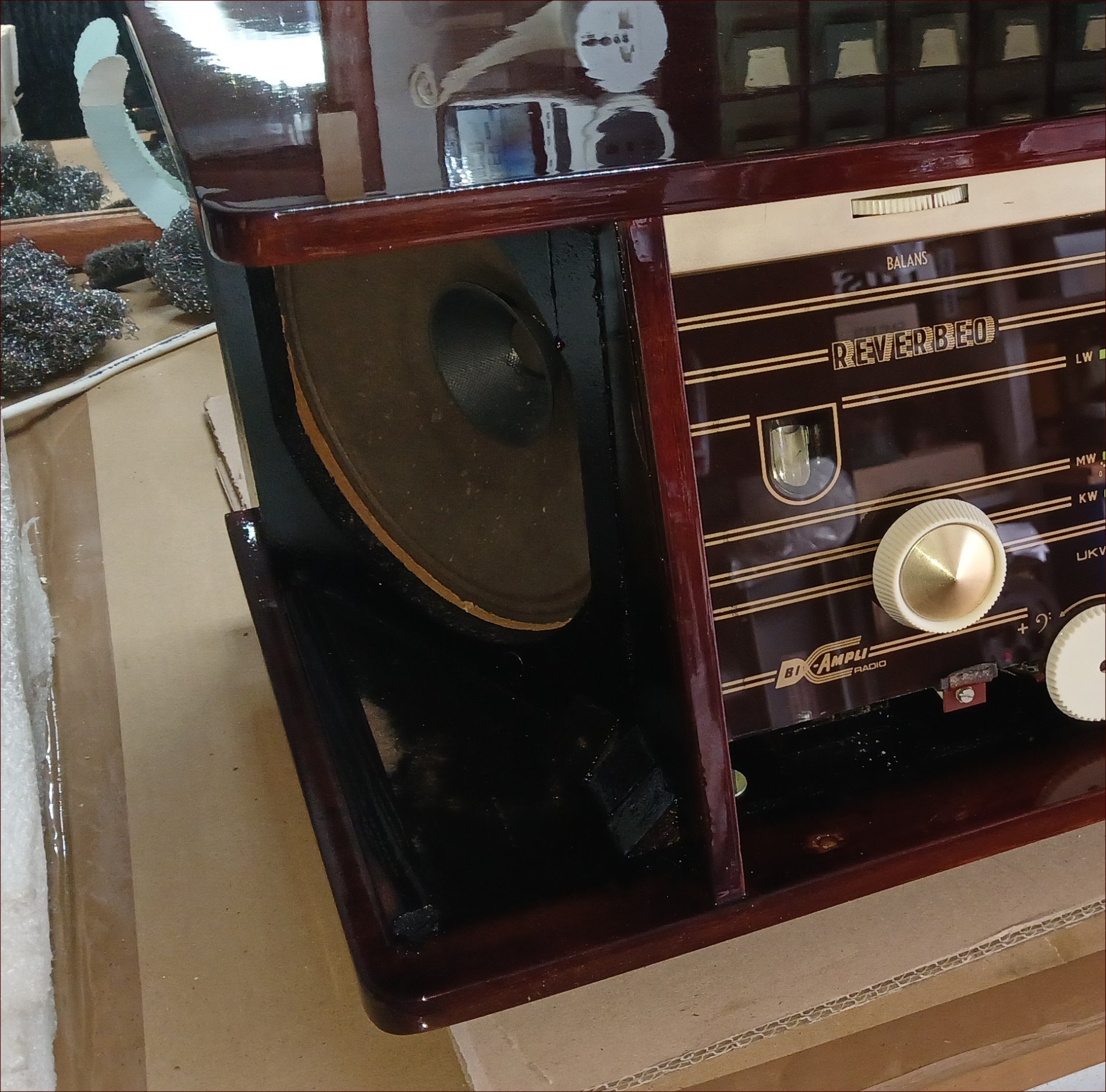
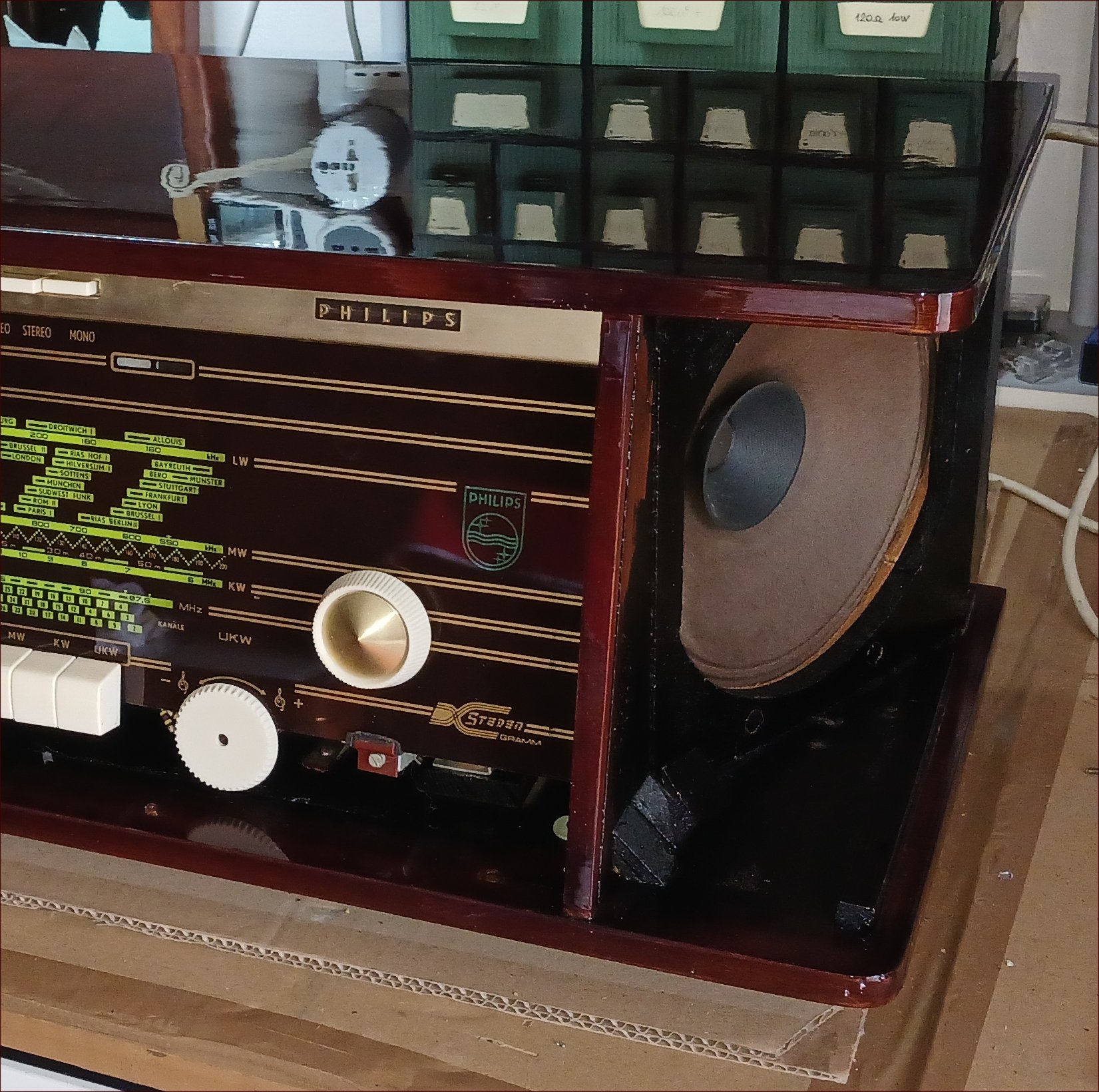
The speakers are mounted facing the front corners in order to accentuate the stereophonic effect when the listener is positioned at least one meter away from the radio.

There are several options for connecting external speakers. Naturally, any external speakers must also have an impedance of 800 ohms.
It is possible to connect external speakers, excluding or not the internal speakers.

CONTROL PANEL

Philips Capella Reverbeo

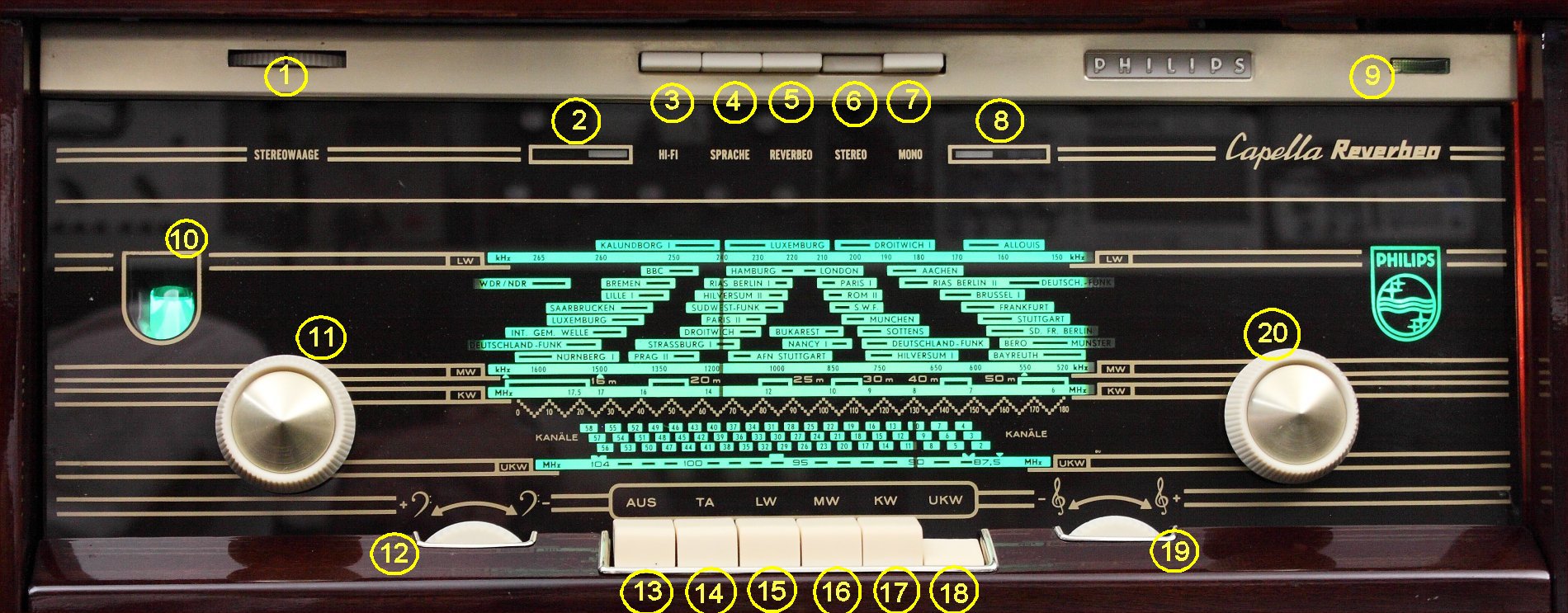
1 - Balance Knob
2 - Left Channel Balance Indicator
3 - Preset EQ for Music Listening
4 - Preset EQ for Speech Listening
5 - Reverb Insertion
6 - Stereo Listening
7 - Mono Listening
8 - Right Channel Balance Indicator
9 - Stereo Station Reception Indicator
10 - Tuning Indicator

11 - Volume
12 - Bass
13 - Power Off
14 - Turntable/Auxiliary Input
15 - Long Wave
16 - Medium Wave
17 - Short Wave
18 - FM
19 - Treble
10 - AM/FM Tuning Control

Philips Capella Reverbeo

REAR SIDE

AM and FM antenna inputs and ground socket.

Tape recorder socket.

Turntable input.

External speaker output. (Caution: Use only 800 ohm speakers)

Voltage switch

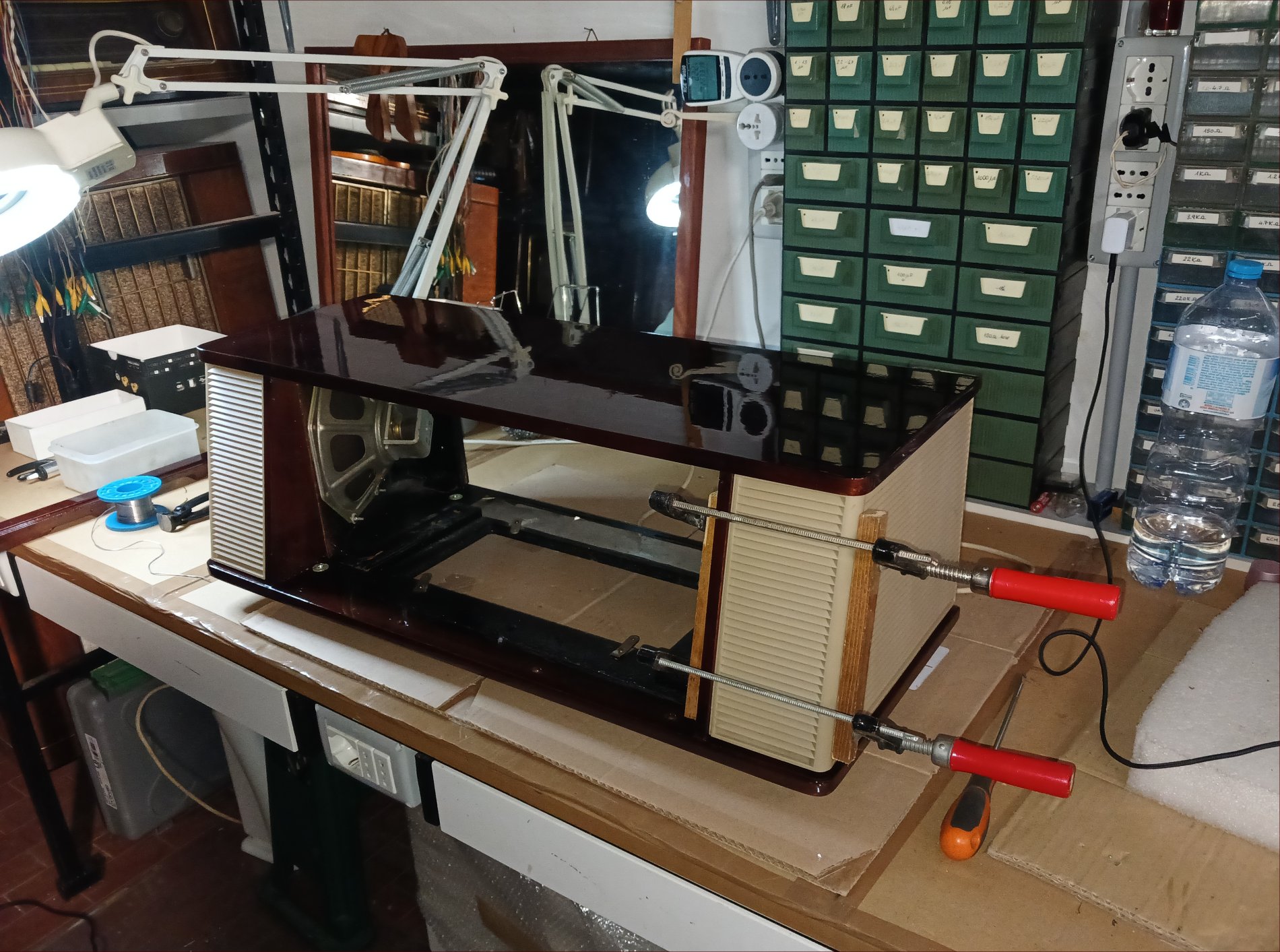
RESTORATION STEPS

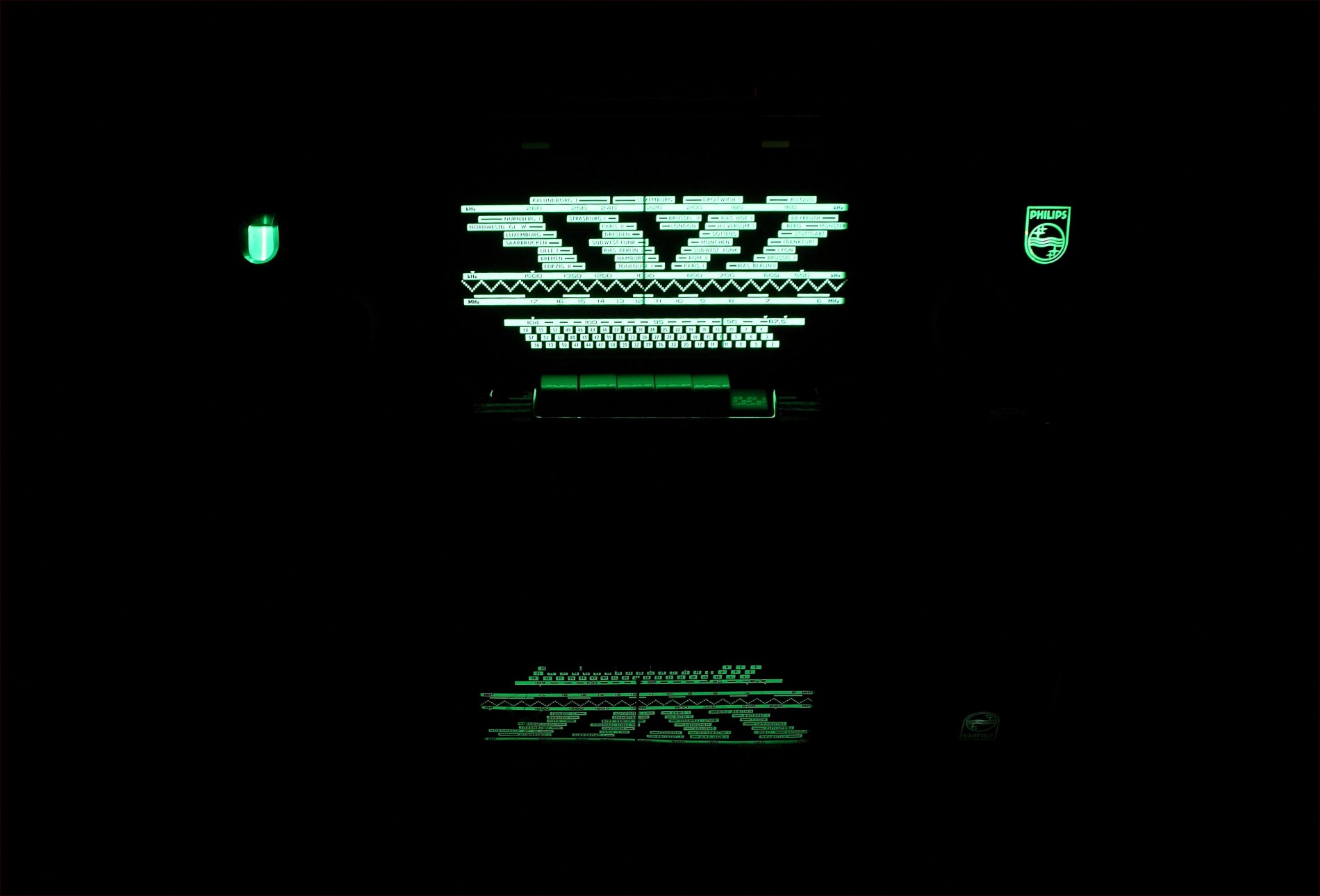
THE USUAL AMAZING LAST IMAGE

Philips Capella Reverbeo

Graetz Praludium 23F german radios - cn

Graetz Pr…

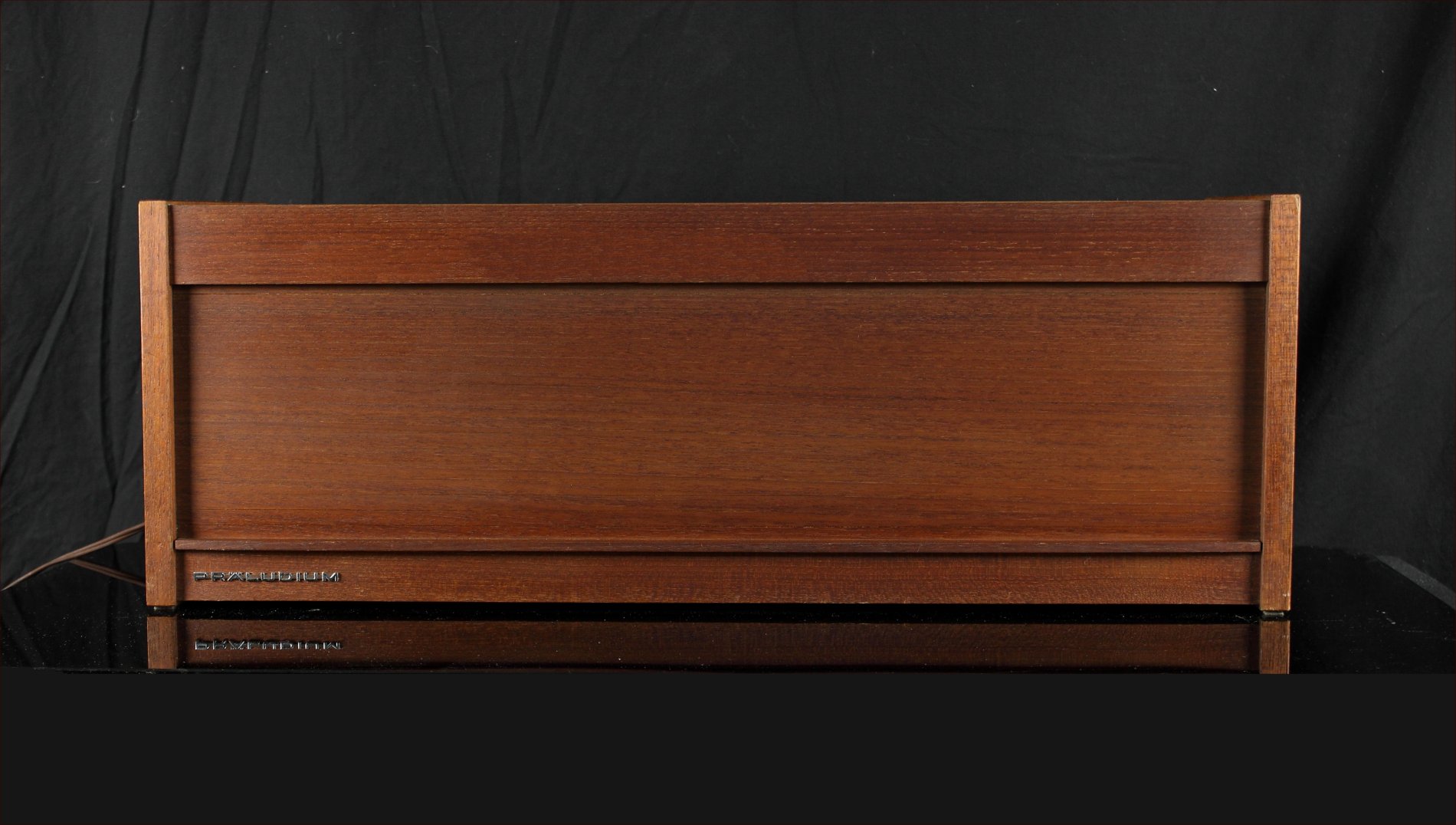
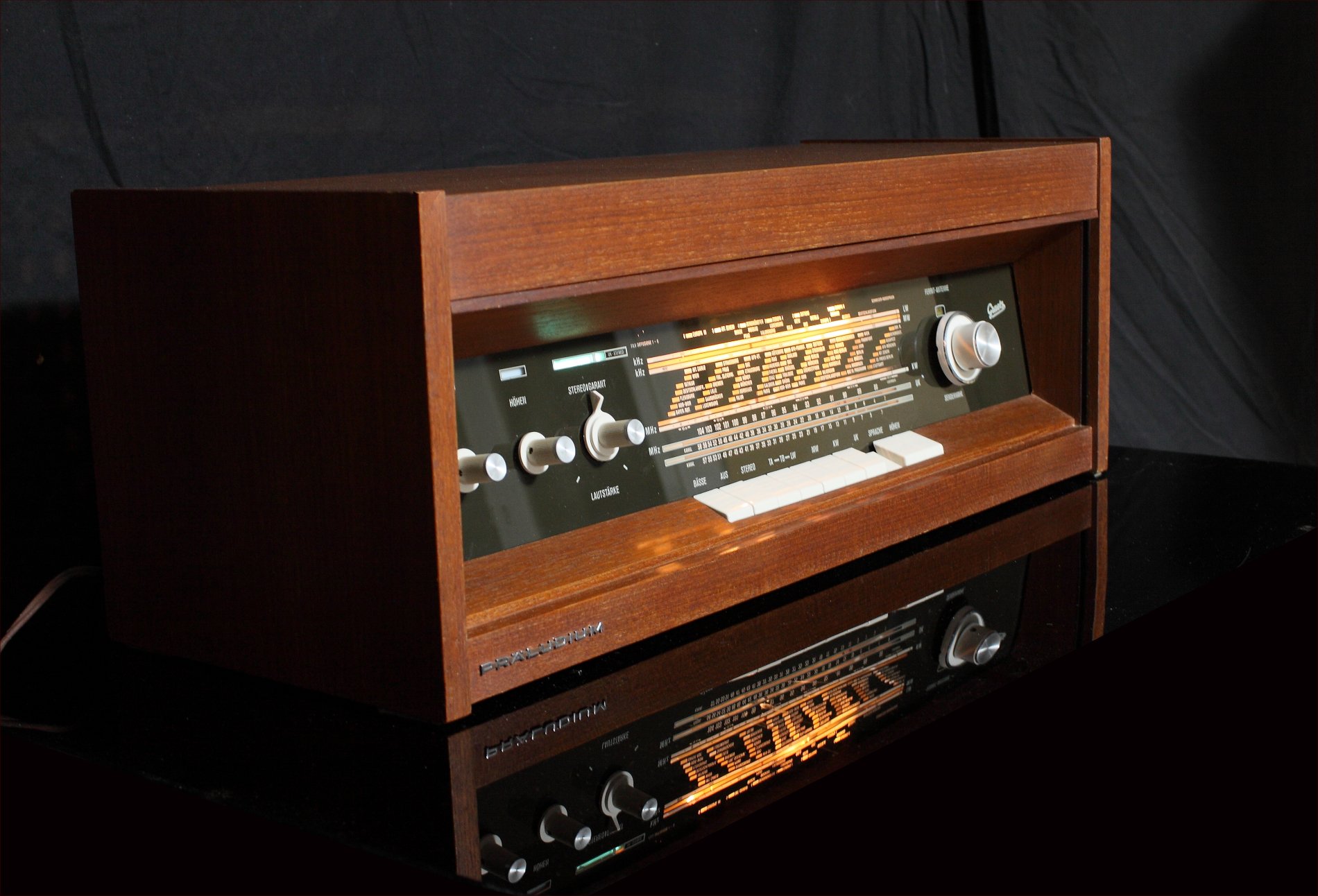
GRAETZ Präludium 23F

From the Second World War until the 1960s, Graetz was considered one of the most prestigious radio manufacturers, although it never achieved high sales performances due to the high cost and economic conditions of Europe at that time.
Graetz devices have always been appreciated both for their elegant and refined finish but above all, for the constant search for innovative acoustic solutions and the related patents.
The Graetz Präludium 23F was the most prestigious stereo receiver produced by Graetz from 1966 to 1968.
It is the last tube receiver produced by Graetz. It therefore benefited from all the know-how on tube amplifiers developed by the Berlin company since 1932.
In that period every important manufacturer, German or Japanese, offered a model of receiver, "Receiver" in German. Telefunken produced the two models Opus 2430 and 2550, Nordmende produced the Steuergerät 3004 Stereo, Grundig the Stereomeister series, 300, 3000, 15.
With this device, Graetz entered the delicate sector of "High Fidelity" devices as conceived in that period.
The tuner section is equipped with a multiplexer so that stations that broadcast in stereo are received in stereo, a real gem for the time.
The FM converter is equipped with AFC (Automatic Frequency Control) so that when you tune in close to an FM station the Praludium automatically centers itself at the point of maximum emission making listening pleasant and free from disturbances, as far as the reception conditions allow.
The low frequency stage is classic but with some interesting details. The Volume potentiometer for example is equipped with three sockets for a more progressive variation of the Loudness correction level, thus avoiding the annoying variation of the response curve as the Volume of the device increases, typical of simpler devices equipped with only one or in the best of cases two sockets on the potentiometer.
The feedback circuit and tone control are much simplified compared to the previous configurations used by Graetz designers. The feedback level remains low, ensuring a natural and stable sound.
The controls are very soft, simple and intuitive to operate.

The acoustic tests and recordings that we normally publish for each device on the Compilation page were not carried out because the result would depend mostly on the speakers chosen and not so much on the device itself.

Graetz Praludium 23F

  • BLUETOOTH

    Bluetooth receiver embed

    READ MORE >

  • MULTI PLATFORM CONNECTION

    Each radio is equipped with a cable for connection to any digital device.

    READ MORE >

ELABORAZIONI TUBESOUND

Bluetooth receiver embed – The unit is equipped with a BLUETOOTH receiver powered directly by the receiver power supply. This makes it possible to control the amplifier from any external digital device as an IPAD, a Smartphone, or a sophisticated multimedia station. So you can hear your preferred web station or your lossesless file without cables on the room. Wireless Receiver can be equipped upon requests.
Multi Platform Connection – A customized adaptation cable to connect any digital device as Iphone, Smartphone, Laptop, CD Player etc. will be provided with this radio. This special cable suits the different impedances between the modern equipment and the receiver. Furthermore the two stereo channels flow into one without increasing the load to the input unit.
Graetz Sinfonia 522


graetz factory


HISTORY

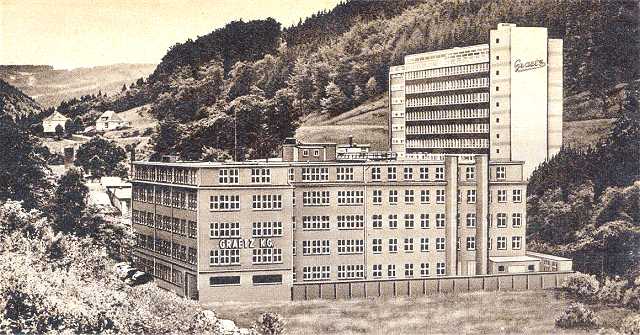
The Ehrich & Graetz metalworks was a factory established in 1866 in Berlin by Albert Graetz (1831–1901) and the tradesman Emil Ehrich (died 1887) under the name “Lampen-Fabrik Ehrich & Graetz OHG” (E&G).
By 1897 the firm was controlled by Albert’s sons, Max Graetz, and Adolf Graetz. The company grew rapidly, and in 1899 a factory complex were built in Berlin, in the United States, France, the UK, and Bombay.
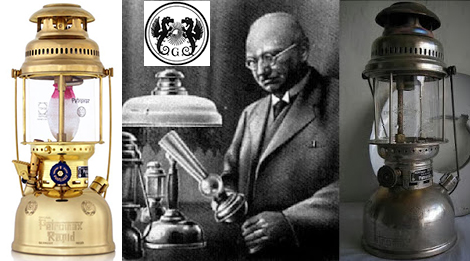
Around 1910-1916 Max Graetz developed the famous Petromax Lantern. Around 1925 the factory also produced radios, and other electrical appliances under the name Graetzor.

In the Second World War, just as in the First World War, the company was part of the war industry. With the use of forced laborers from France, Russia, and the Netherlands the company made huge gains in production.
At the end of April 1945 the factory was claimed by the Russian army.

In 1949 the firm became part of the “peoples” program, “VEB-VolksEigenerBetrieb” and since 1950 “VEB Fernmeldewerk, Berlin Treptow (RFFT).” VolksEigenerBetrieb, means that the factory was owned by the people for the people (Communism).

In 1948 Erich, and Fritz Graetz founded a new company in Altena, Germany known by the name The Graetz Firm, which was successor to the lost family company in Berlin. The new company produced mainly radios, and televisions.
In 1961 the company was then sold to Standard Elektrik Lorenz (SEL) AG, but since 1987 has been to the present owned by the Finnish company Nokia.

MAIN FEATURES

Year of production: 1966/68
Superheterodyne IF 468/10700
6 AM Circuits 10 FM Circuits
Wavebands: Medium Waves (OM), Long Waves (OL),Short waves (OC), FM (UKW) 88-104 MHz
Loudspeakers: external
Dimensions (LHD): 650 x 240 x 250 mm / 25.6 x 9.4 x 9.8 inch
Net weight: 8 kg / 17.621 lb
8 tubes (Equiv: 17) : ECC85, ECH81, EBF89, ECC83, EMM803, ECC83, 2xECLL800
Rotating ferrite antenna for AM bands


Graetz Praludium 23F

LOUDSPEAKERS

As previously mentioned, the speakers are external.
So you can connect the speakers based on your preferences, the space available and your wallet.
High sensitivity speakers are recommended, even those suitable for supporting low power.
Excellent results, according to my ear, were achieved with a speaker with a Fostex FE208NS horn-loaded motor. But the topic of speakers is enormously vast, indeed, infinite, and we cannot address it here.

TONE CONTROL WITH LEVEL INDICATION

The tone control system is very efficient. Above the large tone control knobs we find a band that lights up progressively indicating the emphasis given to the band on which it acts.

The control is very simple:

Bass - Bass

Hohen - Treble

Bass button - Emphasizes the low tones

Sprache button - Attenuates the low and high tones, enhancing the voice, useful in spoken transmissions

Hohen button - Emphasizes the high tones

Graetz Praludium 23F

Graetz Praludium 23F

ANTENNA ORIENTATION

Rotating ferrite antenna with window indicating its position.

The ferrite antenna is rotated with the large knob behind the volume knob,

Inside the cabinet there is a dipole for FM reception and an adjustable ferrite antenna for AM reception.

The reception sensitivity with the internal antennas is very good.

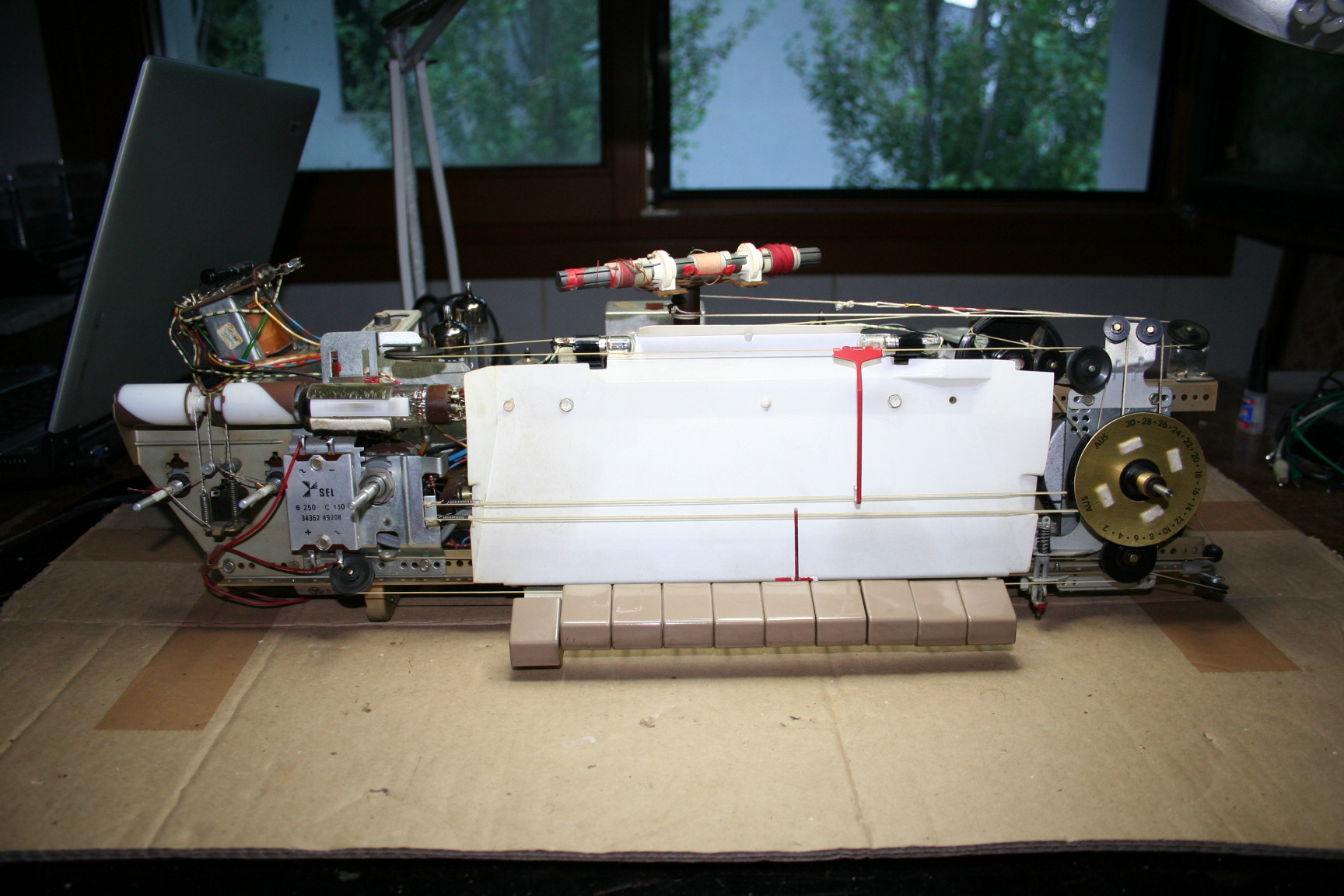
SEPARATE TUNING CONTROL BETWEEN AM AND FM

The tuning system is another gem.
The unit is equipped with separate tuning mechanisms for the AM bands and for each of the two FM bands.
There is only one tuning knob but a selector switches on separate cable systems (all steel) and pulleys depending on the band.

Graetz Praludium 23F

TUNING INDICATOR

The magic eye has obviously been replaced.

CONTROL PANEL

Graetz Praludium 23F

1 - Bass control
2 - Treble control
3 - Volume control with built-in Loudness
4 - Left and right channel balance control
5 - Bass boost button
6 - Power off button (OFF)
7 - Stereo/Mono
8 - Turntable (if pressed together with LW enables Recorder Input)

9 - Long Waves (if pressed together with TA enables Recorder Input)
10 - Medium Waves
11 - Short Waves
12 - FM
13 - Bass and treble reduction button
14 - Bass reinforcement button
15 - AM/FM tuning
16 - Ferrite antenna position adjustment for Medium and Long Waves)

Graetz Praludium 23F

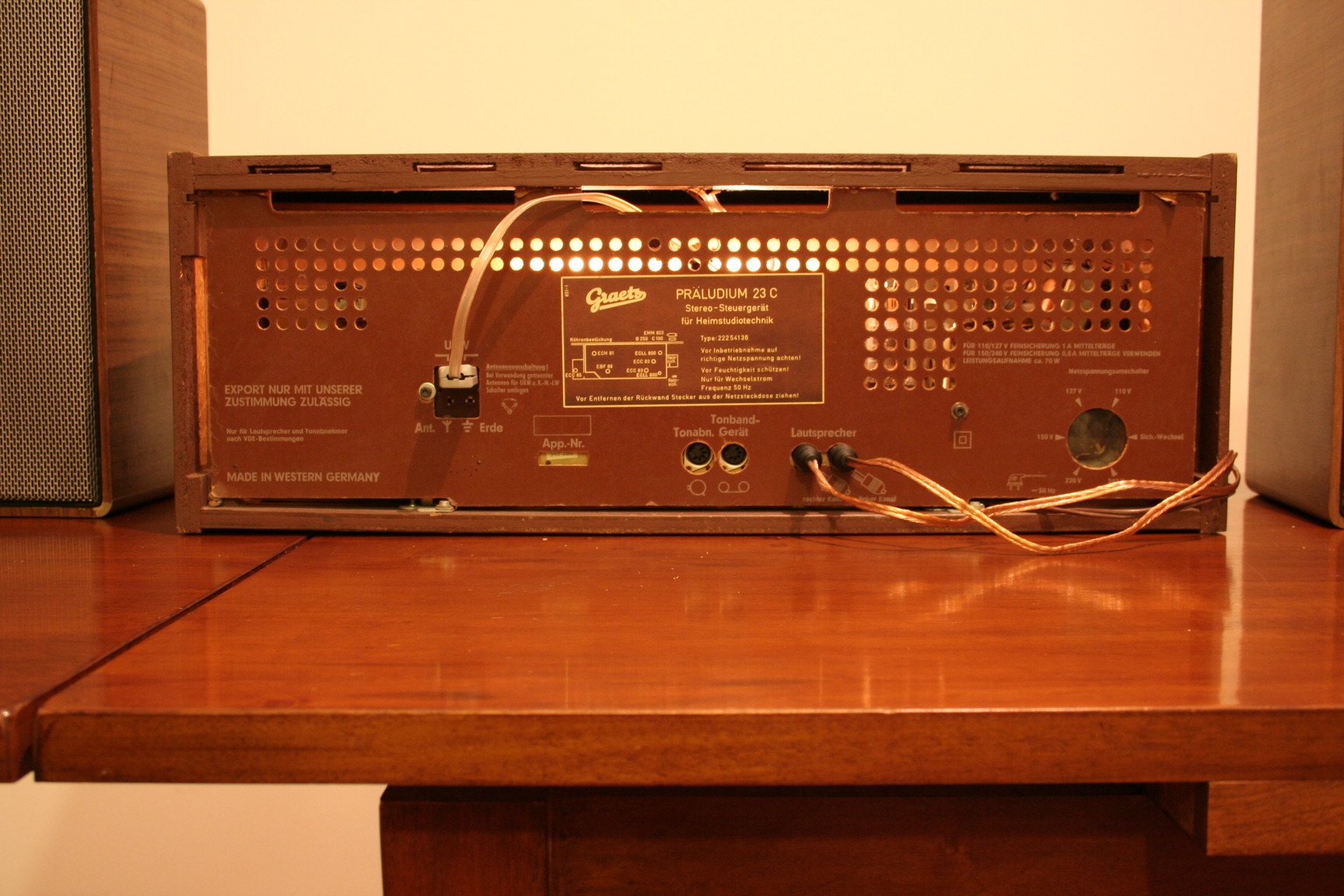
REAR SIDE

External speaker output.
Recorder socket (tonbandgerat).
Turntable input (tonabnehmer)
AM and FM antenna inputs and ground socket.

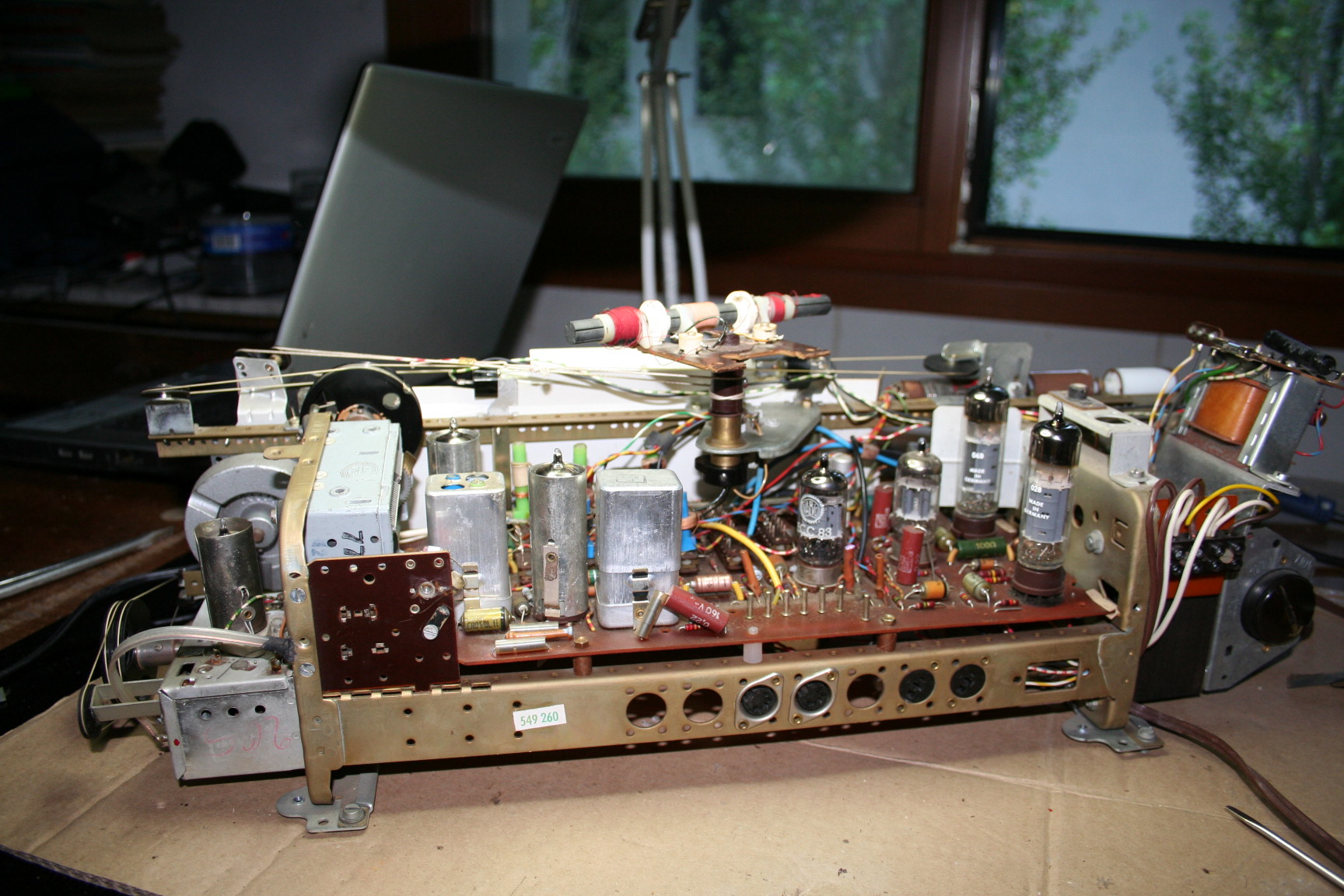
THE STEPS OF RESTORATION

THE USUAL AMAZING LAST IMAGE
Graetz Praludium 23F

Grundig 3055/56 german radios - cn

Grundig 3…

Grundig 3055/56 double FM band

Also this reviews will be accompanied by a section with graphs of technical measures of the most important parameters.
There is no such thing anywhere else, as far as I know. Not even the manufacturers themselves detailed the technical features of their own devices at this level.
This new section has been developed for an objective comparison of different devices.
In order to avoid interpreting the measurements incorrectly, it is very important to read the warnings carefully the first time.

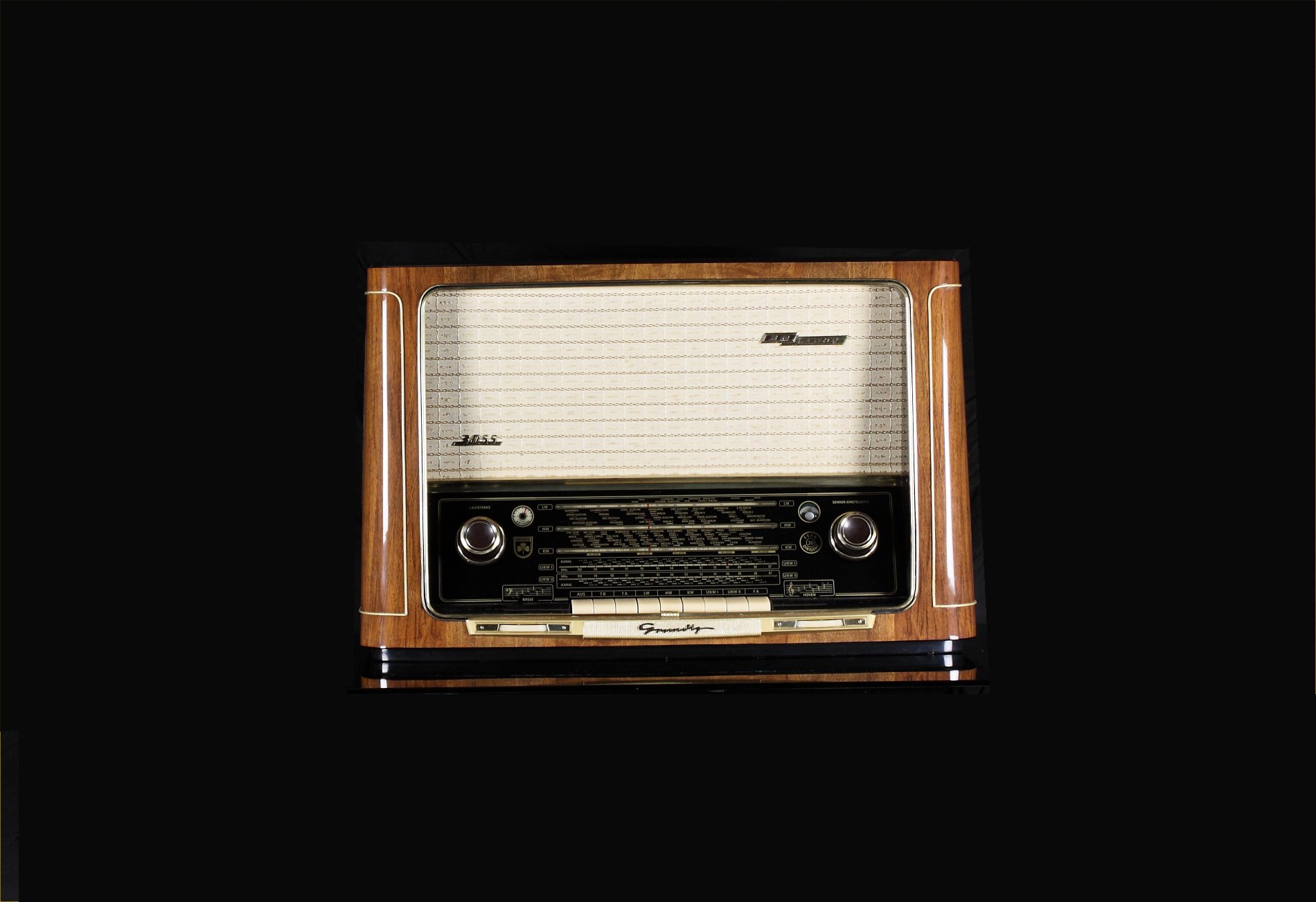
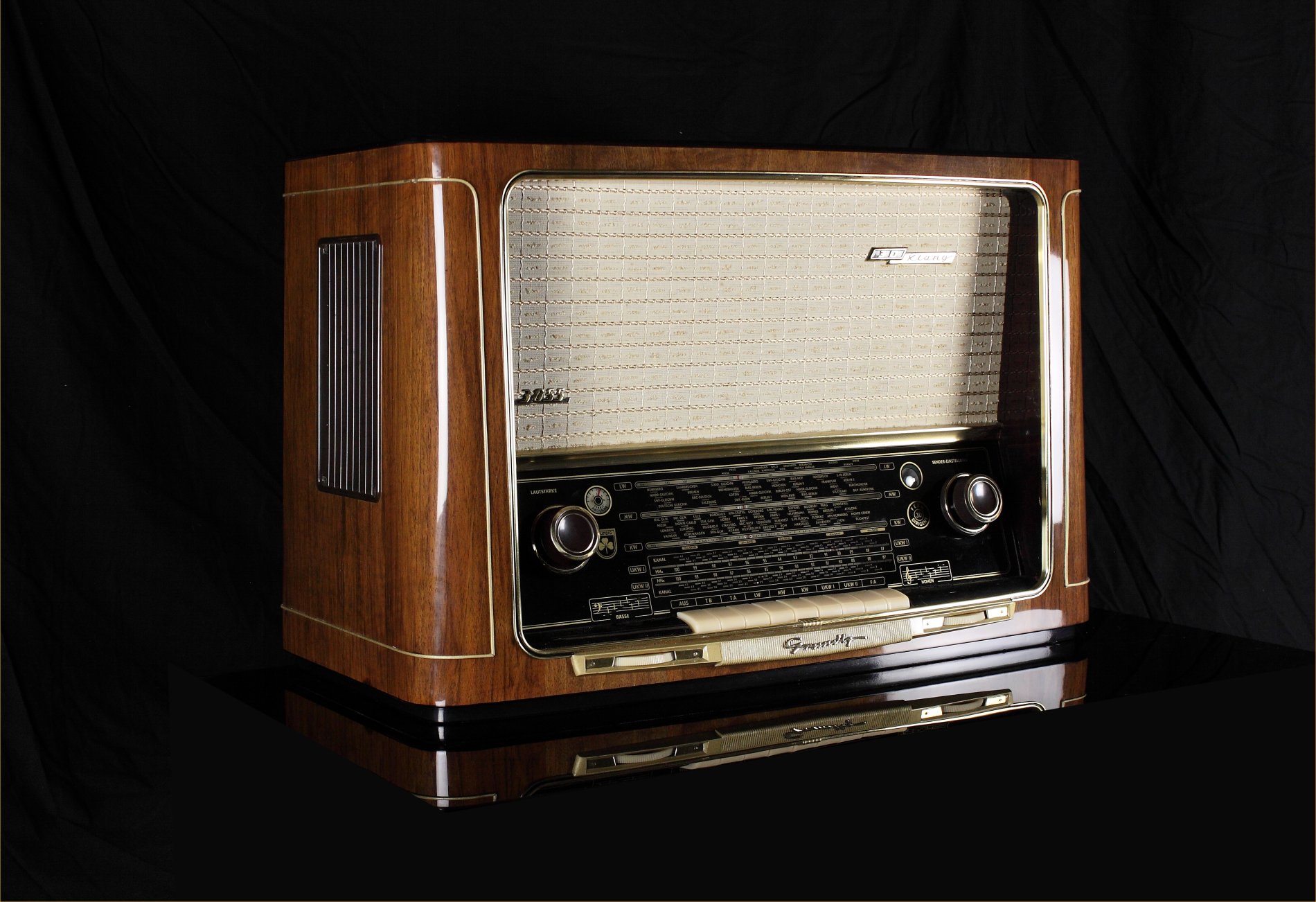
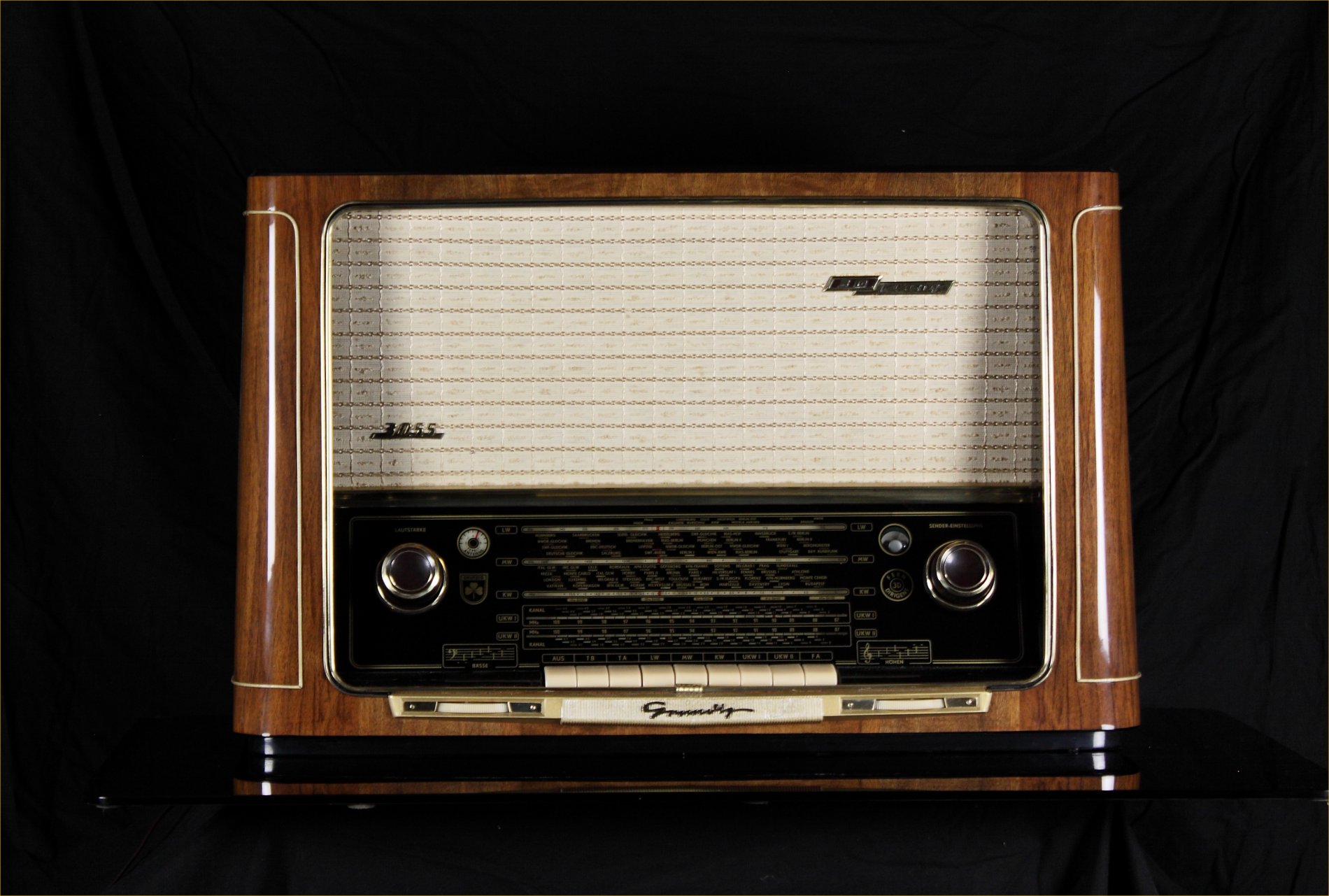
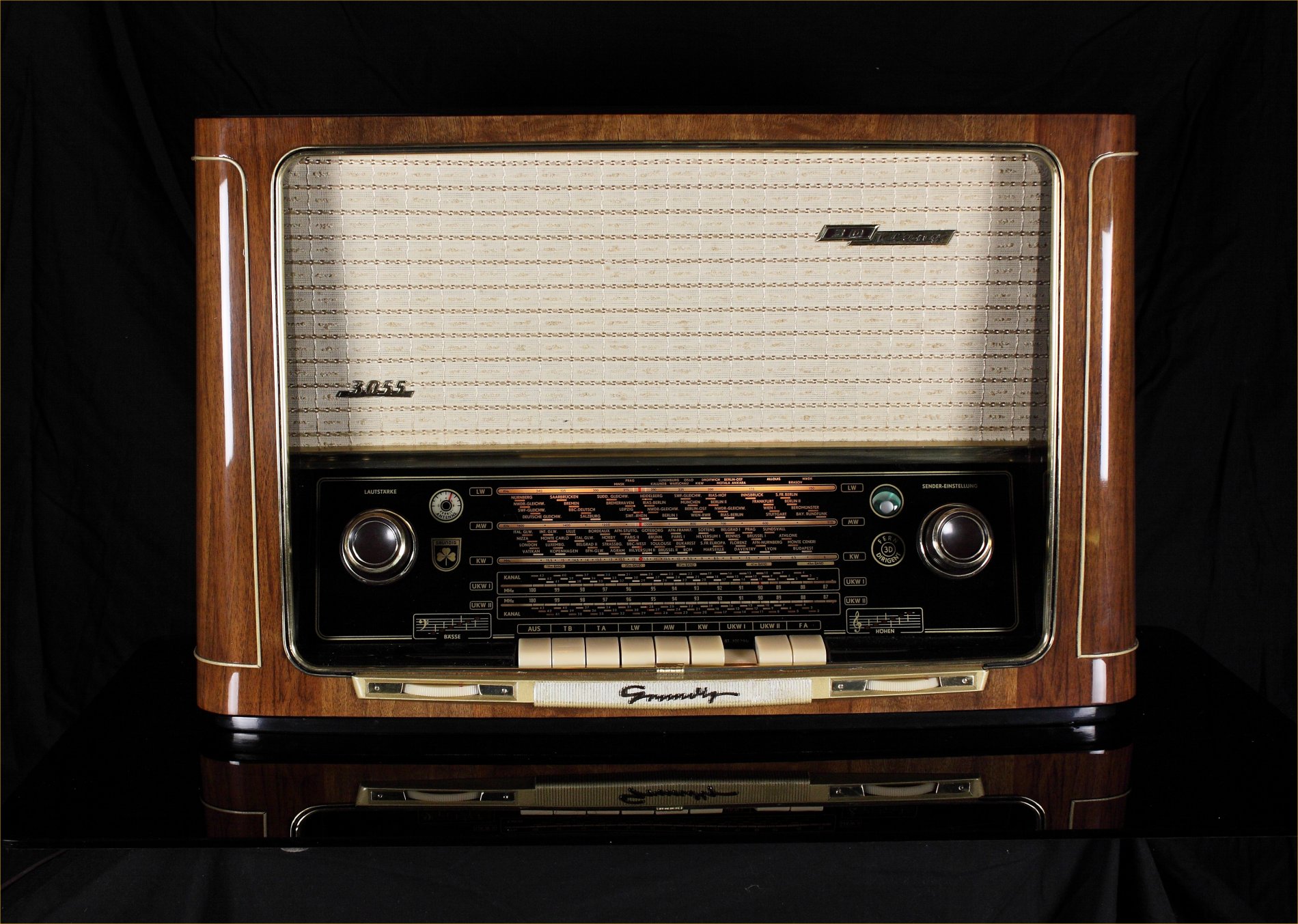
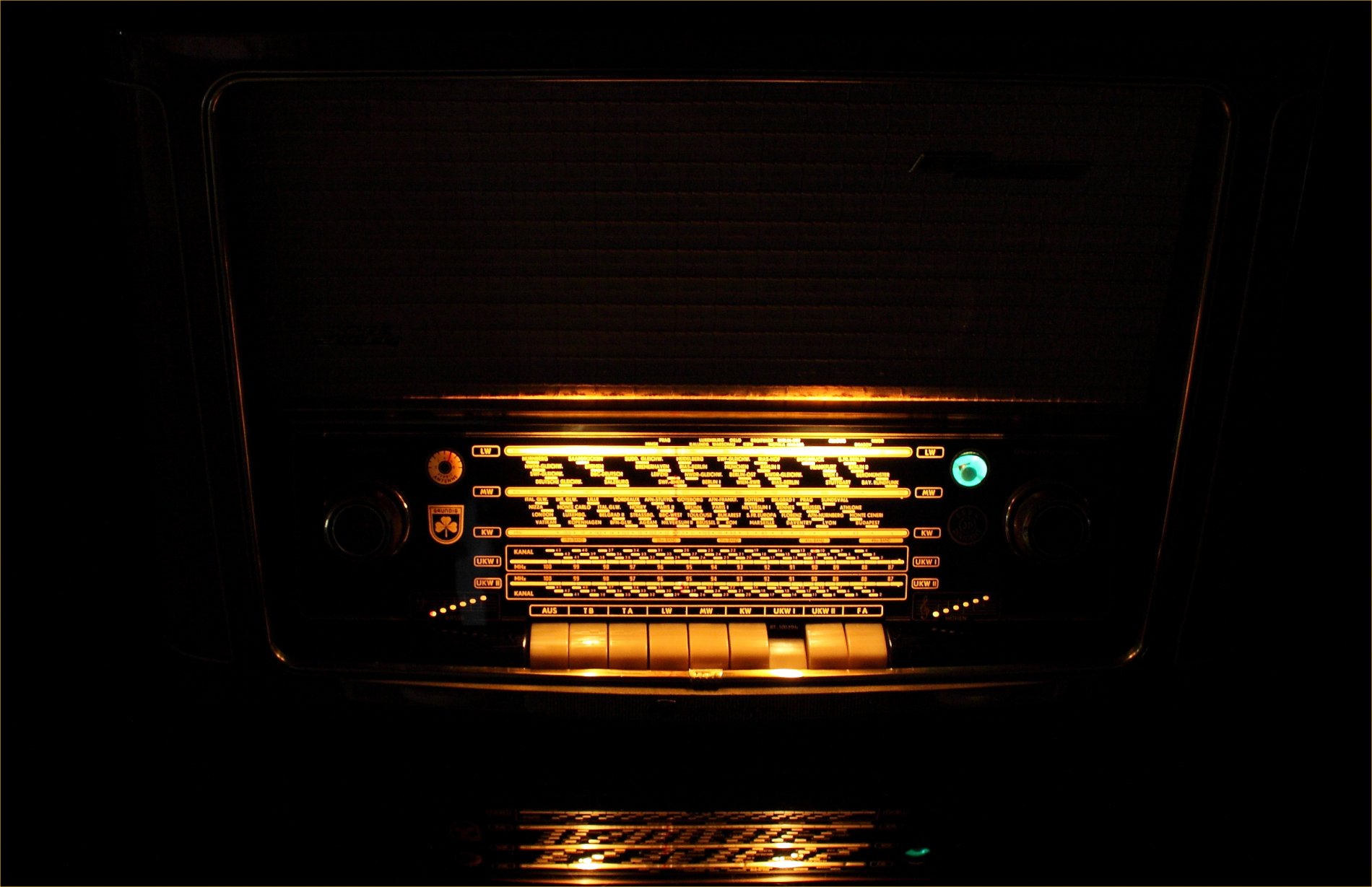
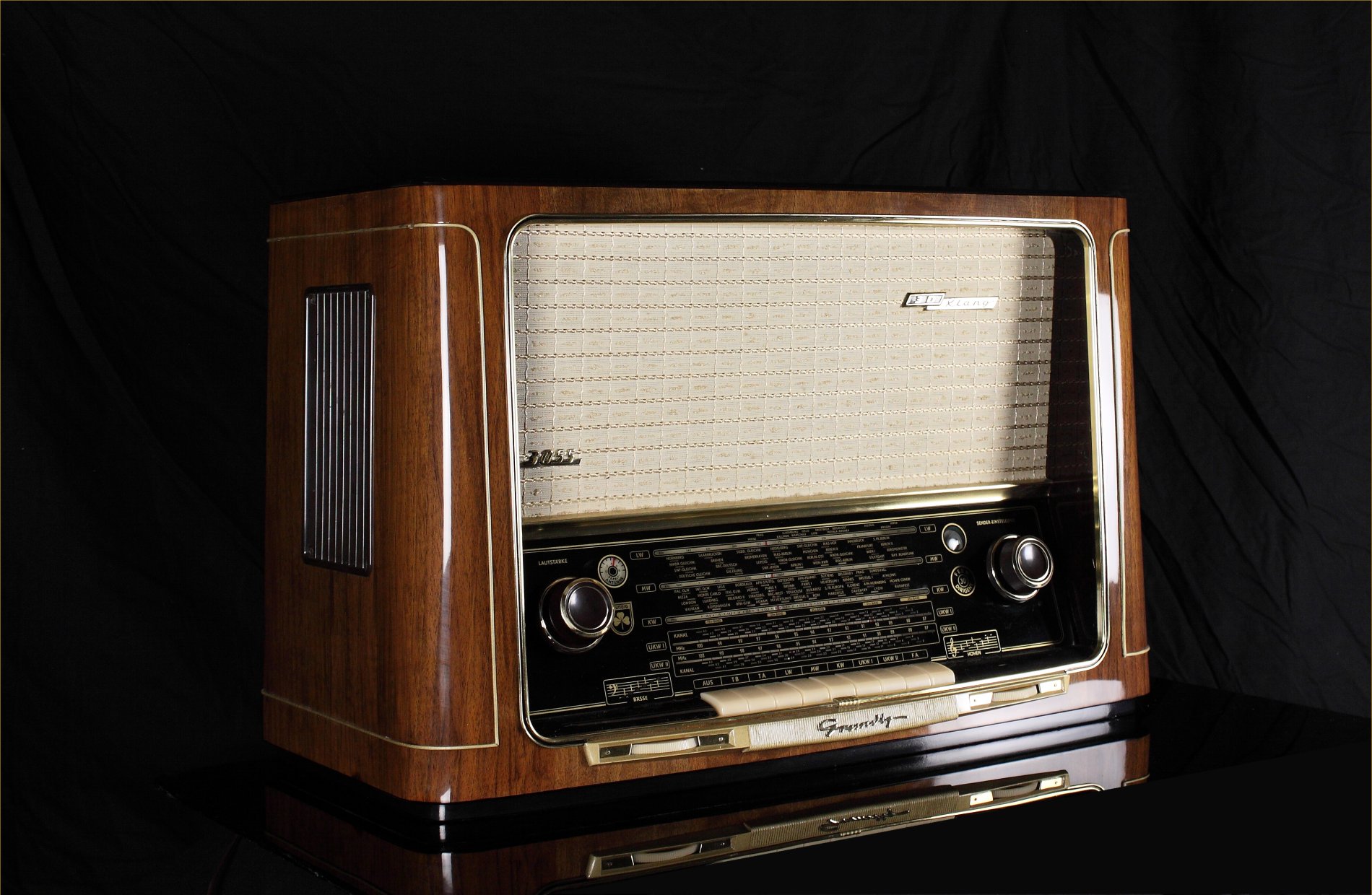
The Grundig 3055/56 was the most powerful radio model with a class A amplifier produced by the German company in 1956.

The FM converter stage is particularly interesting. In fact, it is equipped with double amplifier and oscillator circuits that can be selected via two buttons on the front. Furthermore, in the dialglass there are two identical FM bands, FM1 and FM2. Pressing the UKWI button and rotating the tuning knob will move the UKWI scale indicator, pressing the UKWII button and rotating the tuning knob will move the UKWII scale indicator. In this way it is possible to store an FM station in the UKWI band and another FM station in the UKWII band. The Grundig 3055 and 4055 are the only radios in the entire German production of that period to have two FM bands.

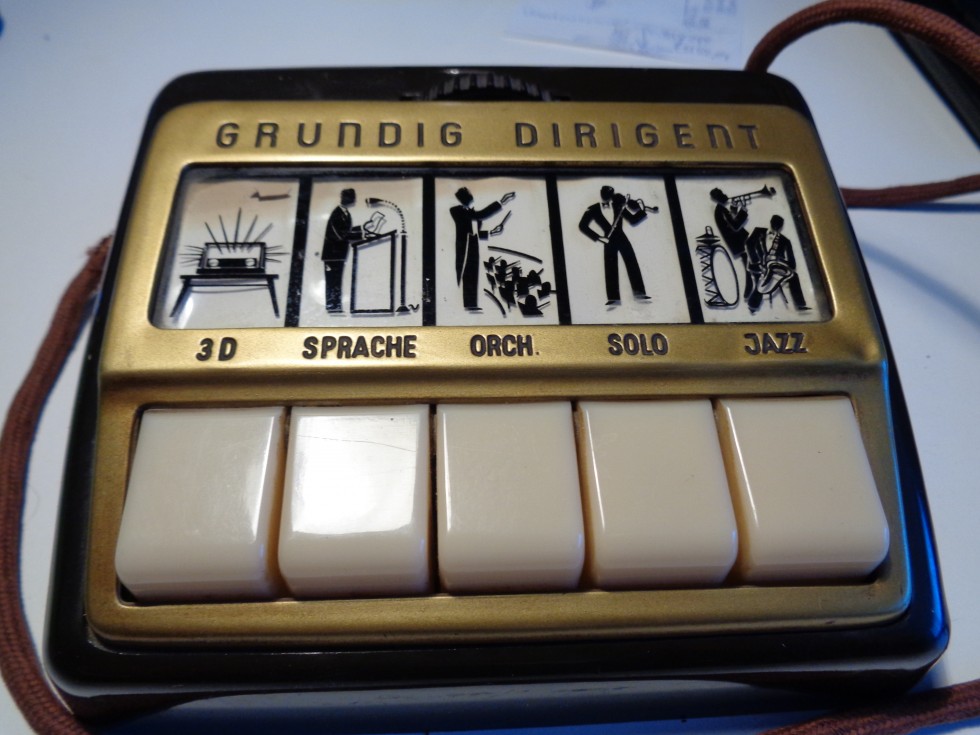
Unlike the previous model, Grundig 3055W/3D, the 3055/56 model is equipped with a rear socket for the remote control. The remote control allows you to turn the device on and off, vary the volume and choose one of the predefined equalizations present on the remote control.

The low frequency stage is an excellent example of a Class A amplifier with the famous EL84 pentode with well-known sonic characteristics.
The preamplifier is made up of the triode section of an EABC80. The circuit is classic and very well tested. The high quality of the sound is given by the excellent quality of the output transformer and its considerable size, which together with the good quality of the air gap laminations and the alternating winding of the copper layers reaches saturation very late.

The feedback, as usual, is moderate, and intervenes on the response curve. The resulting sound is very open, with great presence on the medium and high tones and sufficiently damped bass.

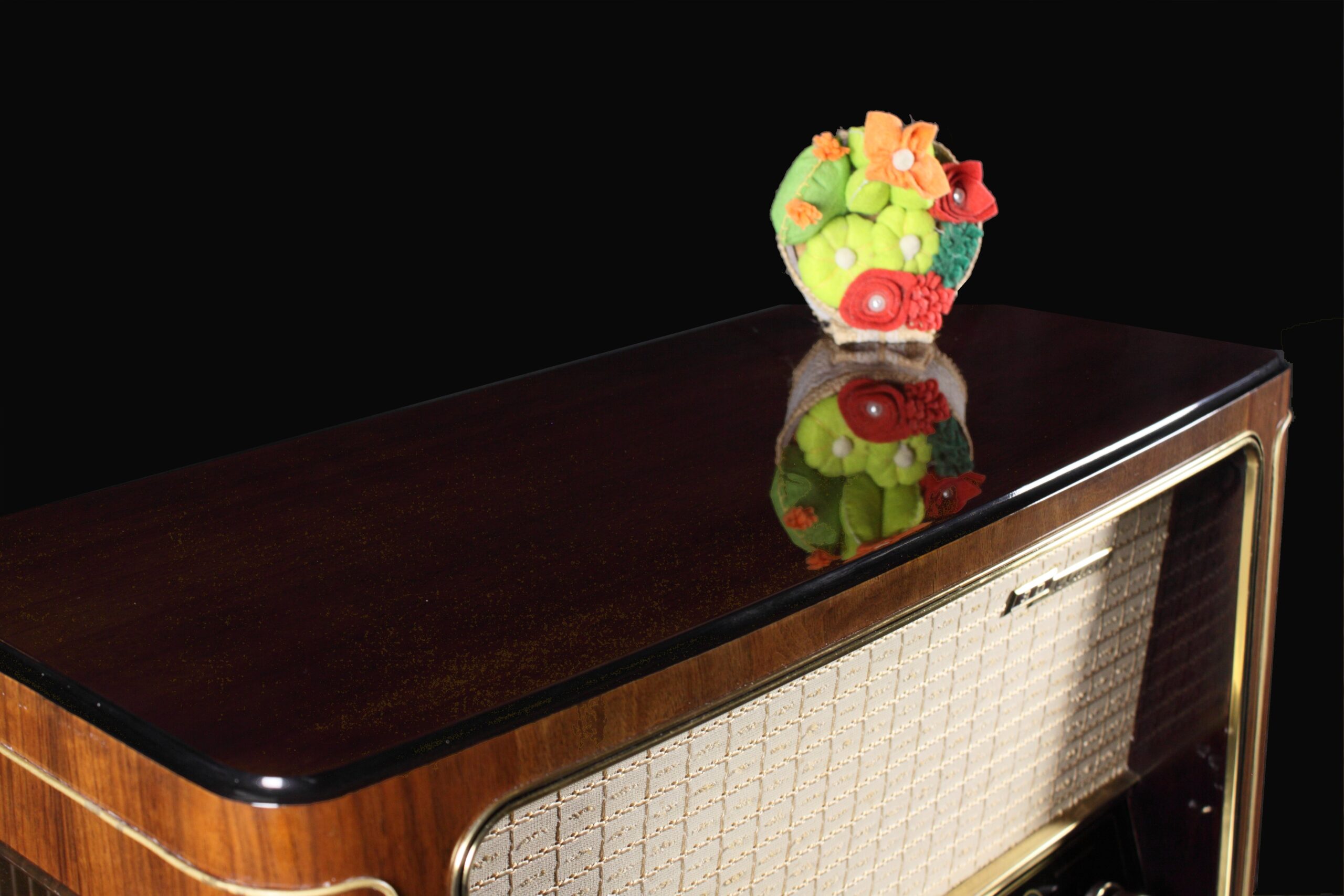
The cabinet is very sturdy and free of vibrations and resonances.

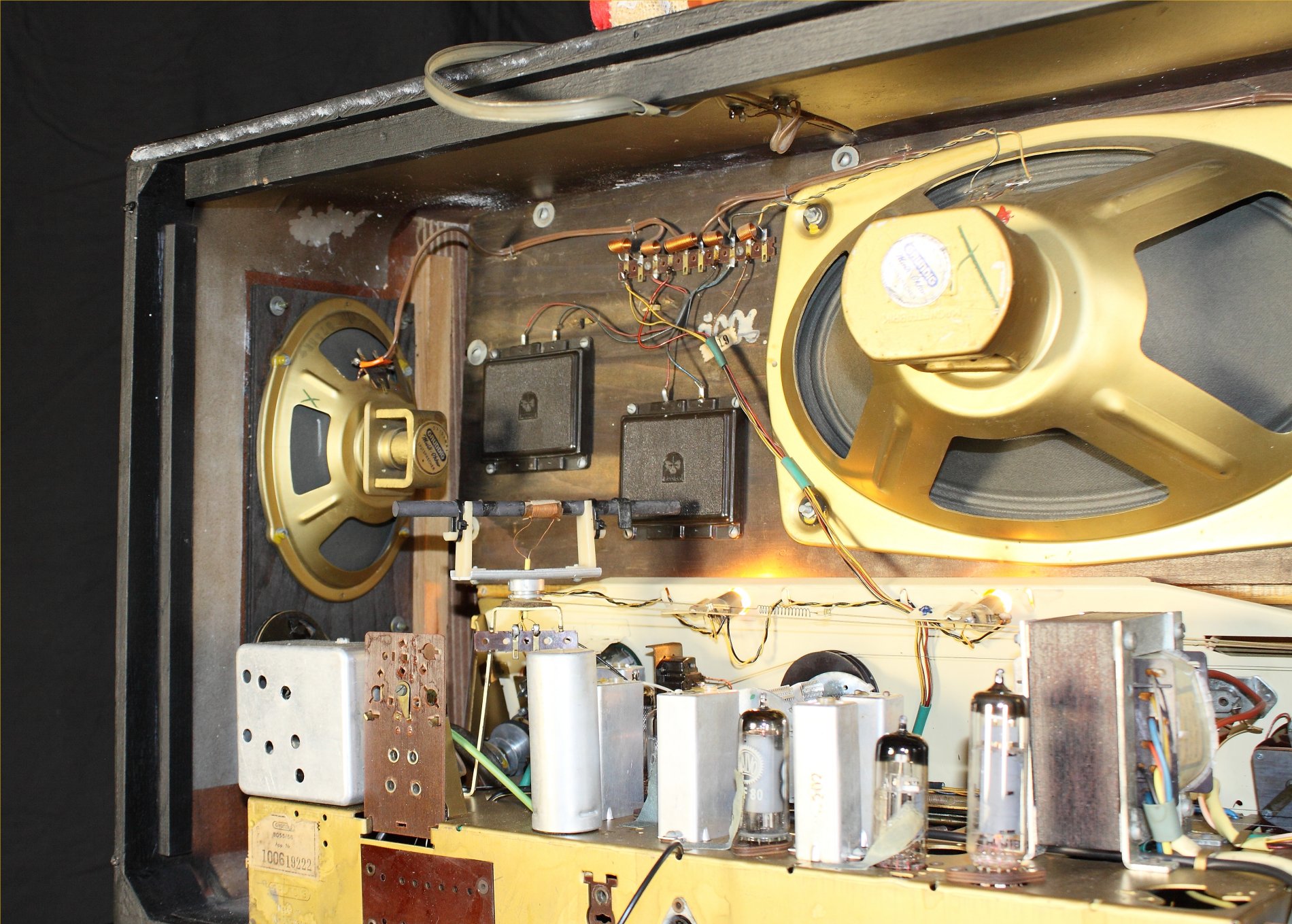
The speakers:
There are five speakers, three on the front and two on the sides.
It is a huge elliptical full-range driver and two electrostatic tweeters. On the sides we find two large elliptical full-range drivers.
The entire frequency range is sent to these full-range drivers with a slight cut in the upper part, in reality the actual cut of the upper part is mechanical.

The front canvas covering the speakers is never completely transparent from an acoustic point of view.
For this reason the only way to obtain maximum performance from the appliance is to eliminate it.
We can build a false frame in which the original canvas is installed. This frame attaches to the speaker panel with magnets.

All this translates into an exciting dynamic, brilliance of sound, lack of oscillations of the canvas in the presence of low frequencies, making listening to this beautiful device very realistic and pleasant.

Grundig 4055/56

Grundig 4055/56

The first song is by Etta James, it is I'd rather go blind recorded live in Montreaux in 1975. Etta James whose real name is Jamesetta Hawkins is one of the most beautiful and famous voices of blues and rock. Also memorable is her "At last" published in 1960. Etta passed away in 2012 due to diabetes and a serious leukemia after having fought for years with health problems and drug abuse. The song was written together with a singer-songwriter from Detroit, Ellington Jordan (Fugi), while the latter was in prison. In her autobiographical book James wrote that the song was about having been blind in her love life and in her daily habits. The version that is proposed here was recorded live in Switzerland, at the famous Montreux festival in 1975. In this interpretation Etta James, already a mature artist, was able to involve the audience by showing off her powerful voice, singing at times even without a microphone, and also exchanging a few jokes with the audience during the song. A true artist.

The second song performed by Chico Barque is entitled O que serà (a flor da pele). This very famous song is by Milton Nascimento (Milton Silva Campos do Nascimento), a recognized Brazilian composer who has collaborated with artists of the caliber of Wayne Shorter, Pat Metheny, Paul Simon, Cat Stevens, Quincy Jones. O que serà is a sweet song, in the classic Brazilian melodic style that tells of falling in love and its inevitable consequences, "What will it be, What happens inside us and what shouldn’t ... Who have no rest, nor will ever have, Who is not tired, nor will ever be, What has no limit". Francisco Buarque de Hollanda, real name Chico Barque is a Brazilian singer-songwriter, politically engaged against the Gorillas regime, exiled in Italy in 1969, he is also a poet, screenwriter and novelist. He also played with Stefano Bollani.

The third song is performed by Louis Armstrong, and is the famous song What a wonderful world. It is a song written by Bob Thiele and George David Weiss expressly for Armstrong. The two, Thiele and Weiss, were not yet very well known and the collaboration with Armstrong was an incredible opportunity for them. It was such a huge success that it overtook the Beatles from the first place in the English charts. In the USA it did not have the success it deserved because it was hindered by the number one of ABC records, Larry Newton, who wanted a swing song in the wake of "Hello, Dolly!" Armstrong was 62 years old at the time, his lips destroyed by the mouthpieces of the trumpet and his heart suffering, Thiele and Weiss created something that Louis could sing with his heart rather than with his voice. The song celebrates the wonders of the world, the beauty of nature and kind people. The song was included in the soundtrack of "Good Morning, Vietnam" directed by Barry Levinson.

The fourth song performed by Luciano Pavarotti and Barry White is the equally famous You'r the first, the last, my everything. Peter Sterling Radcliffe, a friend of White, wrote it in 1956 in a country style, calling it "You're My First, You're My Last, My In-Between". When White heard it, in 1973, he immediately liked it. While keeping almost all the chords, he changed almost all the lyrics and the melody. White had worked as the manager of the female trio "Love Unlimited" in the 60s and 70s. From 1972 he began recording under his own name. "You'r the first, the last, my everything" was released in 1974, on the album "Can't Get Enough" and was an immediate success. Pavarotti's splendid voice made it even more enjoyable.

  • BLUETOOTH
    Bluetooth receiver embedn

    READ MORE >

  • MULTI PLATFORM CONNECTION
    Each radio is equipped with a cable for connection to any digital device.n

    READ MORE >

TUBESOUND IMPROVEMENT

Bluetooth receiver embed – The unit is equipped with a BLUETOOTH receiver powered directly by the receiver power supply. This makes it possible to control the amplifier from any external digital device as an IPAD, a Smartphone, or a sophisticated multimedia station. So you can hear your preferred web station or your lossesless file without cables on the room. Wireless Receiver can be equipped upon requests.
Multi Platform Connection – A customized adaptation cable to connect any digital device as Iphone, Smartphone, Laptop, CD Player etc. will be provided with this radio. This special cable suits the different impedances between the modern equipment and the receiver. Furthermore the two stereo channels flow into one without increasing the load to the input unit.

HISTORY

1930 - At 22 years old Max Grundig begin a radio repair business.

1939 - The II world War start. Grundig works primarily for the Wehrmacht and repair of telecommunication equipment.

1945 - Immediately after the war, the demand for repair work was very great. Max Grundig built the first two Grundig appliances: the Tubatest tube tester and the Novatest testing device.

1947 - Start the sale of a kit radio, the Heinzelmann. The unit is the basis of success, sold more than 15,000 pieces.

1950 - Very high frequency (VHF) is introduced to Germany and places new demands on the industry. Grundig launches the 380 W on the market.

1952 - The first television channel starts up in Germany. After intensive research, Grundig launches the FS 080 onto the market. In the same year the first portable tape recorder Reporter 500 L is created.

1956 - After a lot of radio produced with progrssively high performances was produced the Concert Radio 5080 equipped with an equaliser, which has five controls and a visual display.

1965 - A new factory is established in Braga, Portugal. The Satellit 205 is one of many appliances in the Satellit series. This product marks the beginning of Grundig production of high-quality global receivers.

1970 - The Audiorama 7000 Hi-fi was produced, it has twelve dynamic speaker systems in one speaker.

1976 - The Reel Tape Recorder TS 1000 is equipped for semi-professional use.

1980 - The slim-line Hi-fi Tuner ST 6000 and the Monolith Hi-fi Dynamic Flat Top Antenna, which has 22 speaker systems, are two particularly popular appliances in the new hi-fi range.

1984 - After severe drop in sales Philips increased its stake in Grundig 31.6 percent and takes over the corporate management.

1997 - Philips pulls out of its involvement with Grundig.

2003 - The company files for bankruptcy.

2008 - Turkey's Koç Holding took full ownership of Grundig Multimedia B.V., the parent company of Grundig Intermedia GmbH in Nuremberg.

Courtesy of: Grundig

MAIN FEATURES

Year of production:  1956

Superheterodyne IF 468/10700
8 AM circuits
12 FM circuits

Wavebands:
Medium wave (MW), Long wave (LW),Short wave, FM1 (UKWI), FM2 (UKWII)

Loudspeakers:
1 elliptic wideband
2 electrostatic Tweeter
2 cone Mid/Tweeter

Dimensions (LHD): 660 x 430 x 280 mm / 26 x 16.9 x 11 inch
Net weight: 15.9 kg / 35 lb 0.4 oz

7 Tubes: ECC85 ECH81 EF89 EBF80 EM34 EABC80 EL84

Grundig 3055/56


MEASURED TECHNICAL FEATURES

IMPORTANT REMARK
(to be read carefully at least the first time)

  1. The following measures have been carried out in order to compare, from an electrical point of view, the devices that will be reviewed on this site. It is not possible to make comparisons with measurements made by other laboratories on different devices. The instrumentation and measurement conditions are probably very different.
  2. The instrumentation used for the measurements is obsolete and unprofessional. We believe that more precise instrumentation is not necessary due to the tolerances of the human auditory system. Distinguishing a distortion of 1% from one of 1.1% or 1.001% only makes sense from the electrical point of view. Probably no one can hear the difference by ear. Only a child and very few lucky people can perceive the difference between a flat response curve up to 16 KHz and one up to 20 kHz.
  3. The perception of sound depends on many factors, namely the age of the listener, the listening environment, the musical genre that is being reproduced, the listener's expectations, his or her listening habits and knowledge and many other factors, besides of course the quality of the other devices. Therefore, there is no direct and unique relationship between the results of the measurements made and the pleasantness of listening to a specific device.

Grundig 3055/56

Grundig 3055/56

BANDWIDTH

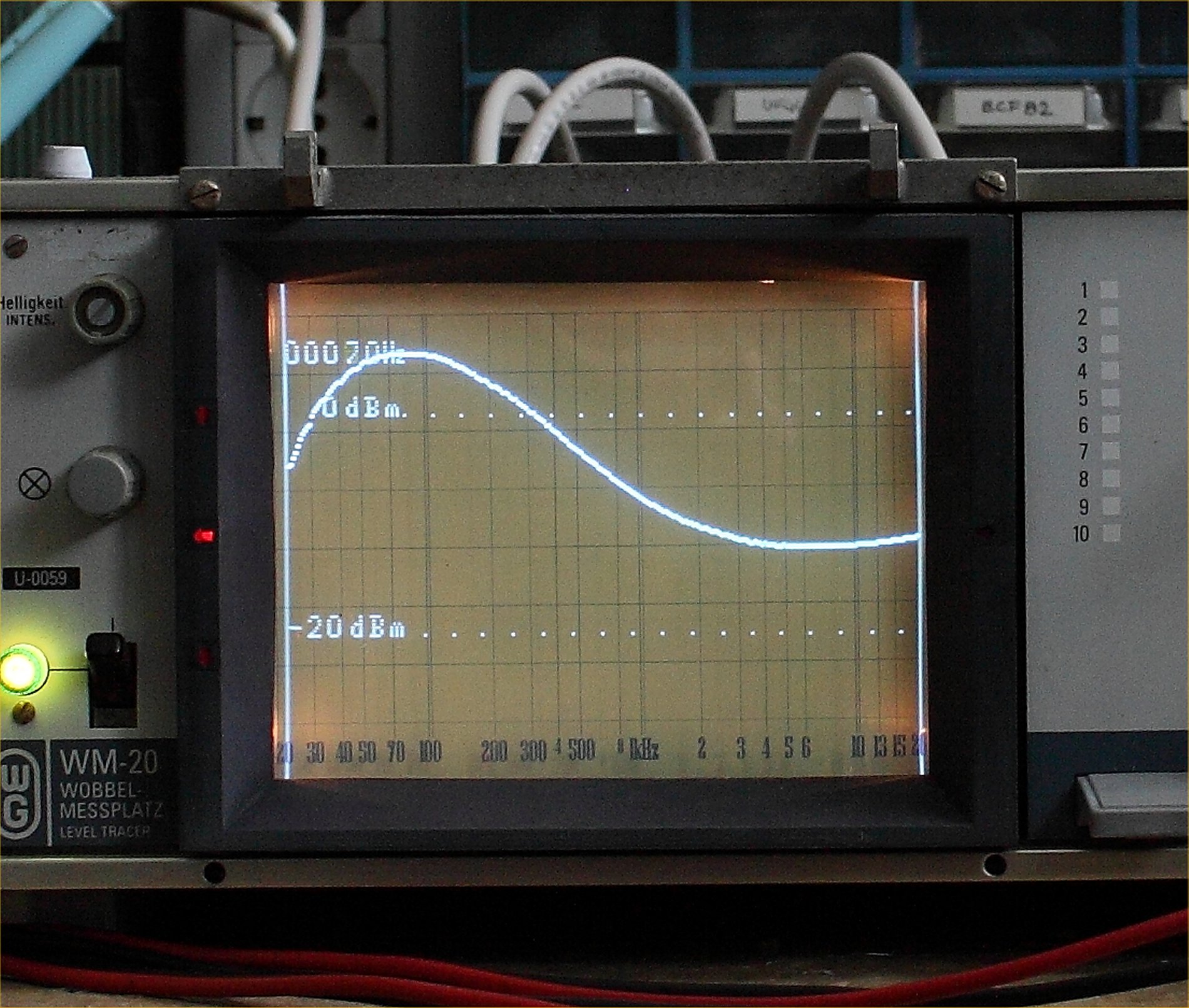
Normally the measurement of the bandwidth is done on a resistive load. Therefore, the deformation caused by the loudspeakers' inductive load and the effect of the mechanical resonance of the speakers themselves on the feedback circuit are not considered. The effects are by no means negligible, the measurements carried out on a purely resistive load are always very linear but they don't coincide with the real frequency response.

On the other hand, this response curve was measured on an inductive laod, that is, with its own loudspeakers.
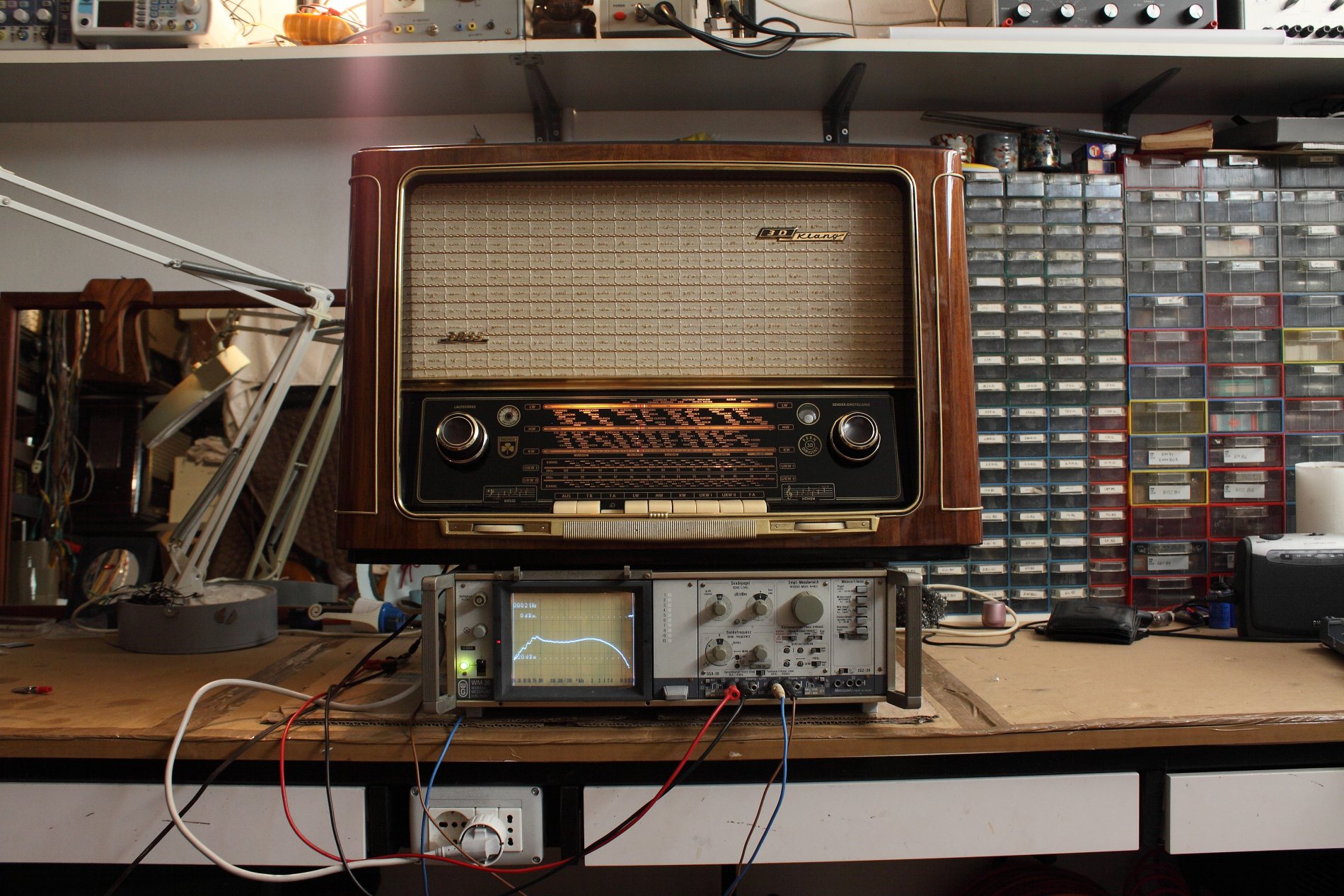
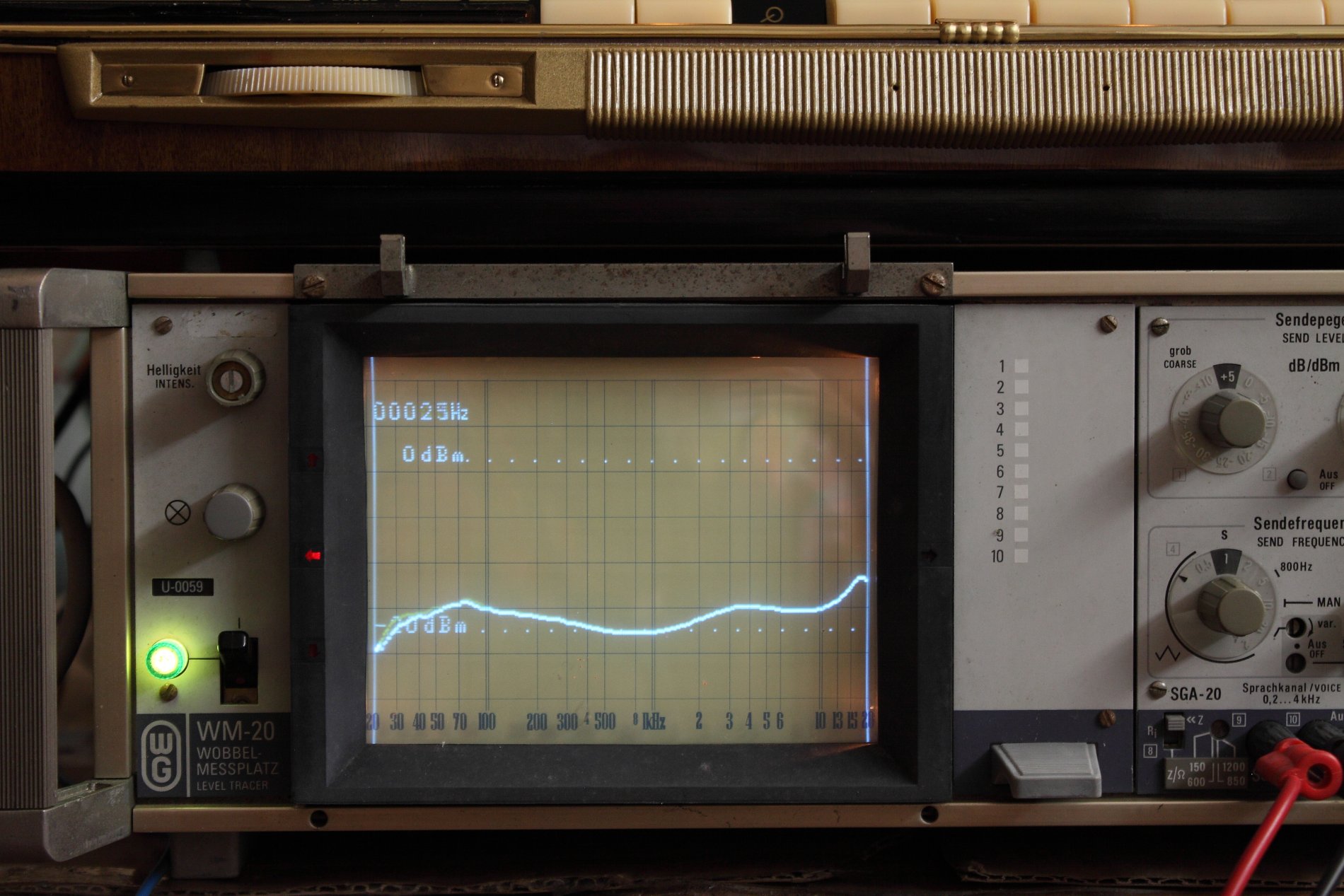
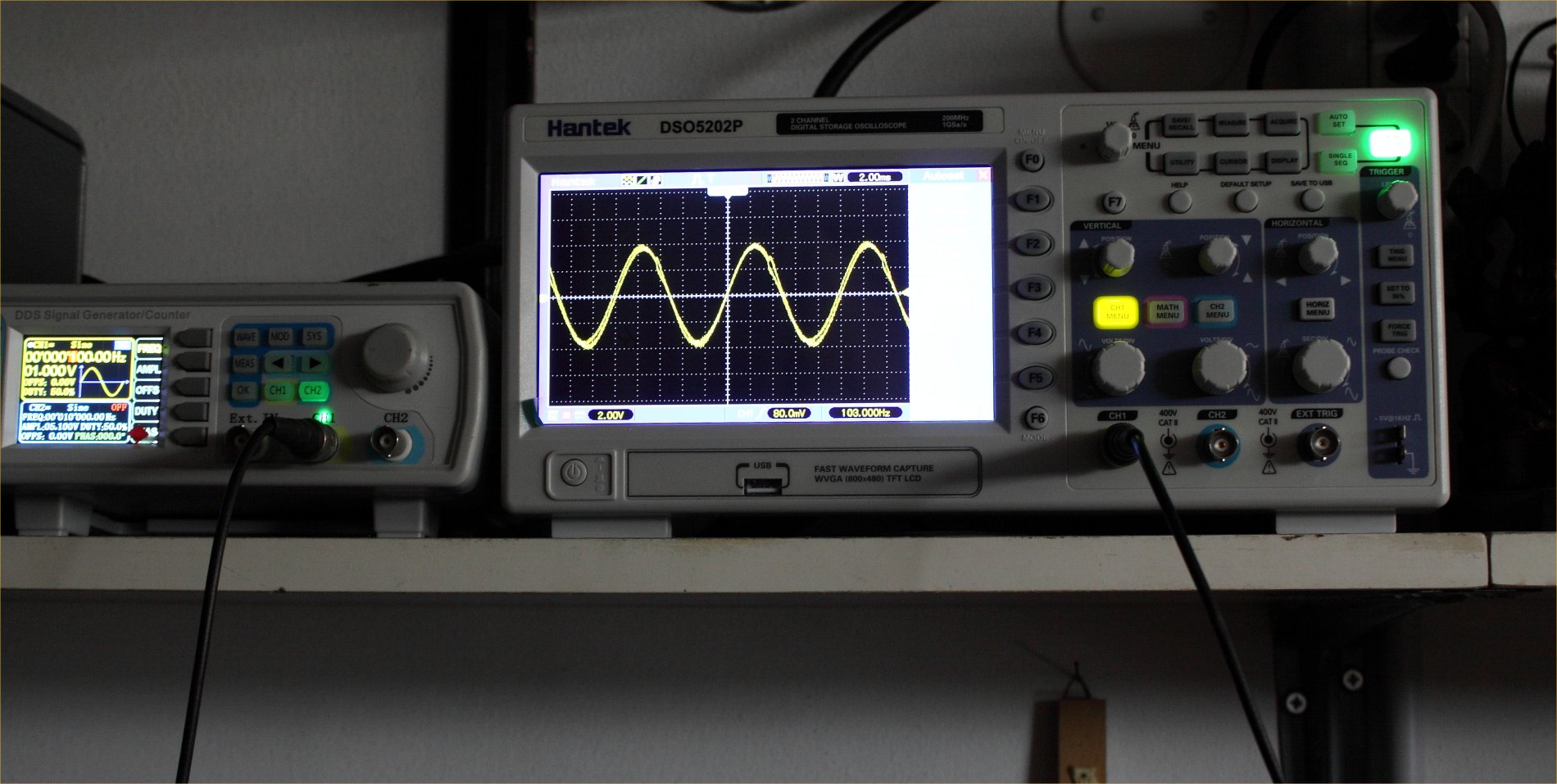
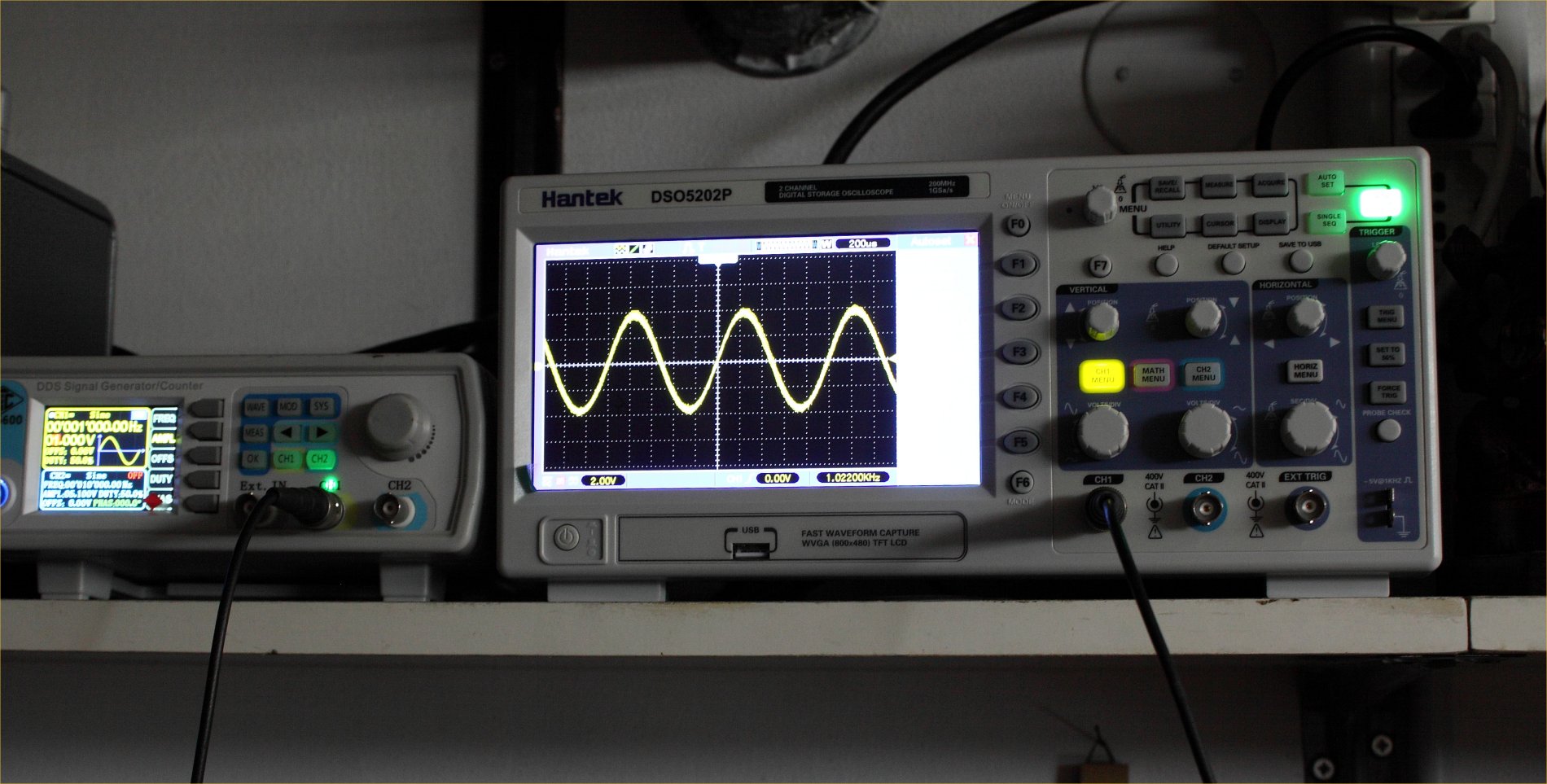
The frequency response measurements were made with a sinusoidal generator and a 
Wandel & Goltermann WM  20 level meter.
You can see the actual frequency response on the vobulator' screen.


(Photo below) Treble at minimum

Grundig 3055/56

(Photo below) Treble at maximum

Grundig 3055/56

RMS POWER

he lower of the RMS voltages measured at the three sample frequencies divided by the load resistence.
The measurement conditions are the following:
- sample frequencies, 100, 1000, 10,000 Hz
- 8 ohm resistive load
- distortion less than or equal to 1%.
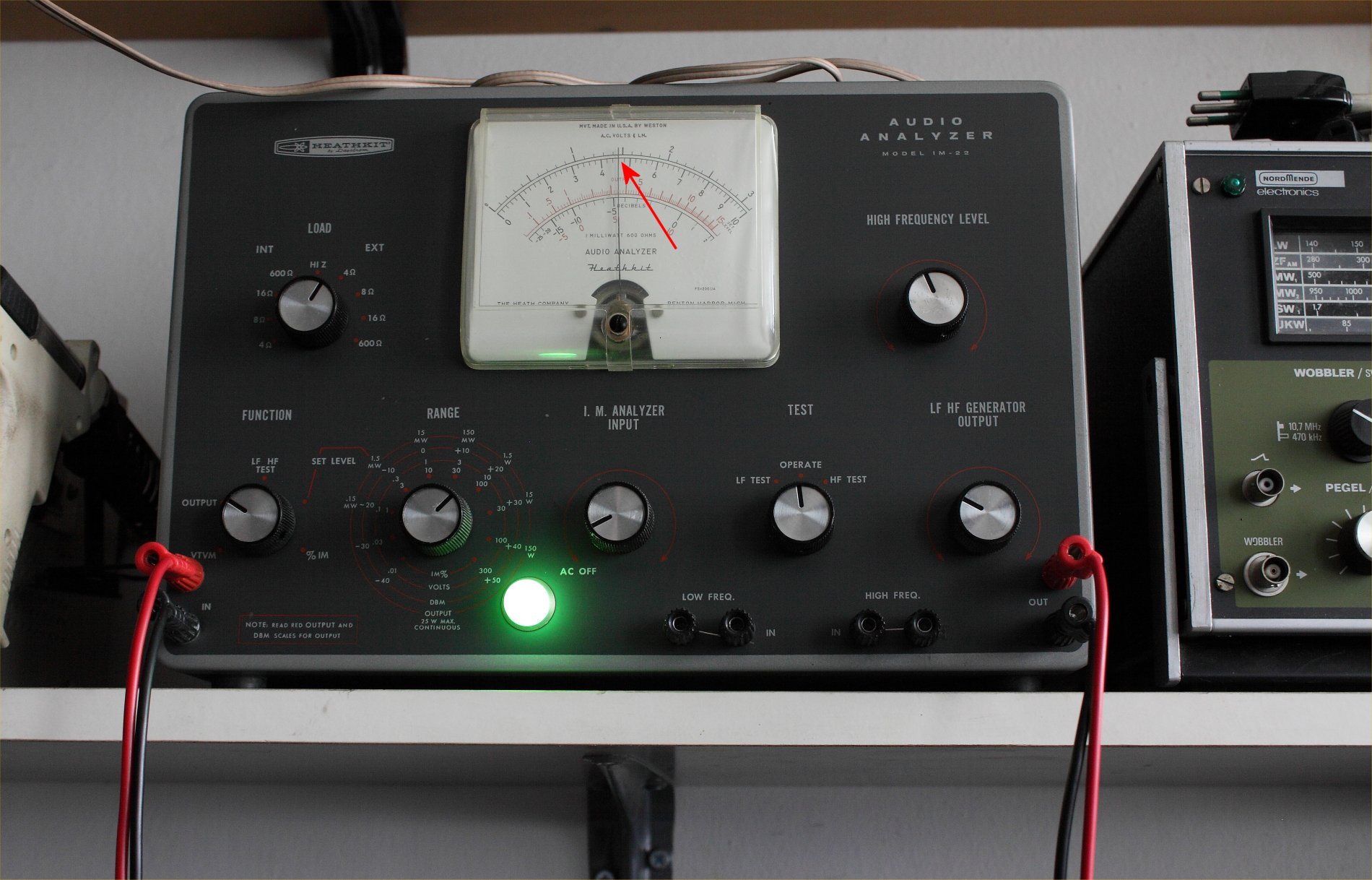
The measuring instrument provides the RMS value directly.

The measured RMS power is 3,3 W

Grundig 3055/56

Grundig 3055/56


Measure IM% at 1000 Hz

Grundig 3055/56


Measure IM% at 1000 Hz

Grundig 3055/56


INTERMODULATION DISTORTION %

The Intermodulation Distortion % was measured with the SMPTE standard and measured at 1W RMS.
The two measurements were carried out by modulating the 50 Hz sine wave with a 1080 Hz sine wave and then with a 10400 Hz sine wave, with an amplitude in a ratio of 1/4 compared to the basic sinusoid.
The output voltage was kept around 2.83V on an 8 ohm carico.

The measured Intermodulation Distortion % (IM%) is 0.15%


Frequency Response

Below are the images of the linearity of the response at different frequencies. The sinusoid voltage is always the same, around 12 Vpp.

TONE CONTROL WITH LEVEL INDICATION

The tones control system is very efficient. Above the large tone control knobs there is a band that lights up gradually indicating the emphasis on the band on which it acts.


BASS MAX

Grundig 3055/56


BASS FLAT

Grundig 3055/56


BASS MIN

Grundig 3055/56


TREBLE MIN

Grundig 3055/56


TREBLE FLAT

Grundig 3055/56


TREBLE MAX

Grundig 3055/56


Grundig 4055/56

AERIALS

Inside the cabinet there is a dipole for FM reception and a ferrite rotating aerial for AM reception.
Ferrite aerial can be rotated from the outside to achieve a perfect tuning of the device in the AM.
In this picture you can see the rotation mechanism, and the aerial position indicator.
The reception sensitivity with internal aerials is very good. This unit was in fact produced when there were not many radio stations, and those available were far from each other.
Using an external aerial sensitivity is further increased.

TUNING INDICATOR


The magic eye has of course been replaced.

Grundig 3055/56

Grundig 3035 3D Klang

FERN-DIRIGENT

Connection for remote control (fern-dirigent) which allows you to control the ignition, volume and equalization.
Below, on the right, you can see the "remote control" diagram.
It is not easy to find, very few have been sold in Italy, the price of the (fern-dirigent) ranges from €350 upwards.

Grundig 3035 3D Klang

Grundig 3035 3D Klang

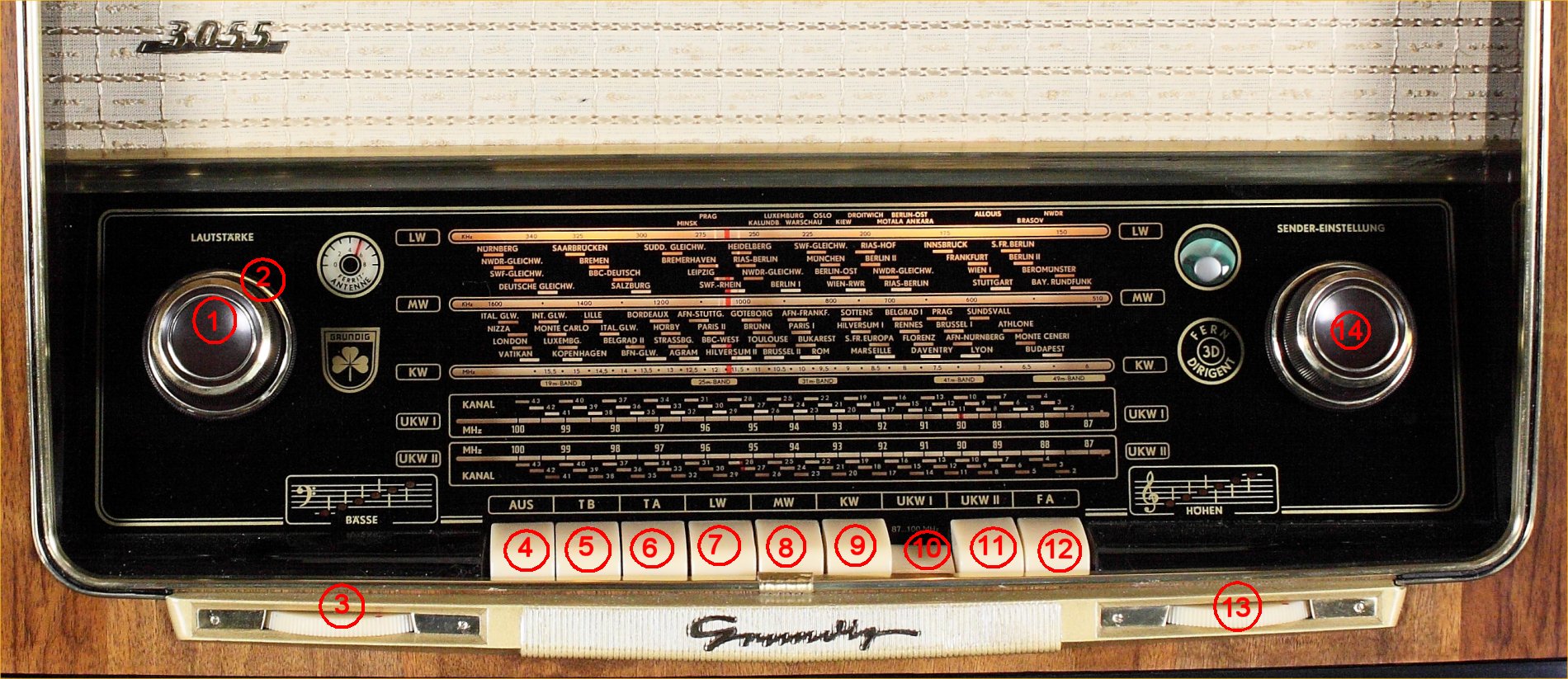
CONTROL PANEL

Grundig 3055/56

1 - Volume control (with built-in loudness)
2 - Ferrite antenna rotation control.
3 - The bass control knob
4 - Switching off
5 - Recorder
6 - Turntable
7 - Long Waves

8 - Medium Waves
9 - Shortwave
10 - FM 1
11 - FM 2
12 - Ferrite antenna for medium and long waves
13 - The treble control knob
14 - Tuning knob

Grundig 3055/56

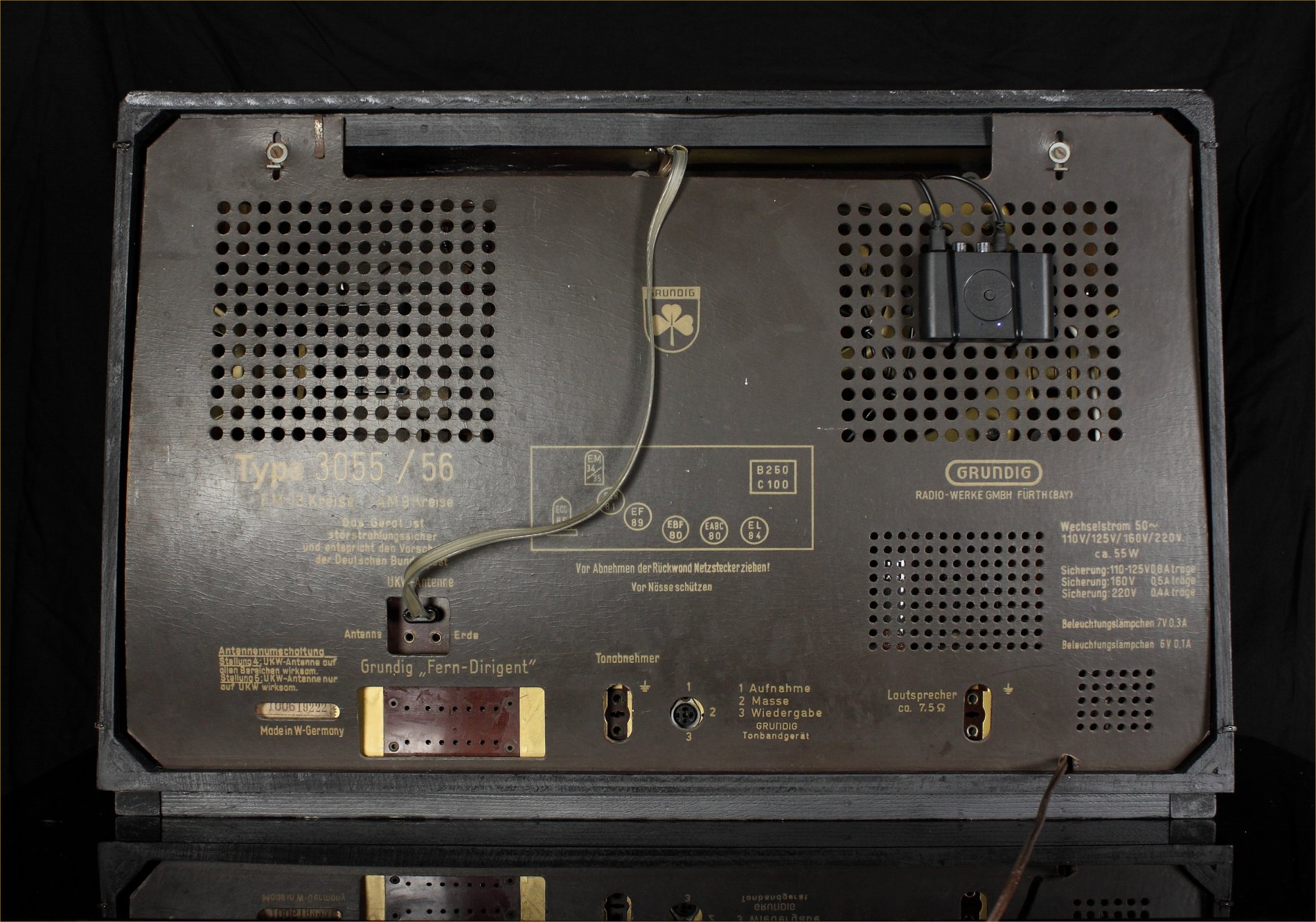
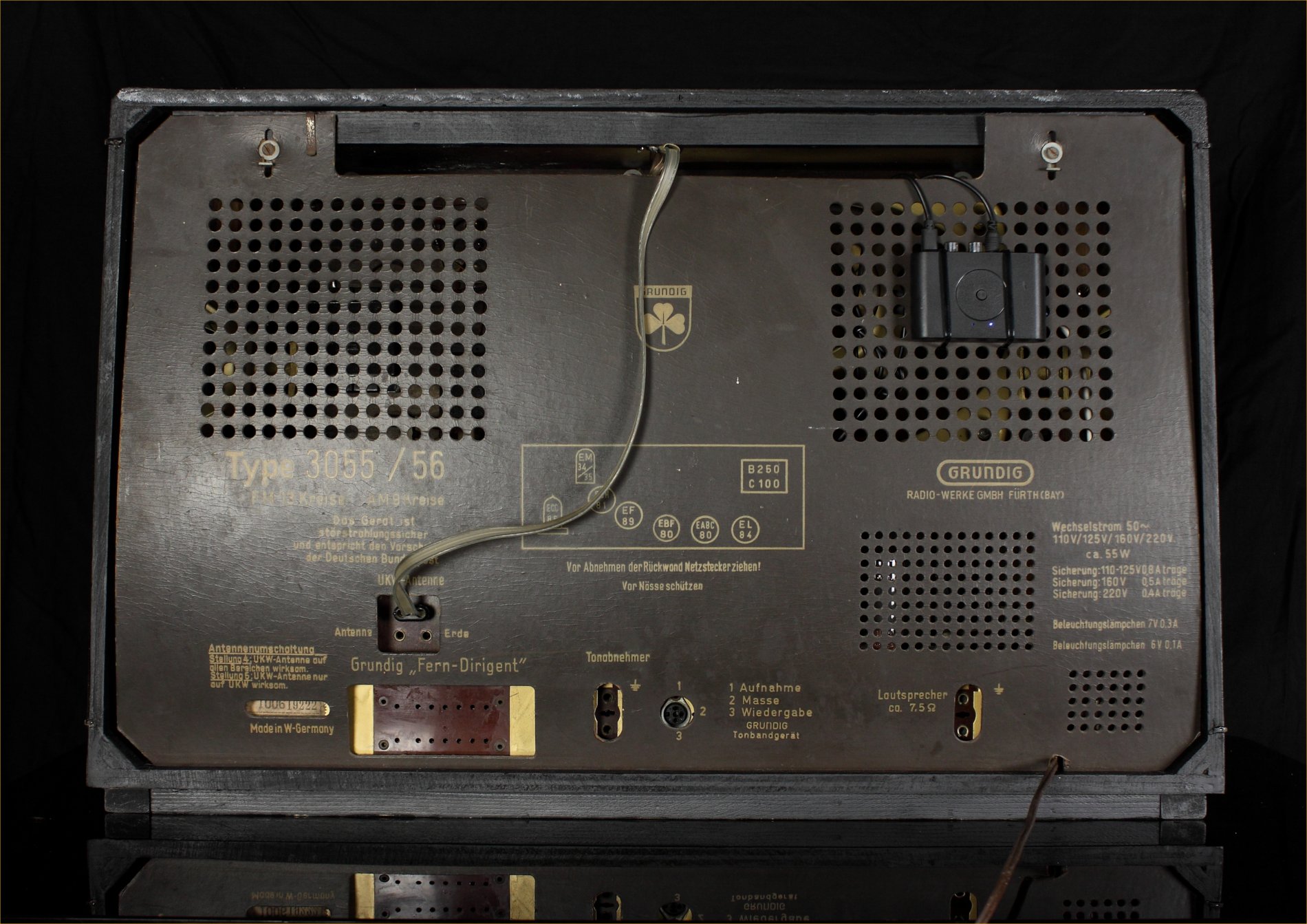
REAR SIDE

Output for external speakers.
Turntable input (Tonabnehmer)
AM and FM aerial inputs and ground socket.
Remote control socket

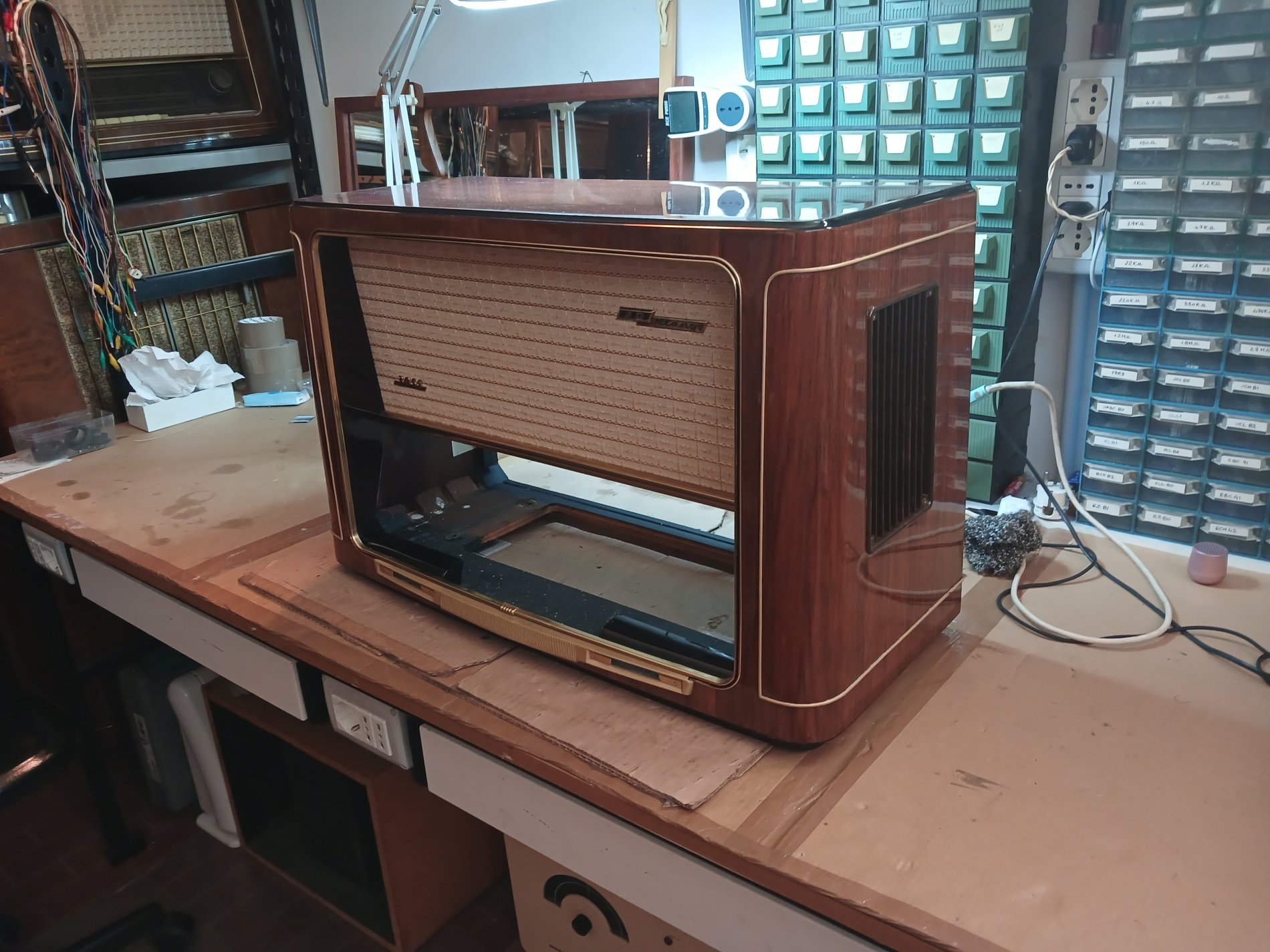
RESTORING WORKS

Grundig 3055/56

THE USUAL AMAZING LAST IMAGE
Grundig 3055/56
Nordmende Tannhauser 59 german radios - cn

Nordmende…

NORDMENDE TANNHÄUSER 59

Nordmende Tannhäuser 59

Tannhäuser, born into a family of knights in Salzburg, took part maybe in the sixth Crusade of 1228 and led a wandering life as a poet and a bard. He attended the court of Duke Frederick II in Vienna.
According to legend, during his life Tannhäuser found the Venusburg (mount of Venus), the subterranean reign of Venus, and lived with her for one year. He then left the goddess, full of remorse, and undertook a journey to Rome, in order to ask Pope Urban IV for forgiveness. The Pope reminded him that such sins lead to eternal damnation and promised to forgive him only in the event of a miracle: the appearance of flowers on his cane. Three days later Tannhäuser returned to Vienna and the cane bloomed.

The legend was put into music by Richard Wagner in his Tannhäuser.

Nordmende, in its heyday of technological growth, decided to name “Tannhäuser” its best device ever produced.
A device designed to represent the crest of the technical perfection of its time and extreme attention to detail.
The output stage is composed of a pair of  EL84 in Push-Pull. The phase inversion is carried out with a section of the double triode  ECC82 in Cathodyne configuration. This kind of inverter has an advantage, the possibility to be connected directly to its previous stage. Such stage consists of the remaining section of the double triode ECC82, which provides for the amplification of the signal after the attenuation deriving from the tone control circuit.
The triode contained in the multifunction valve EABC80 constitutes the input preamplifier and receives a signal from a logarithmic potentiometer with 3 intermediate sockets for a complex and very accurate physiological volume control circuit.

The radio section is of the same high quality. An additional medium frequency stage is present, in order to increase the selectivity.
This allows the receipt of transmissions, especially in FM, particularly stable and free from disturbance.

The complex of loudspeakers, moreover, is really impressive. All the loudspeakers are made by Isophon.
The reproduction of low and medium frequencies is ensured by a big elliptic woofer  P 2031/19/105 which measures 31 cm in length and 20 in height.
To trebles, instead, are dedicated 5 loudspeakers built with 2 different technologies.
Frontally we have a 13 cm midrange for a soft reproduction, perfectly integrated with that of the woofer.
On each side was placed the famous HM 10/12/70 cone tweeter and an ST HB7 electrostatic tweeter

As Baudelaire wrote, the Tannhäuser represents the struggle between the two principles which choose the human heart as their battlefield, that is the flesh against the spirit.
Nordmende honoured this great piece of work with the realisation of its best product.

Frontally, we can find the famous cone tweeter HM 10/12/70 The trumpet exit of a DKS 6/13/100 and an electrostatic tweeter ST HB7 were put  on each side.

Nordmende Tannhauser 59

  • BLUETOOTH

    Bluetooth receiver embedded

    READ MORE >

  • MULTI PLATFORM CONNECTION

    Each radio is equipped with a cable for connection to any digital device.

    READ MORE >

TUBESOUND IMPROVEMENTS

- Bluetooth receiver embedded - The unit is equipped with a BLUETOOTH receiver powered directly by the receiver power supply. This makes it possible to control the amplifier from any external digital device as an IPAD, a Smartphone, or a sophisticated multimedia station. So you can hear your preferred web station or your lossesless file without cables on the room. Wireless Receiver can be equipped upon requests.
- Multi Platform Connection - A customized adaptation cable to connect any digital device as Iphone, Smartphone, Laptop, CD Player etc. will be provided with this radio. This special cable suits the different impedances between the modern equipment and the receiver. Furthermore the two stereo channels flow into one without increasing the load to the input unit.

Nordmende Tannhauser 58

LA STORIA

In 1923 Otto Hermann Mende founded Radio H. Mende & Co. in Dresden. After the bombing of the factory in 1945, Martin Mende (son of the founder) created a new company in Bremen, the "North German Mende Broadcast GmbH" whose name was later changed into NORDMENDE.

In the 50s and 60s it became one of the most prestigious German TV and radios manufacturer.

In the 70s the televisions by NORDMENDE became famous for their frames, cards and for the rigorous testing and quality controls carried out on their finished products. Unfortunately, the high cost involved in such detailed quality determined a competitive disadvantage when the price of color television began to fall.

In 1977 the majority of the shares was sold to the French Thomson. The following year, the family sold the remaining shares. In 1980, the factories of Bremen was closed, NORDMENDE becoming purely a trademark of Thomson.


Thanks Dan Ludington for the image.

MAIN FEATURES

Year of production: 1958/59

Superheterodyne IF 468/10700
10 AM Circuits
13 FM Circuits
Wavebands:
Medium Waves (OM), Long Waves (OL), Short waves (OC), FM (UKW)

Loudspeakers:
1 woofer
1 cone midrange
2 horn tweeters
2 electrostatic tweeters

Dimensions (LHD):: 700 x 420 x 290 mm / 27.6 x 16.5 x 11.4 inch
Net weight: 16.3 kg / 35 lb 14.4 oz
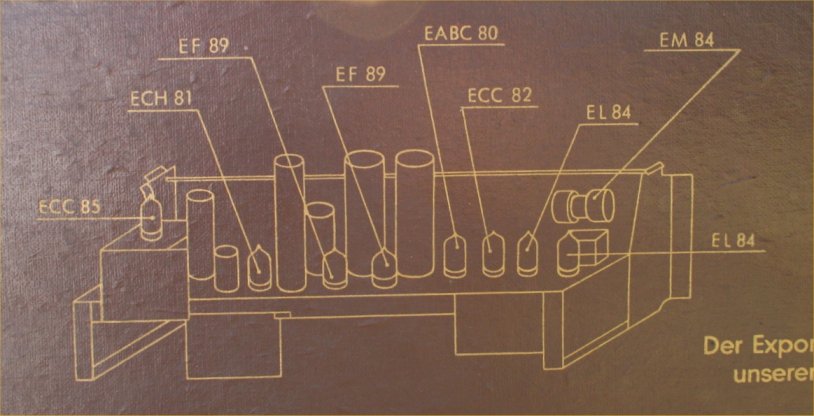
9 Tubes: ECC85 ECH81 EF89 EF89 EM34 or EM35 EABC80 ECC82 EL84 EL84

Nordmende Tannhauser 59

Nordmende Tannhauser 59

BANDBREITE SCHALTBAR

The device has been equipped with a frequency response correction system independent of the tone controls.
It is made up of 5 keys which insert predefined equalization curves operating on the feedback circuit (they are not passive filters).

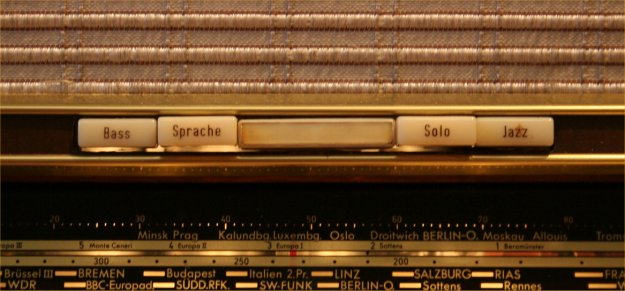
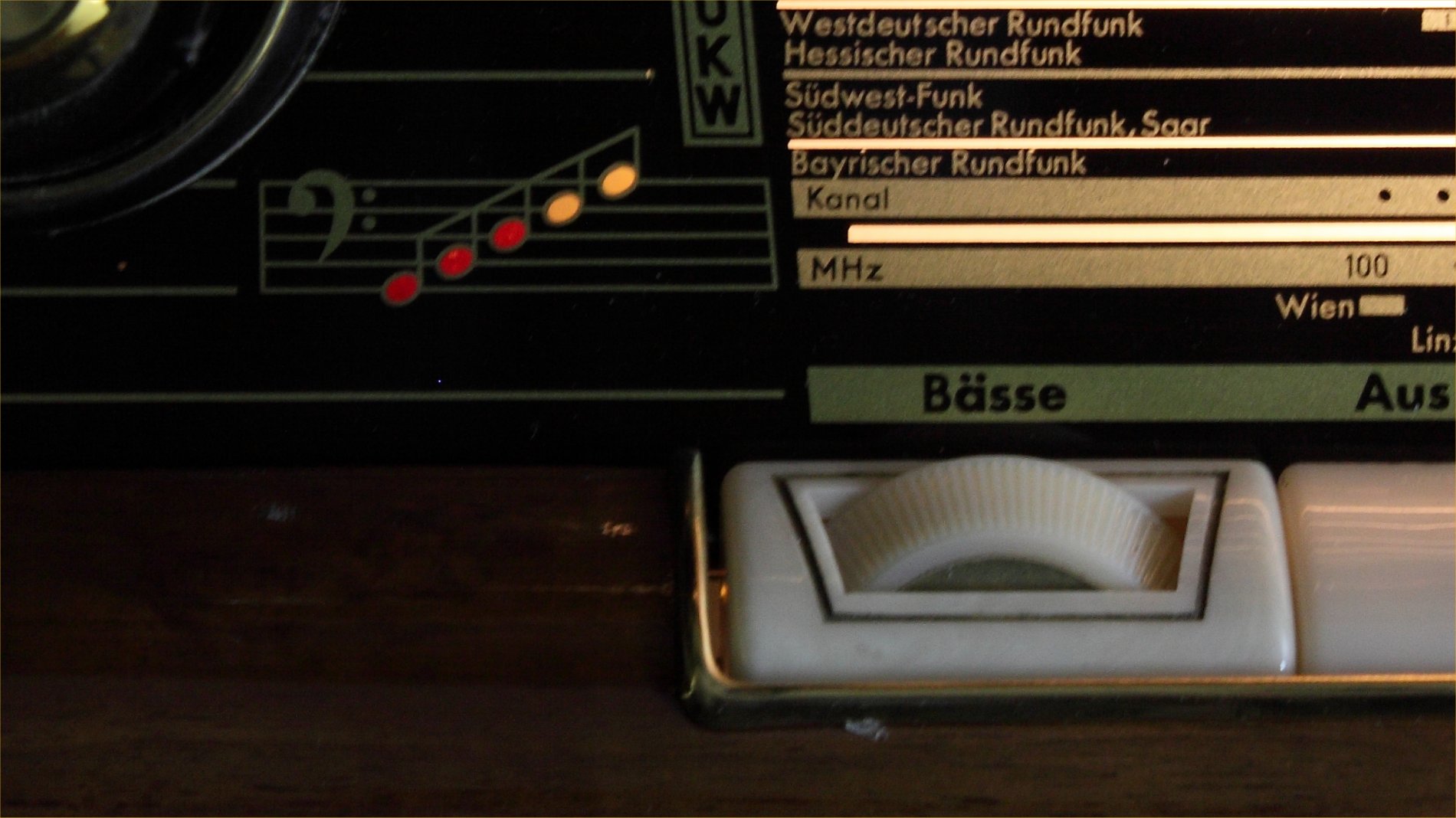
The Bass key emphasizes bass tones.
The Sprache key boosts the mid-range for cleaner listening to spoken broadcasts.
The Expander key (the large central one) inserts a feedback curve that slightly favors the mid-bass tones, increasing the sense of space.
The Solo key slightly accentuates the mid-tones for easier listening to single instruments.
The Jazz key greatly emphasizes the low and high tones to facilitate listening to this musical genre.

TONE CONTROL WITH LEVEL INDICATION

The tones control system is very efficient.

Above the large tone control knobs there is a band that lights up gradually indicating the emphasis on the band on which it acts.

The treble control knob is connected to the ferrite in the MF transformers and varies the slope of the transformer bell. In this way, when you are in the AM bands, the treble tones are further accentuated even before arriving in the BF amplifier stage.

Nordmende Tannhauser 58

BASS MAX

Nordmende Tannhauser 58

Bass flat

Nordmende Tannhauser 58

BASS MIN

Nordmende Tannhauser 58

TREBLE MIN

Nordmende Tannhauser 58

TREBLE FLAT

Nordmende Tannhauser 58

TREBLE MAX

Nordmende Tannhauser 58

ANTENNE

Inside the cabinet there is a dipole for FM reception and a ferrite rotating aerial for AM reception.
Ferrite aerial can be rotated from the outside to achieve a perfect tuning of the device in the AM.
In this picture see the rotation mechanism and the position indicator of the aerial.

The reception sensitivity with internal aerials is very good. This unit was in fact produced in a period when there were not many radio stations and those available fairly apart from each others.
Using an external aerial sensitivity is further increased.

SEPARATE CONTROL TUNING BETWEEN AM AND FM

The tuning system is another gem.
The unit is equipped with mechanisms for keeping separate the AM and FM bands.
The tuning knob is single but a selector switch commutes into cable systems (all in steel) and pulleys separated depending on the band.

The movement is transferred to both mechanisms with a system of pulleys and separated gears.


TUNING INDICATOR

Nordmende Tannhauser 59

The magic eye has of course been replaced.

Nordmende Tannhauser 59

ALTOPARLANTI

The loudspeakers are six.

 In the front we find the biggest elliptic broadband built by Isophon, very linear and efficient. Also frontally, we find an Isophon cone midrange.
In order to obtain a 3D effect, we find on the sides two cone tweeters with two  electrostatic SuperTweeters.

 The acoustic performance is really generous.

 None of the radios I know has the same dotation of loudspeakers.

CONTROL PANEL

Nordmende Tannhauser 59

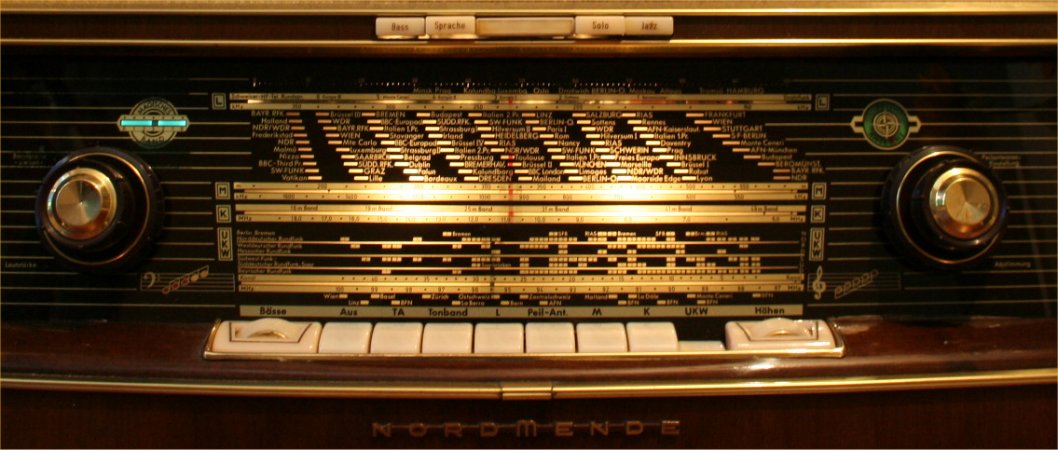
Above the dial, in the loudspeakers panel we find the series of buttons of the Bandbreite Schltbar, previously described.
Moving downwards on the tuning-dial, we first find the magical eye, which indicates the perfect tuning of each station. Below, we find the volume control (with integrated loudness).
By pulling the volume knob, the circuit which powers selectivity in the AM bands is inserted.
From the top down are then indicated the AM dial for Long, Medium and Short bands and below we find the FM dial.
Moving further right, we find the indicator of the position of the ferrite aerial.
Finally, there is the tuning knob, which movement is very pleasant as it is supported by a big flywheel.
Coaxial to the harmony knob is the knob which rotates the ferrite aerial.
Below on the left we find the treble control knob set in a nice bakelite casing with ivory effect.

In the following order, then, we find the buttons:

AUS - Off
TA - Turntable
TONBAND - Tape recorder
L - Long Wave
Peil-Ant - Ferrite antenna for  LW and MW
M - Medium Wave
K - Short Wave
UKW - FM

On the right, the bass control is visible.
Above the tone controls, the respective emphasis indicators of the controls.

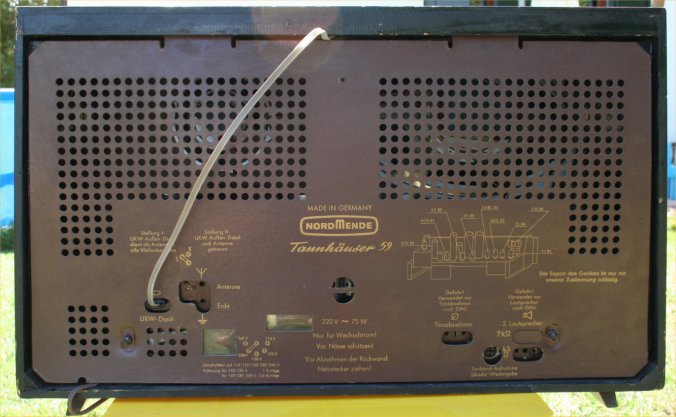
REAR SIDE

Output for external speakers.

Socket for recorder (tonbandgerat).

Turntable input (Tonabnehmer)

AM and FM aerial inputs and ground socket.

THE USUAL AMAZING LAST IMAGE
Nordmende Tannhauser 59
Brionvega RR126 in ANTWERP brionvega - cn

Brionvega…

BRIONVEGA RR126 MANAGED BY VOICE ASSISTANT
BRIONVEGA RR126

This page is the result of an eccentric and courageous request sent to us by a particularly demanding customer.

We were asked to set up a Brionvega RR126 radiophonograph to be managed by voice commands  ALEXA.
We studied the problem and made the necessary modifications and inserted actuators so that this RR126 works with voice command.
As you can see in the video, this device turns on and off, adjusts the volume, chooses songs with voice commands, in this case implemented by Alexa.
Although tested with ALEXA this special version of RR126 works with any voice assistant, be it Siri on Apple HomePod, Google Assistant on Nest mini and of course Amazon Alexa on board Echo Dot!
And of course it also works with traditional controls, like a normal Brionvega RR126.

Nordmende Spectra Futura german radios - cn

NORDMENDE…

. NORDMENDE SPECTRA FUTURA (Mono - Stereo)

NORDMENDE SPECTRA FUTURA (Mono - Stereo)

Also this reviews will be accompanied by a section with graphs of technical measures of the most important parameters.
There is no such thing anywhere else, as far as I know. Not even the manufacturers themselves detailed the technical features of their own devices at this level.
This new section has been developed for an objective comparison of different devices.
In order to avoid interpreting the measurements incorrectly, it is very important to read the warnings carefully the first time.

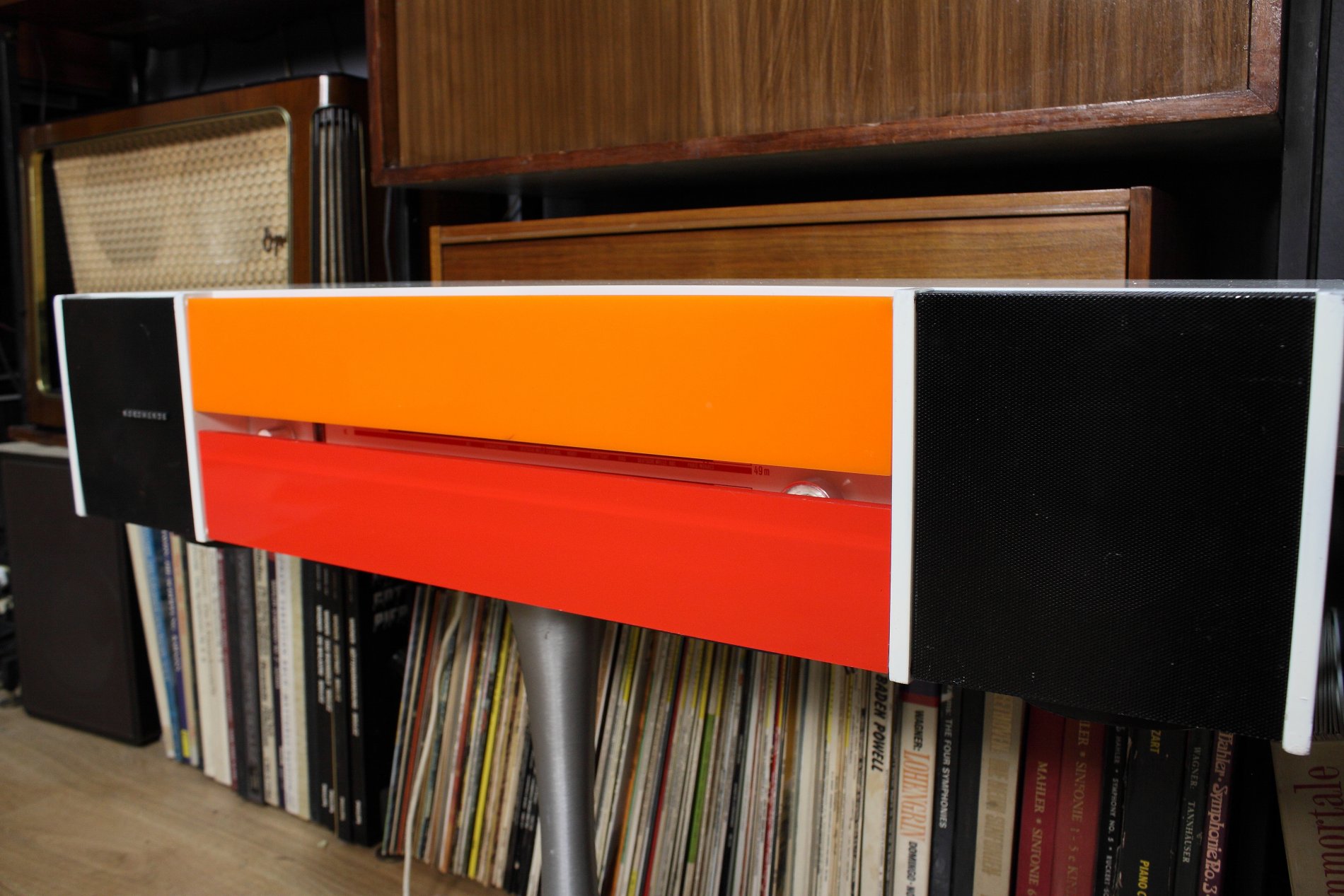
The Nordmende Spectra Futura is the only transistor device of the German brand that we will review on this site.
We will examine it for its design resulting from the collaboration between the Nordmende design center and the famous American designer Raymond Loewy.
Will talk about Loewy later on this page. However, we all know the products he designed, such as the Coca-Cola bottle or the Lucky Strike pack.

Collaborating with the American designer was a very good choice. The device was a sales success and overshadowed all similar radio receivers of other brands, which sometimes tried to awkwardly imitate its shapes.
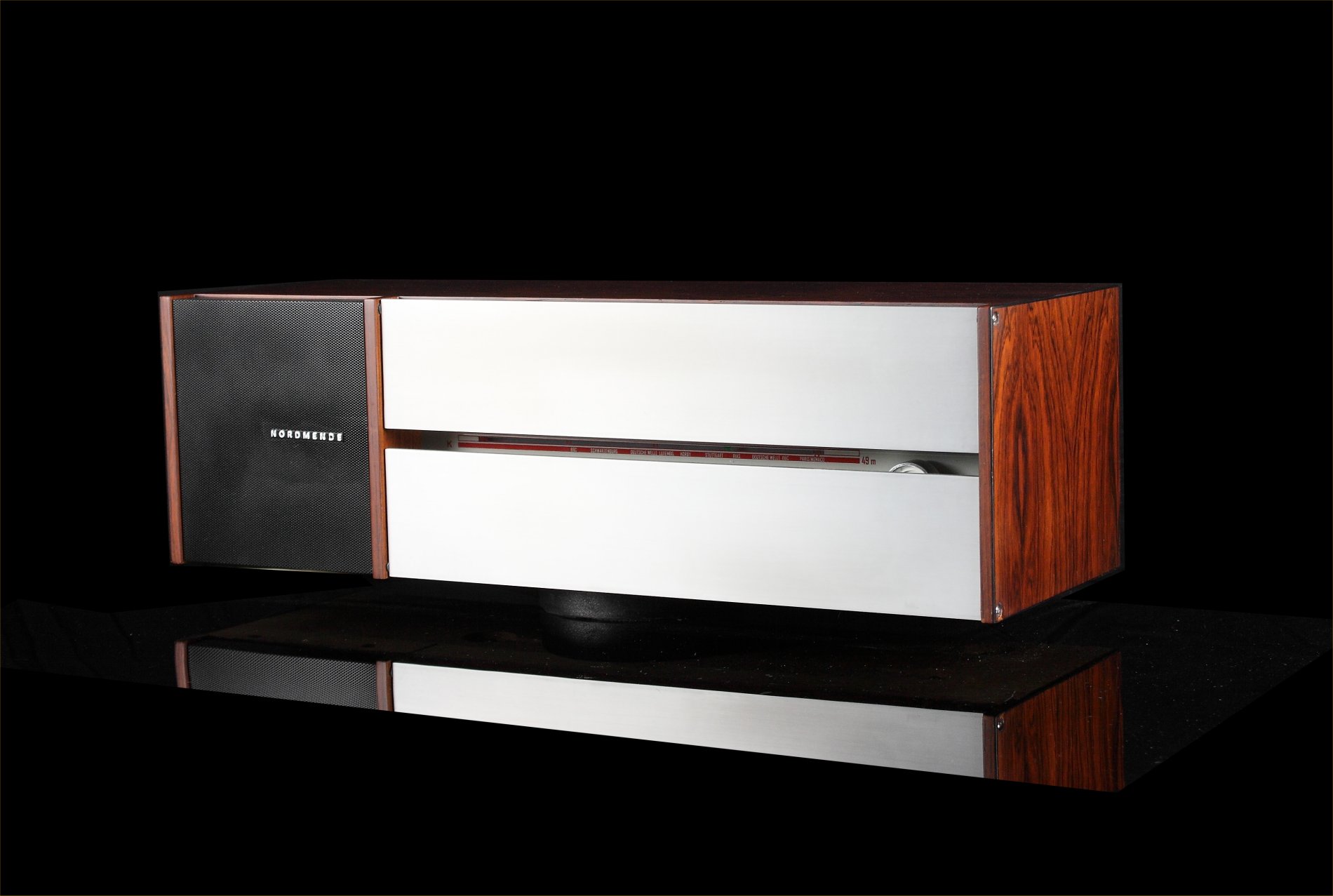
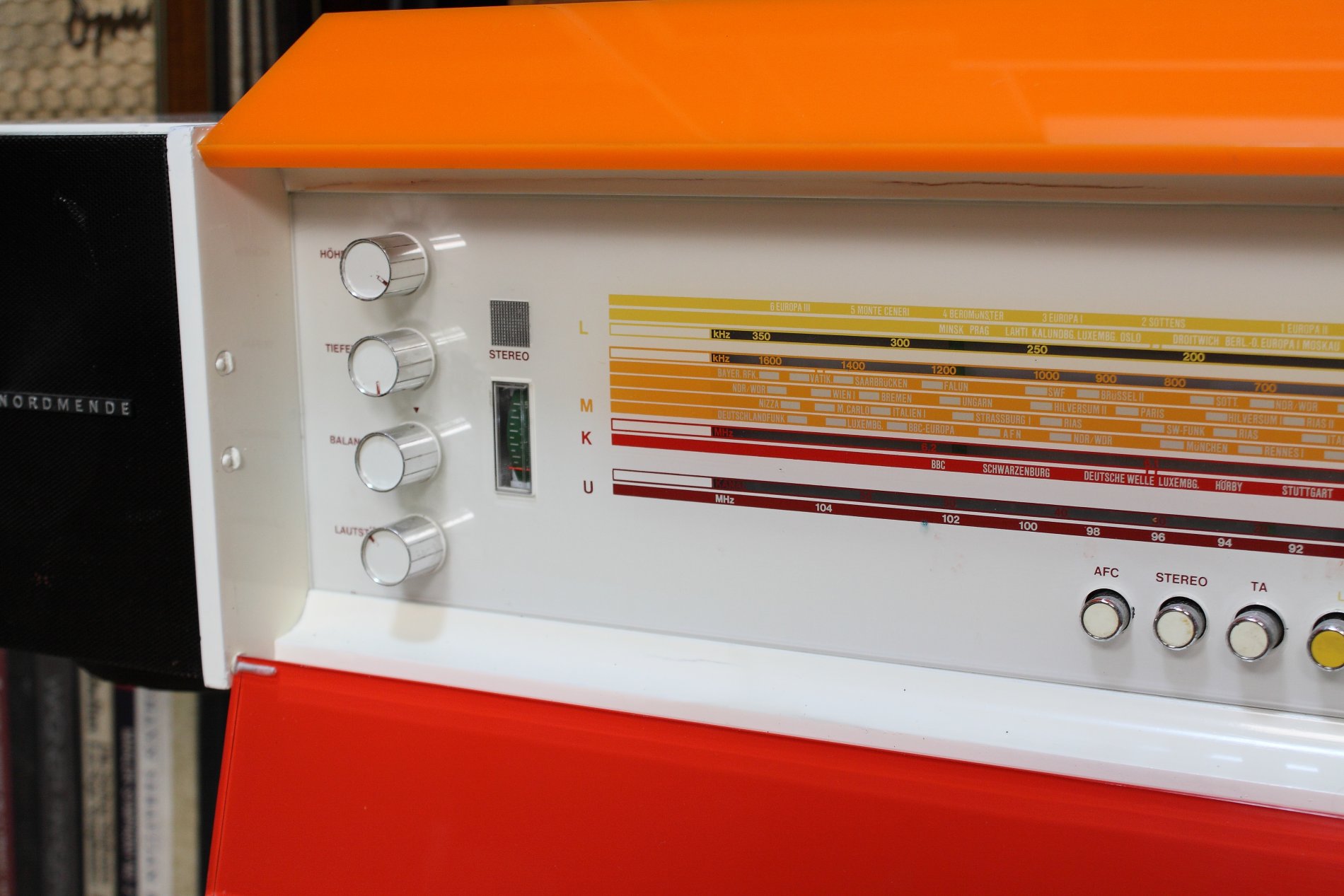
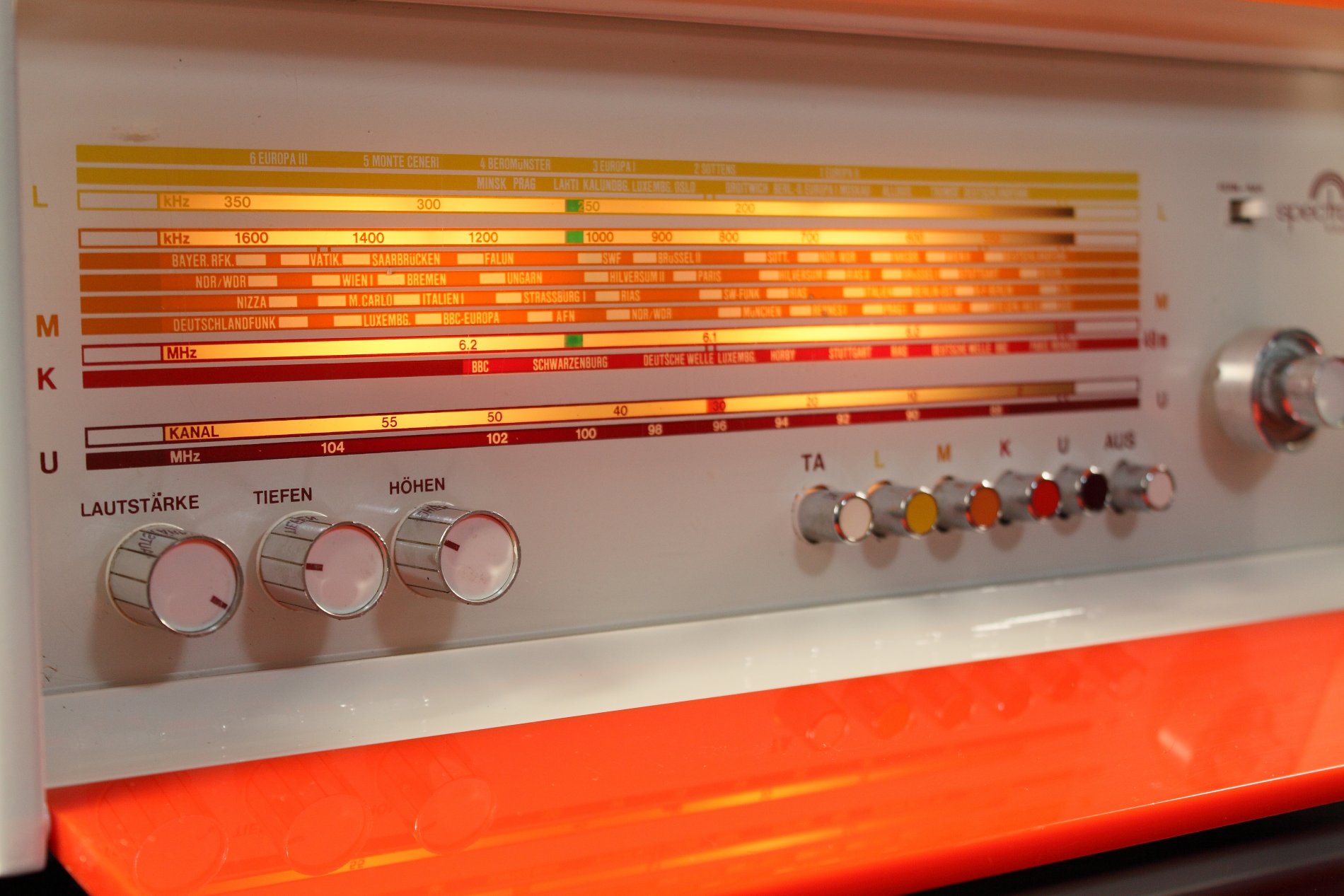
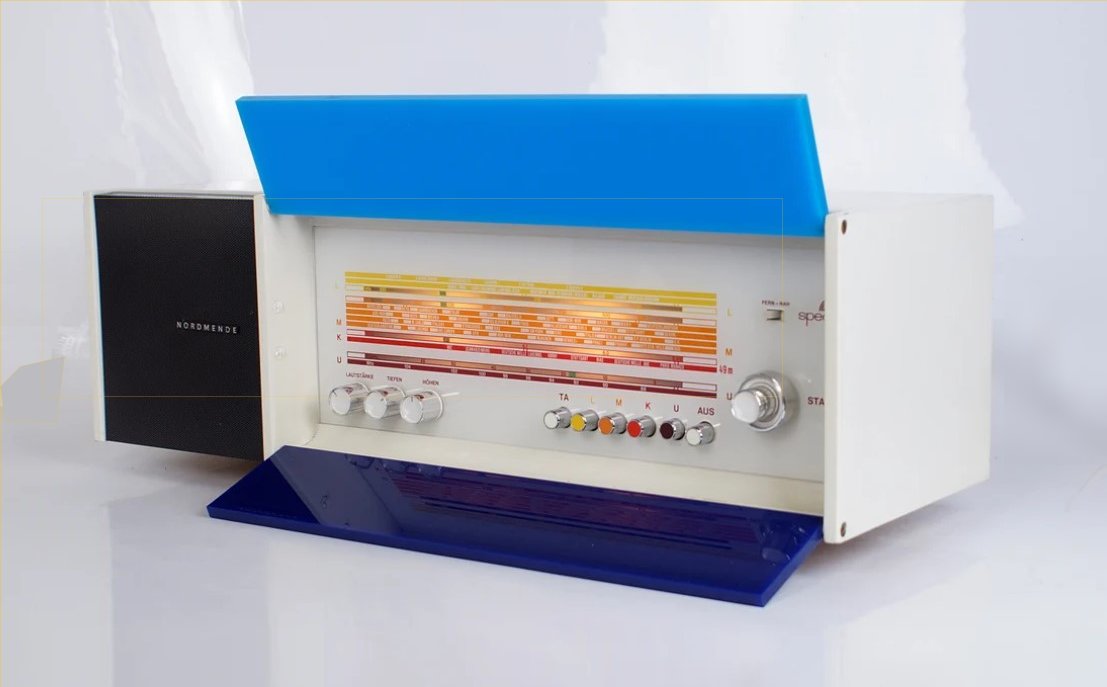
It was produced in many versions, with many color combinations, as shown in the brochures of the time shown here.
The most flamboyant model is certainly the Orange-Red, while the most elegant is with solid aluminum bands and wooden cabinet.

Nordmende produced both monophonic and stereophonic versions of this device. Both models are visible in the photos on this page. Obviously the stereophonic version is the most satisfying from a musical point of view.

The electronic design of this model is interesting from our point of view. Being a few years that the transistors were used for commercial purposes, the circuits were very similar to the tube circuits. The voltages and polarizations changed, but the principle schemes were almost the same, so the sound of the amplifiers of this period is close to the sound of the tube ones.

The FM section is quite stable, very traditional and time-tested.

Conclusions: A beautiful device to look at, which adapts to modern as well as vintage furnishings, with a pleasant and sufficiently powerful sound. A piece of design made in the USA in a machine made in Germany in a handcrafted restoration made in Italy.

__________________________________________________________________________________________________________

The first song is by Megan Thee Stallion and Dua Lipa, it's called Sweetest Pie. Megan Jovon Ruth Pete, aka Megan Thee Stallion for her imposing build, is a Texan rapper and girl prodigy. In a few years he has received considerable public and critical success, famous on TikTok his Savage remixed with Beyoncé. In 2021, she was awarded Best Debut Artist. In 2022 he published in collaboration with the singer Dua Lipa, Sweetest Pie (Sweet cake). The song is permeated with very explicit sensuality, as is Megan's style. An irreverent debut in the presentation of the spectacular Nordmende Spectra Futura.

And irreverence and sensuality are the leitmotifs of the second piece, The quadrille of bullfighters from Bizet's Carmen.
The apparent lack of morality of the protagonist, her vitality, the immeasurable propensity for freedom make her incomprehensible, unacceptable to Don José, who falls madly in love with her and as in the worst traditions will end up killing her. The Spectra Futura, despite the small numbers, manages to highlight the chorus and the orchestra with a momentum typical of much more muscular machines.

Nordmende Spectra Futura

Nordmende Spectra Futura

The third song, played by Antonio Serrano (mouth organ) and Javier Colina (double bass,) is actually by Stevie Wonder, Overjoyed. The title, overflowing with joy, does not hide the meaning and impulse of the piece. The text of "Overjoyed" speaks of a love not reciprocated, indeed, hidden, lived all alone on one side. Stevie wants to reveal to his beloved how deep is the feeling he has for her, hoping that she will accept it and reciprocate. Musically, the piece is characterized by the continuous changes of key and the use of natural sounds as a rhythmic basis. Serrano's harmonica is well enhanced by the Spectra Futura which puts it a head ahead of the double bass, as it should be.

The fourth song is the famous Back to Black by Amy Winehouse. “Back to Black” means returning to a state of depression after the end of a love affair. She specifies that it is a state of despondency in which the pain of loneliness drowns in alcohol and drugs. The reference is to the tormented story with Blake Fielder-Civil, which led to her death after a physically and psychologically toxic marriage, where Amy, already debilitated by eating disorders, did not last long.

The fifth song, again by Stevie Wonder, dedicated to his wife, Syreeta Wright. You are the sunshine of my life. The couple was actually already divorced by the time the song hit. Their marriage has always been difficult due to the singer's work schedule. "I've always lived in his shadow," Wright said. However Wonder was very devoted to Syreeta. In the song the husband looks at his now familiar wife and remembers why he loves her and promises he always will. But it didn't work out for this couple.

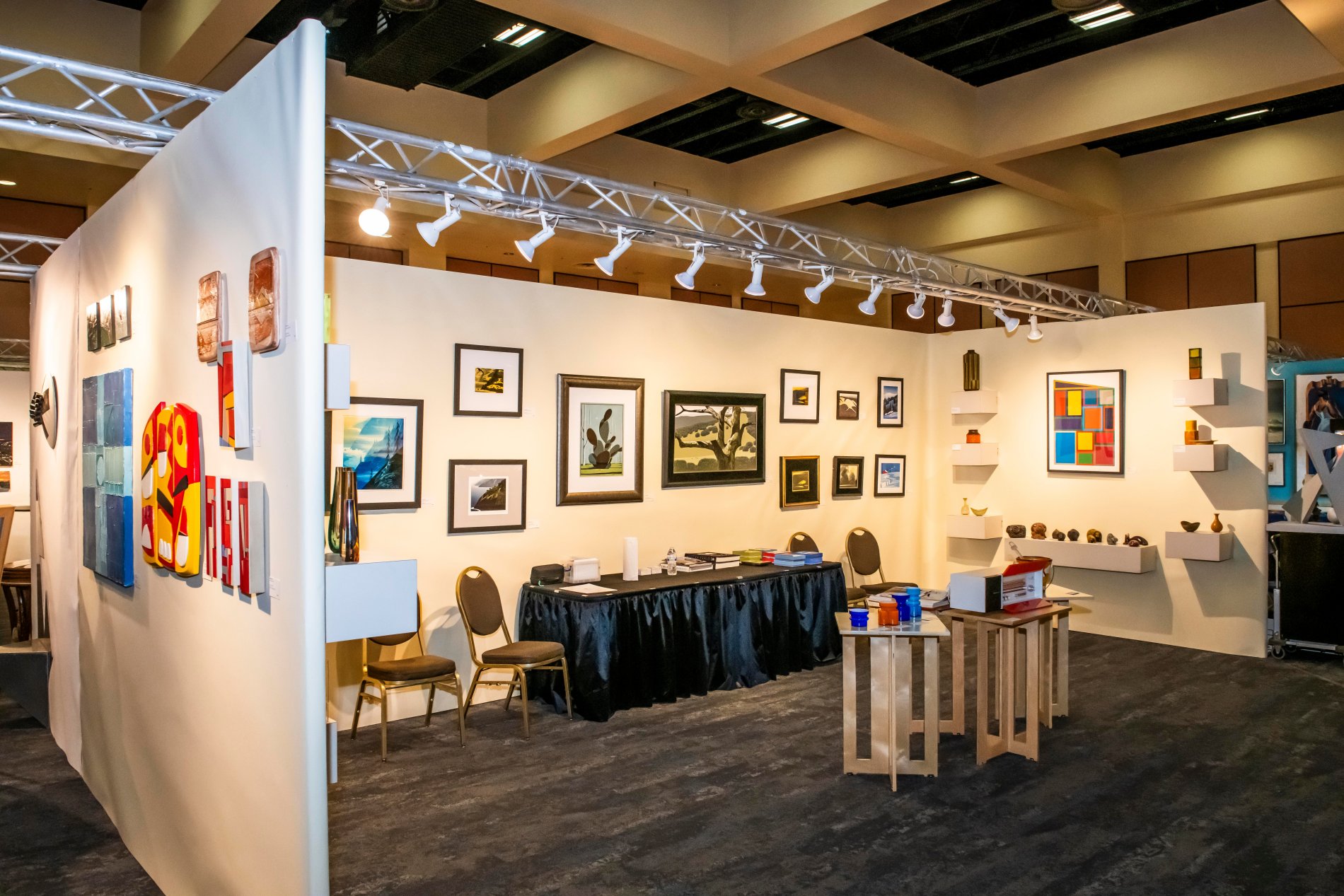
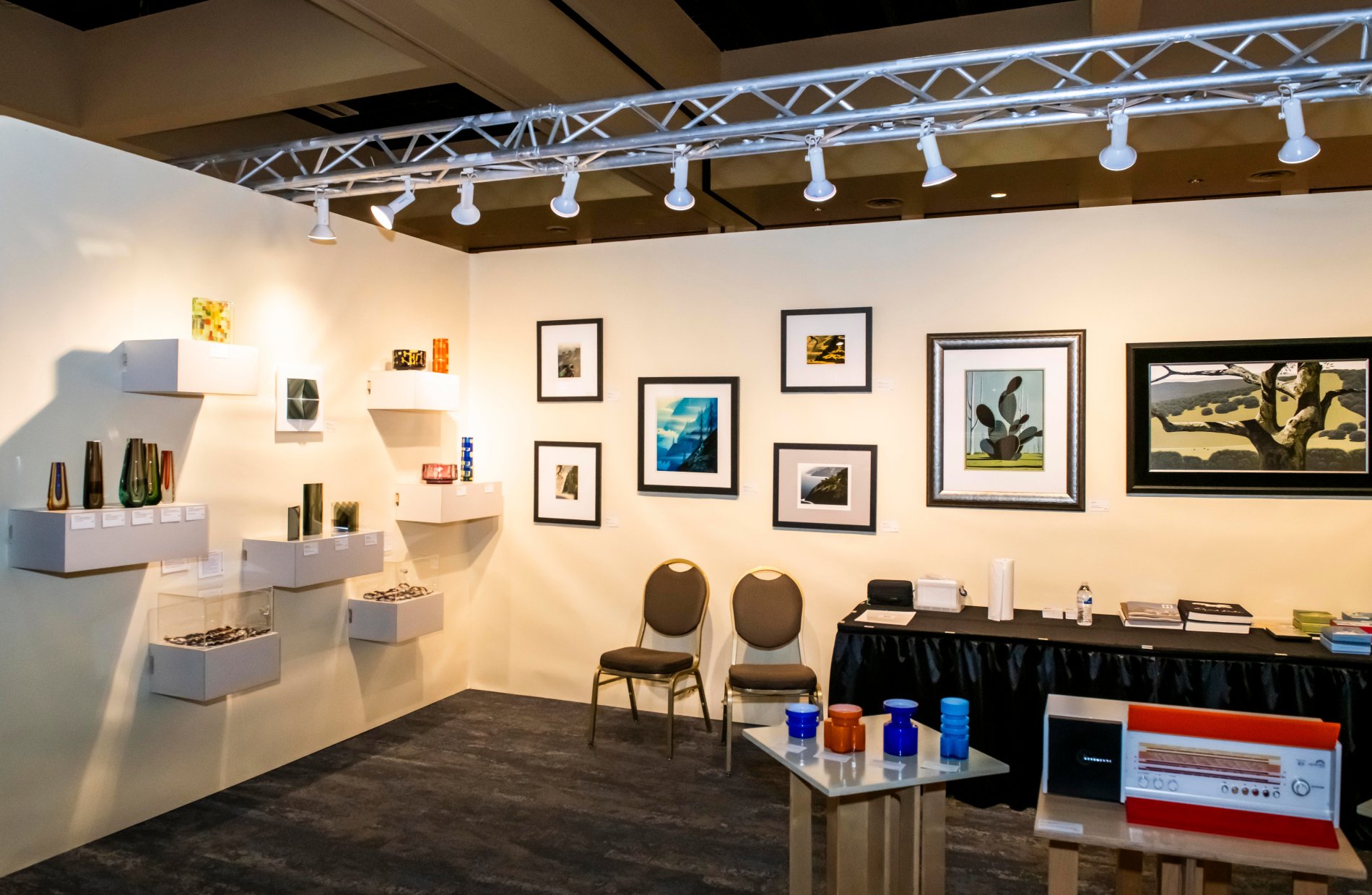
Our NORDMENDE SPECTRA FUTURA at MODERNISM WEEK - PALM SPRING (CA) - FEBRUARY 2025
Palette Contemporary Art & Craft stand

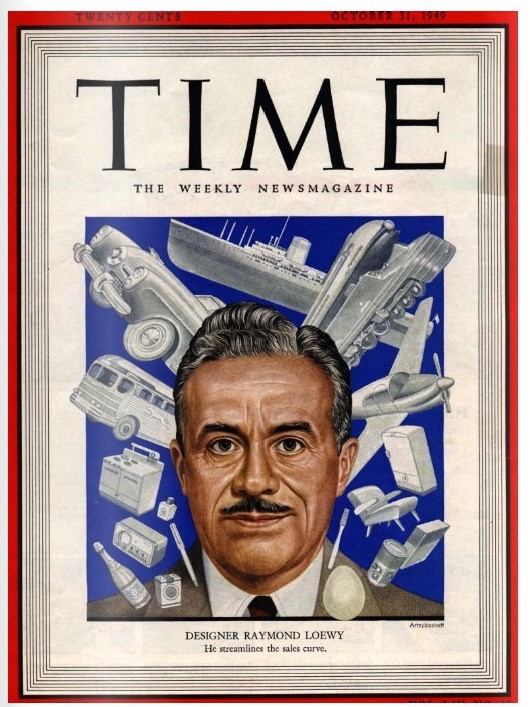
RAYMOND LOEWY

Raymond Loewy appears twice on the cover of the prestigious TIME magazine, in 1949 and 1990 as one of the 100 most influential Americans of the 20th century

Born in Paris in 1893, he emigrated to the USA at the end of the First World War. He was one of the most prolific and creative designers in the world, and perhaps deserves the title of father of industrial design.

His work is not limited to a single sector but extends over the most diverse areas.

Much can be read about his work online and in the numerous books dedicated to him, but probably few know that in 1973 he worked on a diplomatic project between the United States and the USSR with the aim of easing tensions between the two countries during the Cold War period.

A very small part of his most famous works

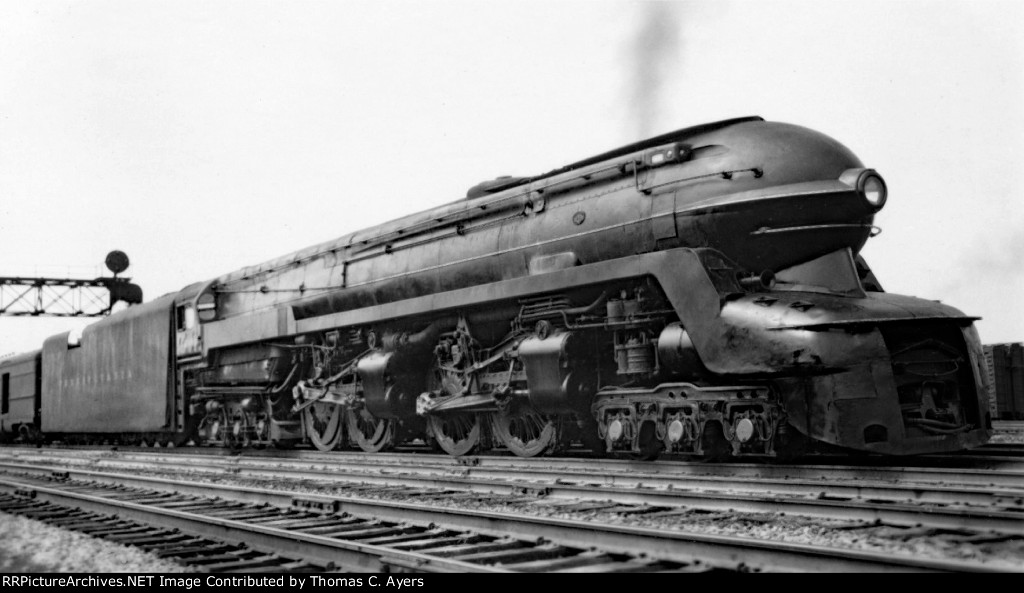
1939 - The Pennsylvania Railroad S1 steam locomotive
1940 - The pack of Lucky Strike cigarettes
1954 - The Scenicruiser bus for Greyhound company
1955 - Coke - The first large format bottle, and in 1960 the first steel can.
1962 - Studebacker Avanti with bodywork made of fiberglass reinforced polyester, speed over 240 km/h.
1962 - Air Force One, designed following the color indications of President John Kennedy, who followed the tastes of First Lady Jaqueline.
1967 - The Nordmende Spectra Futura designer radio, which was successfully marketed the following year.
1971 - Shell logo, which has remained almost unchanged to this day.

  • 蓝牙
    加装蓝牙接收器

    Read More >

  • 多平台的连接
    每台收音机都配备了一条连接到任何数字设备的音频线。

    Read More >

放大管声音的改进

- 加装蓝牙接收器 - 此收音机配置了蓝牙接收器,由接收器电源直接供电。这使得它可以从任何外部数字设备控制放大器,如iPad、智能手机,或一个复杂的多媒体站。所以你能无线拨放您喜爱的网站或Apple lossless音乐。无线接收器可依客户需求配置。- 多平台连接 - 一个定制的音频线,可以连接任何数字设备,如手机,智能手机,笔记本电脑,光盘播放器等,收音机接收音频。这种特殊的音频线适合现代设备和接收器之间的不同的阻抗。此外,两个立体声信道流入一个不增加负载到输入单元。

Nordmende Spectra Futura


. 历史

1923 - Otto Hermann Mende founds Radio H. Mende GmbH in Dresden producing radios under the brand name “Mende”.
1939 - During World War II the government requests to produce bomb detonators.
1945 - The factory is partially destroyed by bombing and dismantled by the Soviet Union.
1947 - Martin Mende (son of the founder) sets up a new company in Bremen the North German Mende Broadcast GmbH. Whose name is later changed to NORDMENDE. The operational headquarters are established in the former Focke-Wulf aircraft factory in Hemelingen.
1950 - Becomes one of the most prestigious German radio manufacturers. Since 1950, development engineers have been planning the production of televisions.
1953 - The demand for televisions grows and Nordmende is already prepared.
1961 - Nordmende produces the first television with an ultrasonic remote control.
1964 - A new factory is opened in Wildeshausen, then in Bremerhaven, Sittensen and finally in Verden in 1972
1968 - The company is oriented to design products and comes out the "Spectra Futura" designed in collaboration with the famous designer Raymond Loewy.
1969 - The sons Karl and Hermann take over the management and soon have to deal with the onset of the crisis. Competitive pressure was mounting, the market was "saturated" and the high cost of such quality proved to be a competitive disadvantage when the price of color televisions began to fall.
1977 - Company shares were sold to the French group Thomson-Brandt. But even this did not bring the hoped-for help and so in 1980 the last shares of the Nordmende company were sold.
1980 - The production of audio devices is transferred to France, but the French group was not organized and some absurd choices were made such as the division of labor in production and assembly between the plants in Villingen (Saba) and Bremen, which still made more complex and expensive to produce.
1981 - The first factories in Germany are closed. The same fate will befall the other companies controlled by the French group, such as Dual, Saba and Telefunken.
1987 - Europart's plan, 25% owned by the Thompson group, also failed and in the 1990s the new company filed for bankruptcy. Saba, Nordmende and Telefunken merged and remained part of the Thompson group.

主要特点

生产年份: 1968/70
超外差式收音机IF: 460/10700
7 AM电路,11 FM电路.

无线电波段: LW, MW, SW, FM

扬声器:
1 full-range 13 cm

尺寸(长高深): 59x16x16公分

净重: 8公斤

三极管 13: 3 x AF106, 2 x AF121, AF125, AF137, BFY39IV, BFY39II, BC139, AD161, AD162, AC122, AD150, 3 x AA112

Nordmende Spectra Futura

MEASURED TECHNICAL FEATURES

IMPORTANT REMARK
(to be read carefully at least the first time)

  1. The following measures have been carried out in order to compare, from an electrical point of view, the devices that will be reviewed on this site. It is not possible to make comparisons with measurements made by other laboratories on different devices. The instrumentation and measurement conditions are probably very different.
  2. The instrumentation used for the measurements is obsolete and unprofessional. We believe that more precise instrumentation is not necessary due to the tolerances of the human auditory system. Distinguishing a distortion of 1% from one of 1.1% or 1.001% only makes sense from the electrical point of view. Probably no one can hear the difference by ear. Only a child and very few lucky people can perceive the difference between a flat response curve up to 16 KHz and one up to 20 kHz.
  3. The perception of sound depends on many factors, namely the age of the listener, the listening environment, the musical genre that is being reproduced, the listener's expectations, his or her listening habits and knowledge and many other factors, besides of course the quality of the other devices. Therefore, there is no direct and unique relationship between the results of the measurements made and the pleasantness of listening to a specific device.

Nordmende Spectra Futura

BANDWIDTH

Normally the measurement of the bandwidth is done on a resistive load. The deformation caused by the loudspeakers' inductive load and the effect of the mechanical resonance of the speakers themselves on the feedback circuit are not considered. The effects are by no means negligible, the measurements carried out on a purely resistive load are always very linear but they don't coincide with the real frequency response.

On the other hand, this response curve was measured on an inductive laod, that is, with its own loudspeakers.
The frequency response measurements were made with a sinusoidal generator and a 
Wandel & Goltermann WM  20 level meter.
You can see the actual frequency response on the vobulator' screen.

As you can see the low tones are slightly enhanced due to the always active loudness correction.

Nordmende Spectra Futura

Nordmende Spectra Futura

音调控制

The measurement is always taken on an inductive load, i.e. with its own loudspeakers.

In the image on the left you can see the effect of the bass control in the maximum exaltation position.
In the image on the right you can see the effect of the treble tone control in the maximum exaltation position.

Nordmende Spectra Futura

RMS POWER

We consider as Maximum Power the square of the lower of the RMS voltages measured at the three sample frequencies divided by the load resistence.
The measurement conditions are the following:
- sample frequencies, 100, 1000, 10,000 Hz
- 8 ohm resistive load
- distortion less than or equal to 1%.
The measuring instrument provides the RMS value directly.

The measured RMS power is 4.6 W

Nordmende Spectra Futura

Nordmende Spectra Futura


Misura IM% a 1000 Hz

Nordmende Spectra Futura


INTERMODULATION DISTORTION %

The Intermodulation Distortion % was measured with the SMPTE standard and measured at 1W RMS.
The two measurements were carried out by modulating the 50 Hz sine wave with a 1080 Hz sine wave and then with a 10400 Hz sine wave, with an amplitude in a ratio of 1/4 compared to the basic sinusoid.
The output voltage was kept around 2.83V on an 8 ohm carico.

The measured Intermodulation Distortion % (IM%) is 0.13%


扬声器

The original speaker, or speakers in the stereo model, is a modest Isophon P13F.
Its most important features are:

Maximum power 5W
Resonance frequency 130Hz
Frequency response 80-14000Hz
Sensitivity N.C.

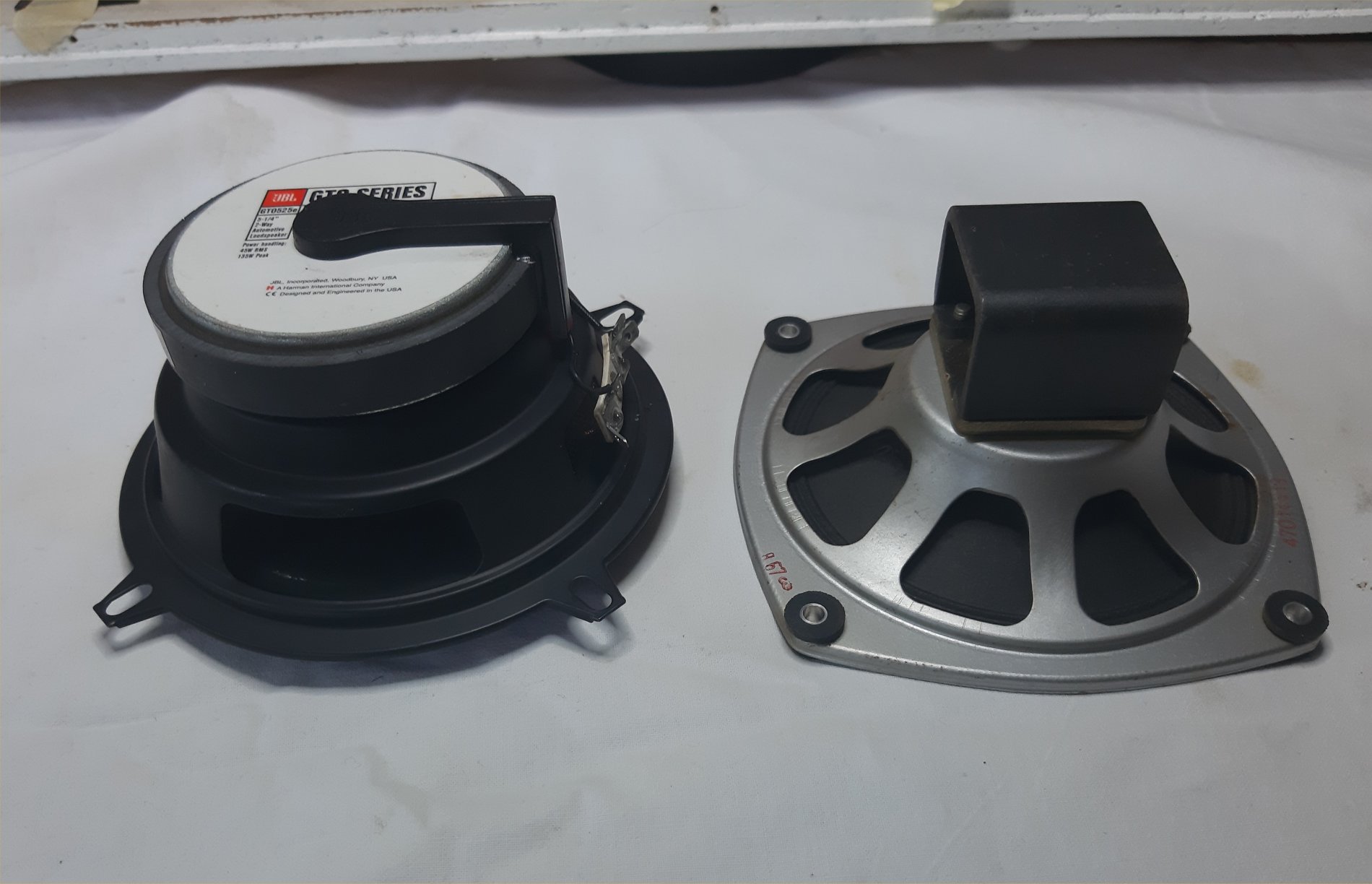
The loudspeaker seemed to us not being able to fully express the good characteristics of the amplifier, for this reason we decided to replace it with an excellent JBL GTO525e or similar.
The features of the last is completely different:

Maximum power 135W
Resonance frequency 80Hz
Frequency response 70 - 21000Hz
Sensitivity 92dB

With this new loudspeaker the frequency response and power handling have changed radically.
Compatibly with the small dimensions of the cabinet and the limited power, the sound is now much warmer and more convincing. The effect of exaggerated emphasis of the mid tones due to the difficulty of reproducing the low and very high tones of the old loudspeaker has completely disappeared.

In the end, a beautiful sound capable of filling even a medium-sized room.

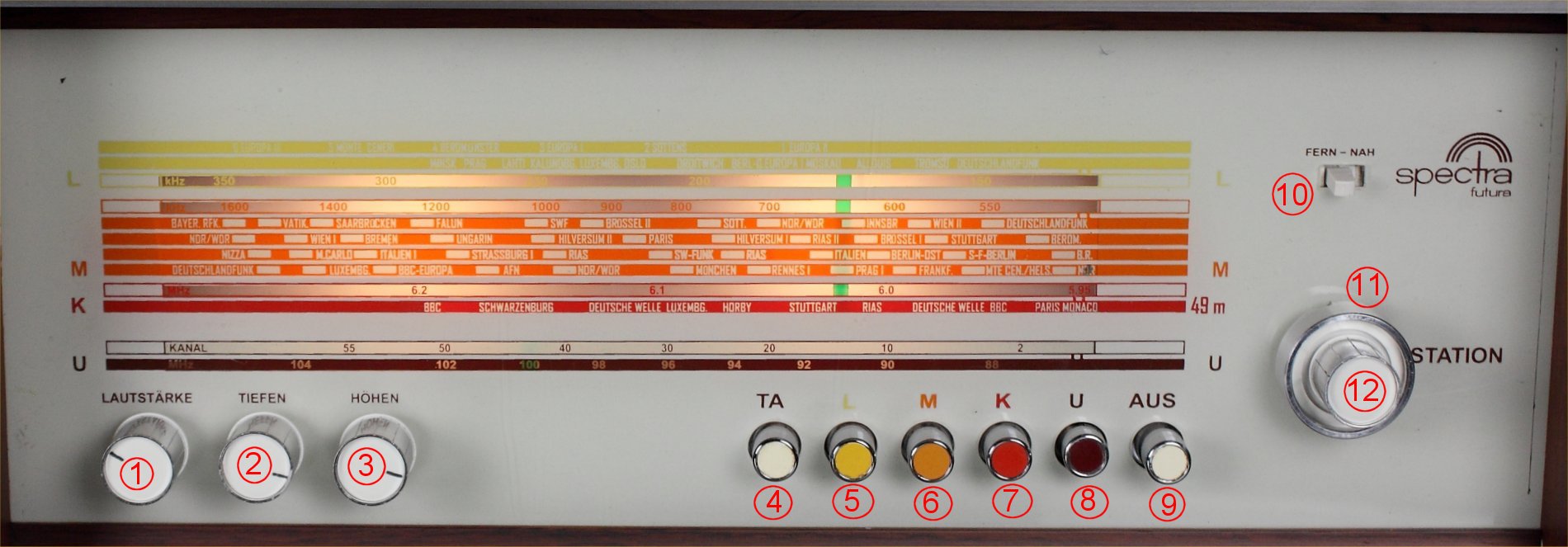
控制面板 - MONO Model

Nordmende Spectra Futura

1 - Volume control (with loudness built-in)
2 - The bass control knob
3 - The treble control knob

4 - TA - AUX
5 - L - Long Waves
6 - M  Medium Waves
7 - K - Short Waves
8 - U - FM
9 - AUS - Turn off

15 - FM sensitivity switch
16 - FM tuning knob
17 - AM tuning knob

控制面板 - STEREO Model

Nordmende Spectra Futura

1 - The treble control knob
2 - The bass control knob
3 - Balance Control
4 - Volume control (with loudness built-in)
5 - Stereo broadcast indication
6 - Tuning indicator


1 -
2 -
3 - 

7 - AFC - Automatic frequency Control
8 - STEREO - Mono/Stereo switch
9 - TA - AUX

10 - L - Long Waves
11 - M  Medium Waves
12 - K - Short Waves
13 - U - FM
14 - AUS - OFF switch

15 - FM sensitivity switch
16 - FM tuning knob
17 - AM tuning knob

Nordmende Spectra Futura

背面

AM调幅和FM调频天线输入和接地插座
外部扬声器输出
录音机插座(1)
唱片机输入(2)

恢复步骤

呈现美丽的形象
Nordmende Spectra Futura
ready for sale - cn

Bang …

Bang & Olufsen - High Fidelity Stereo Amplifier 608

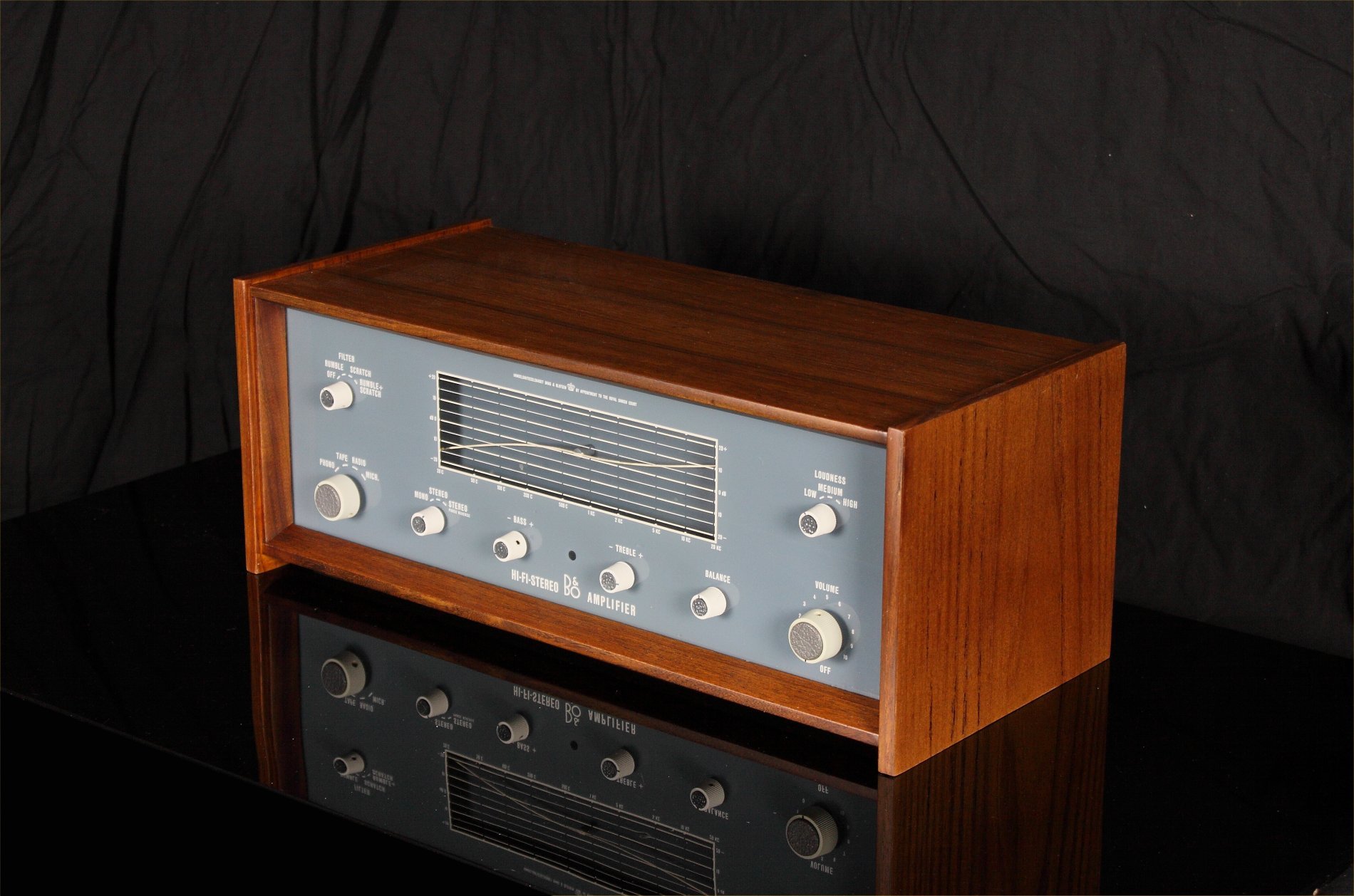
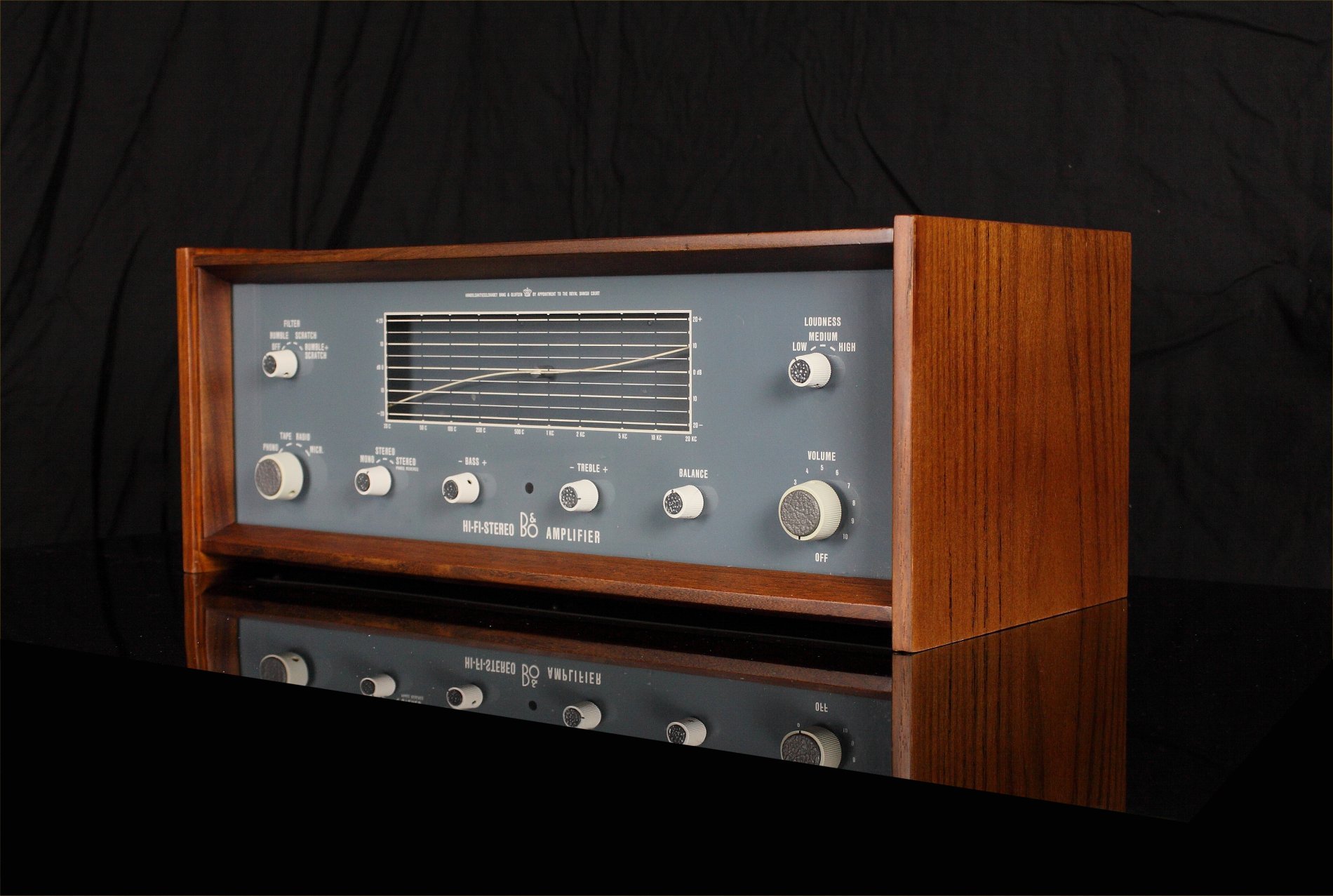
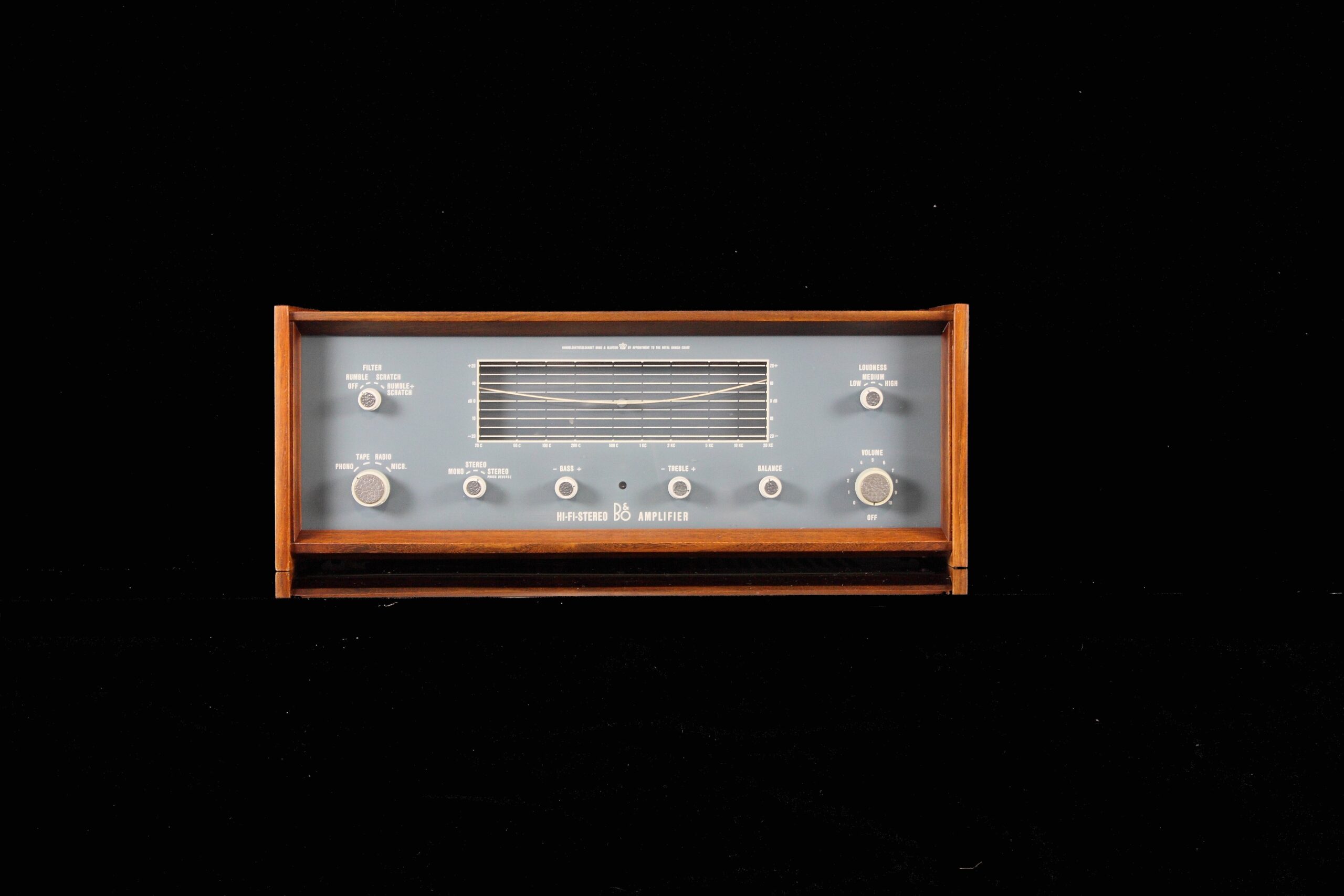
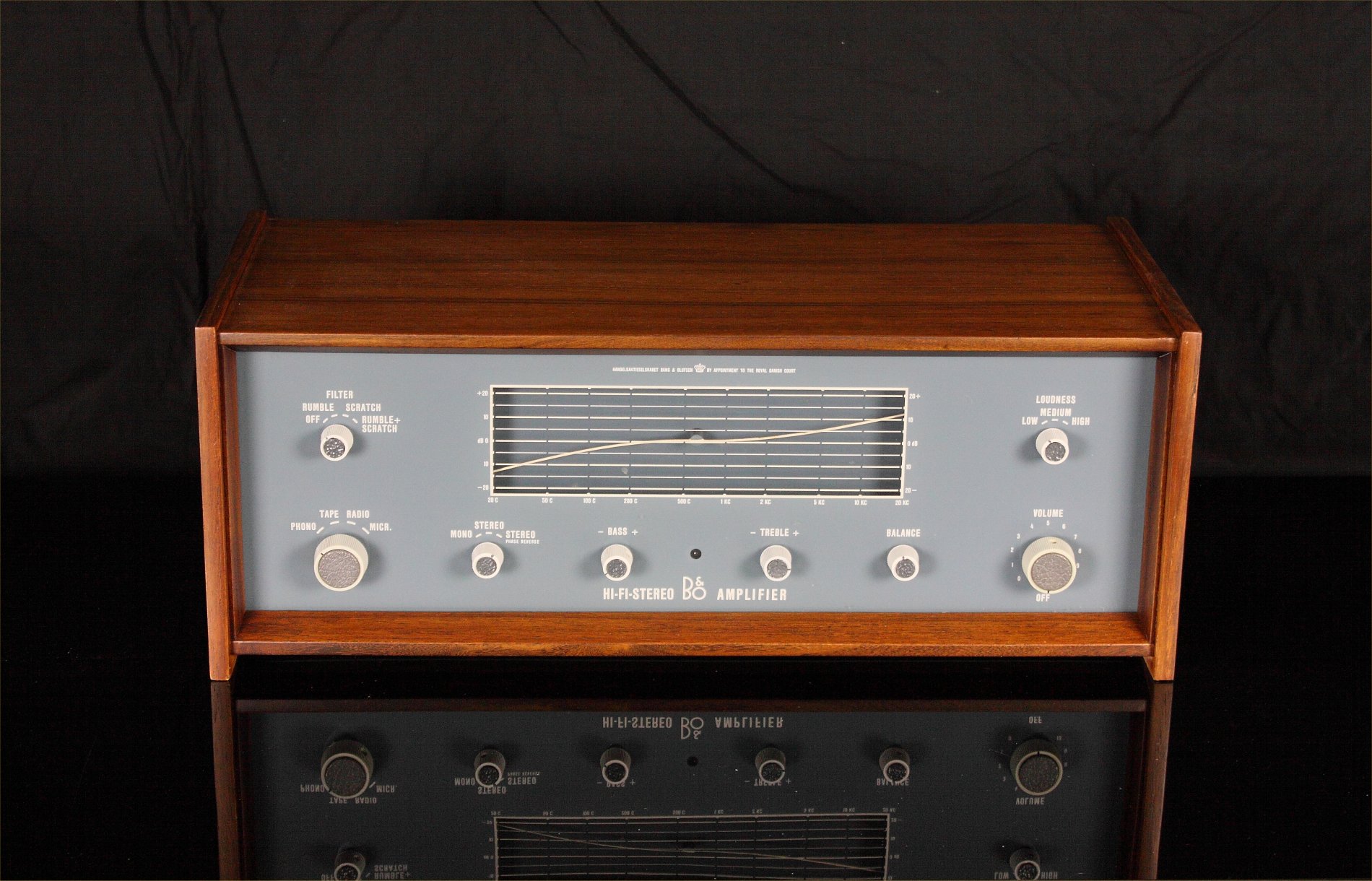
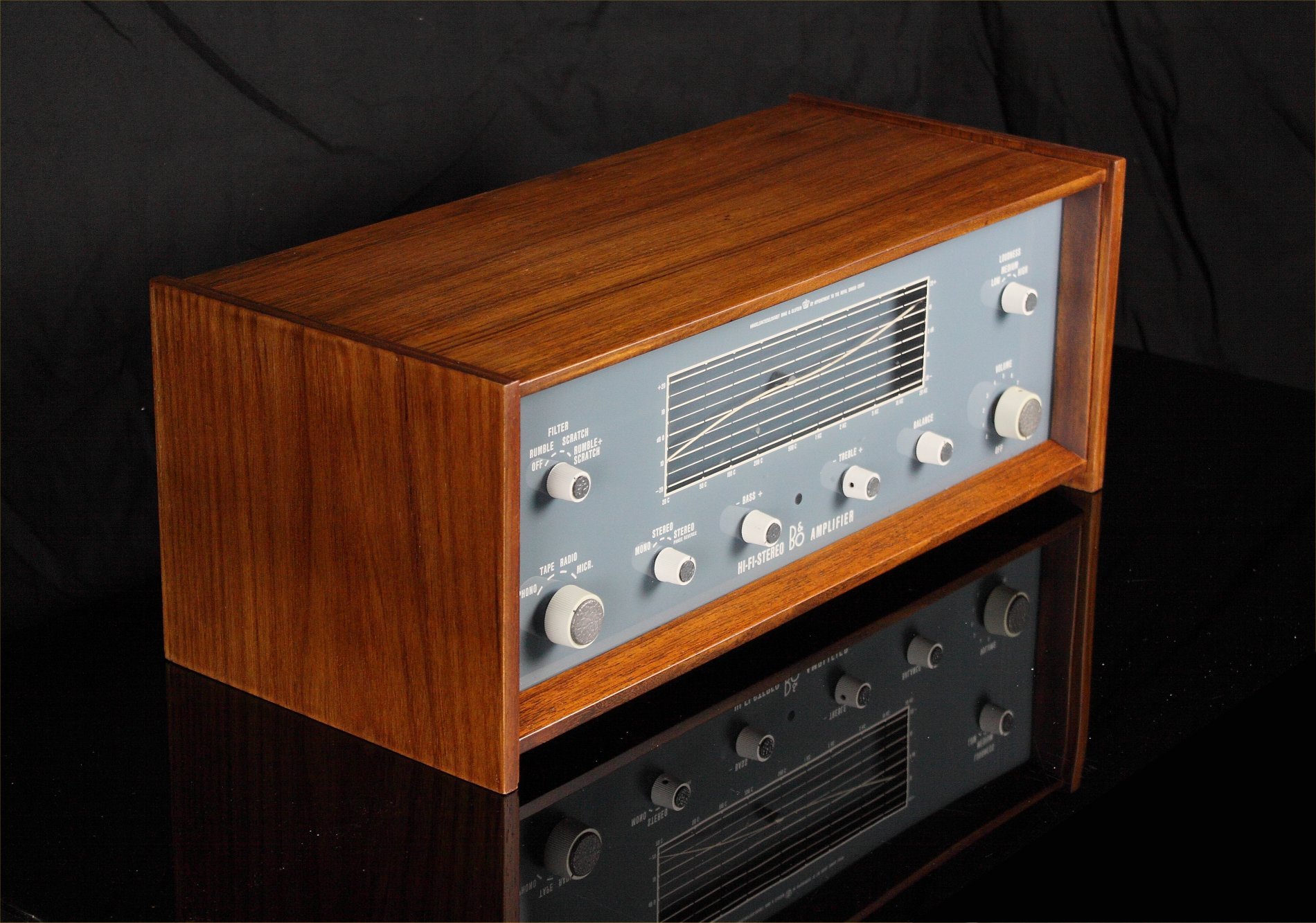
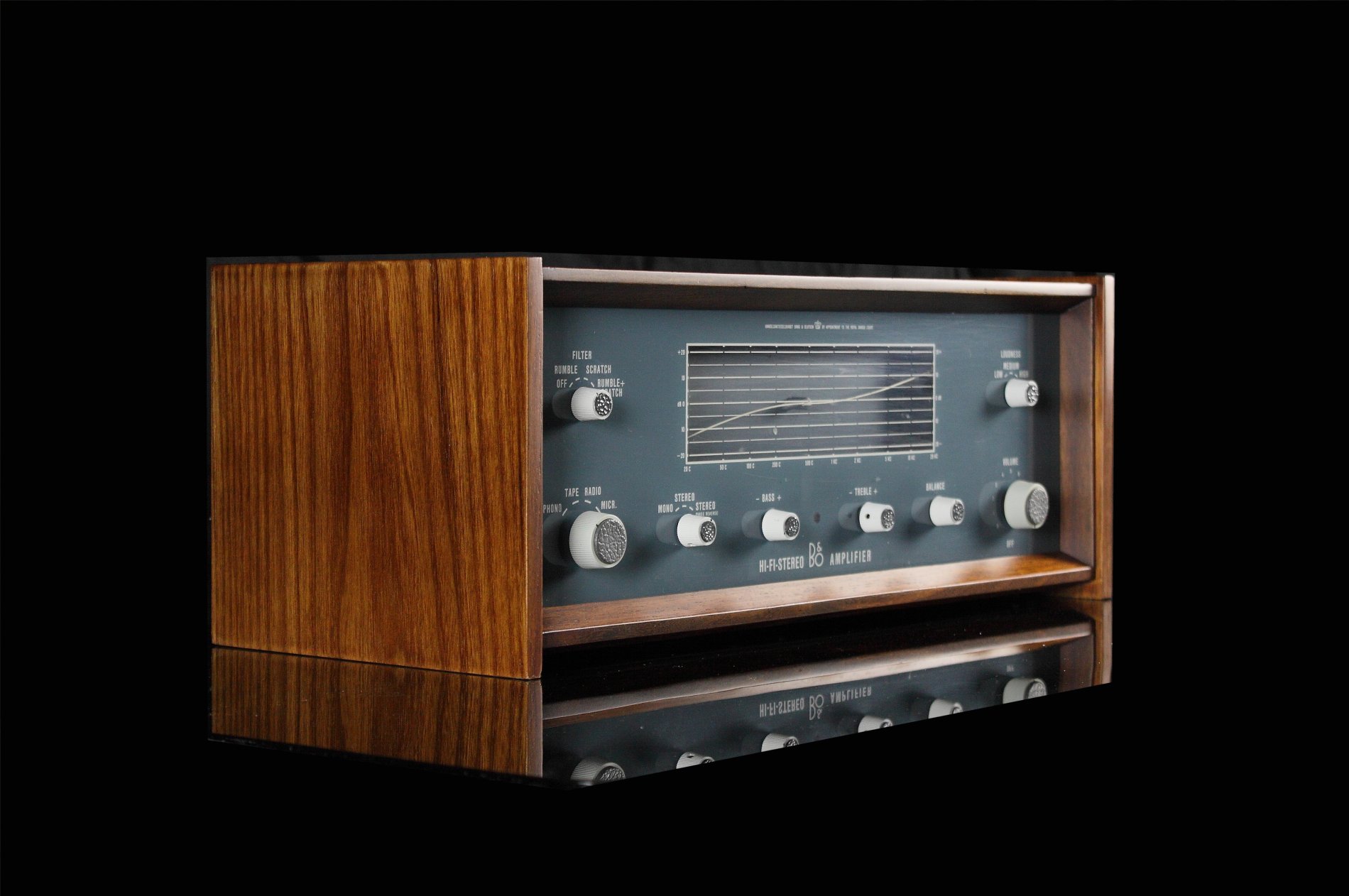
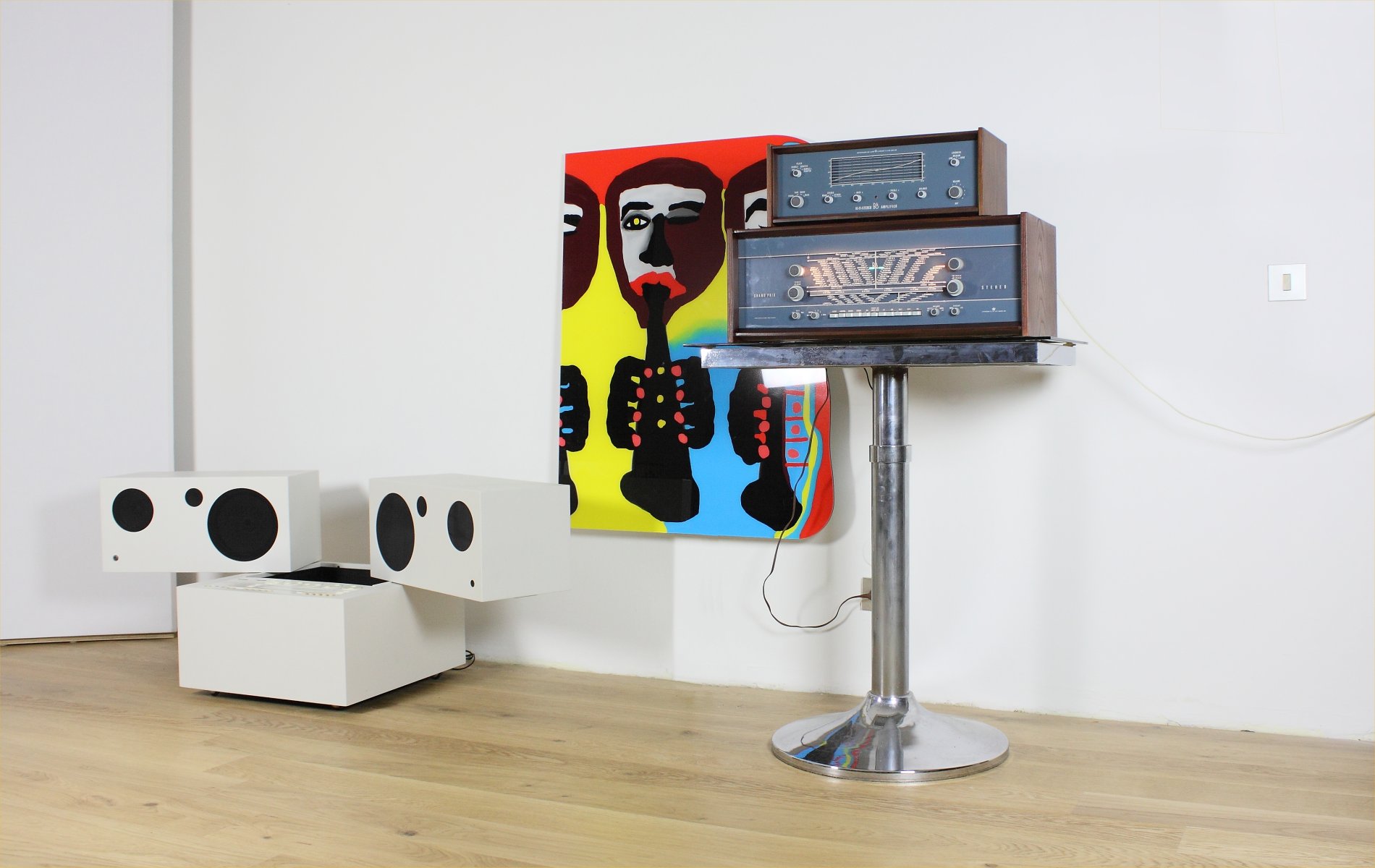
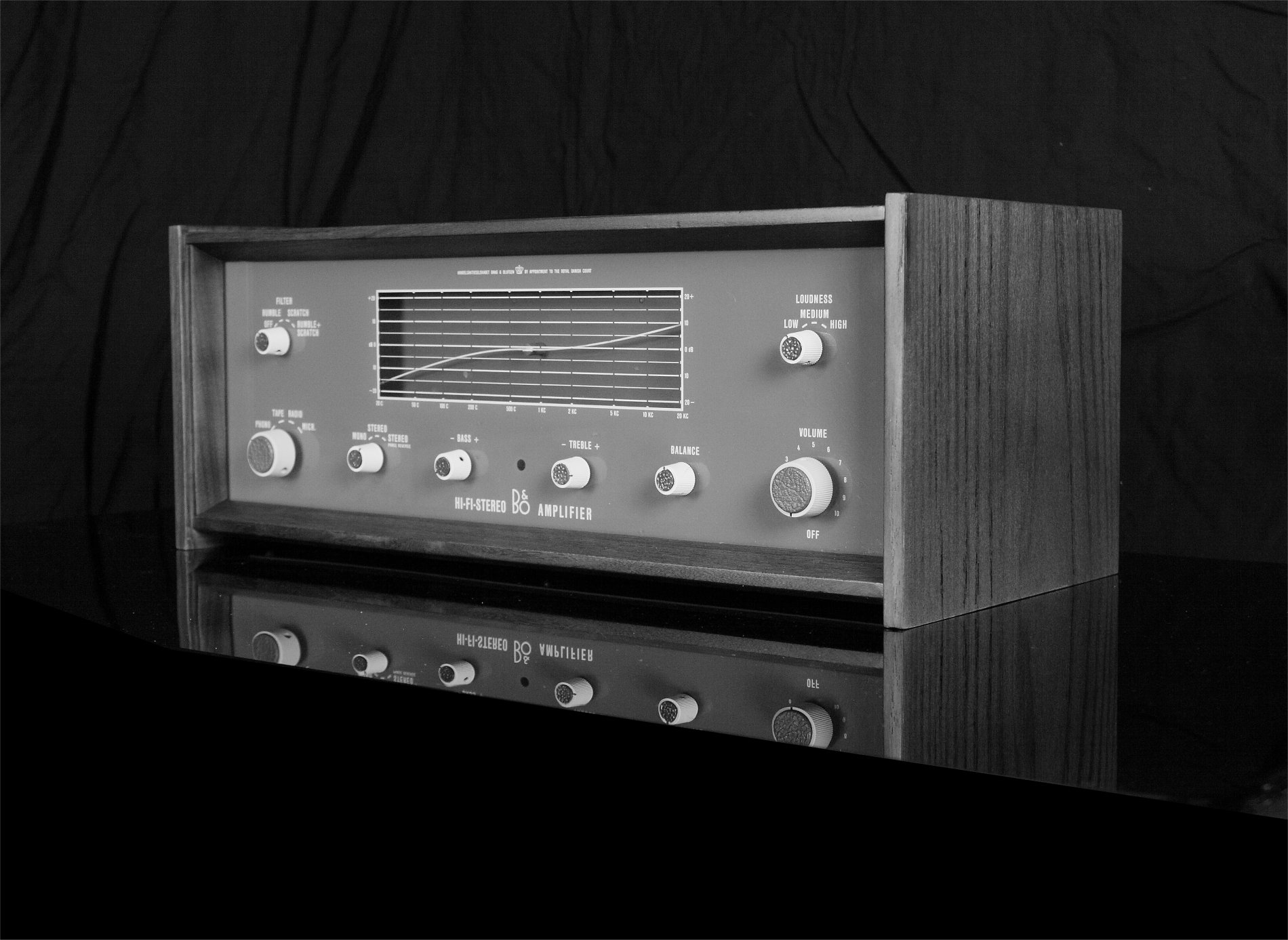
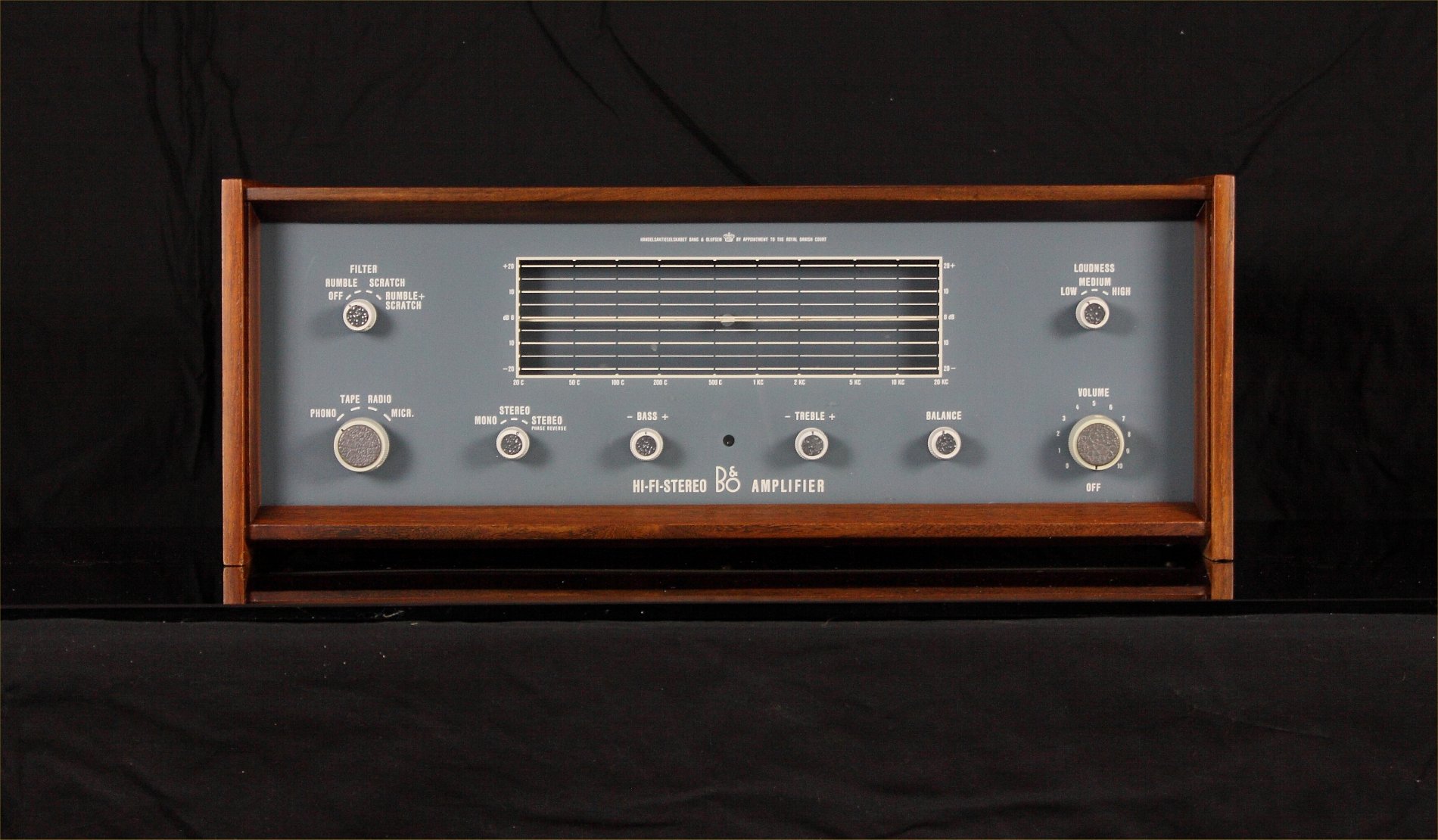
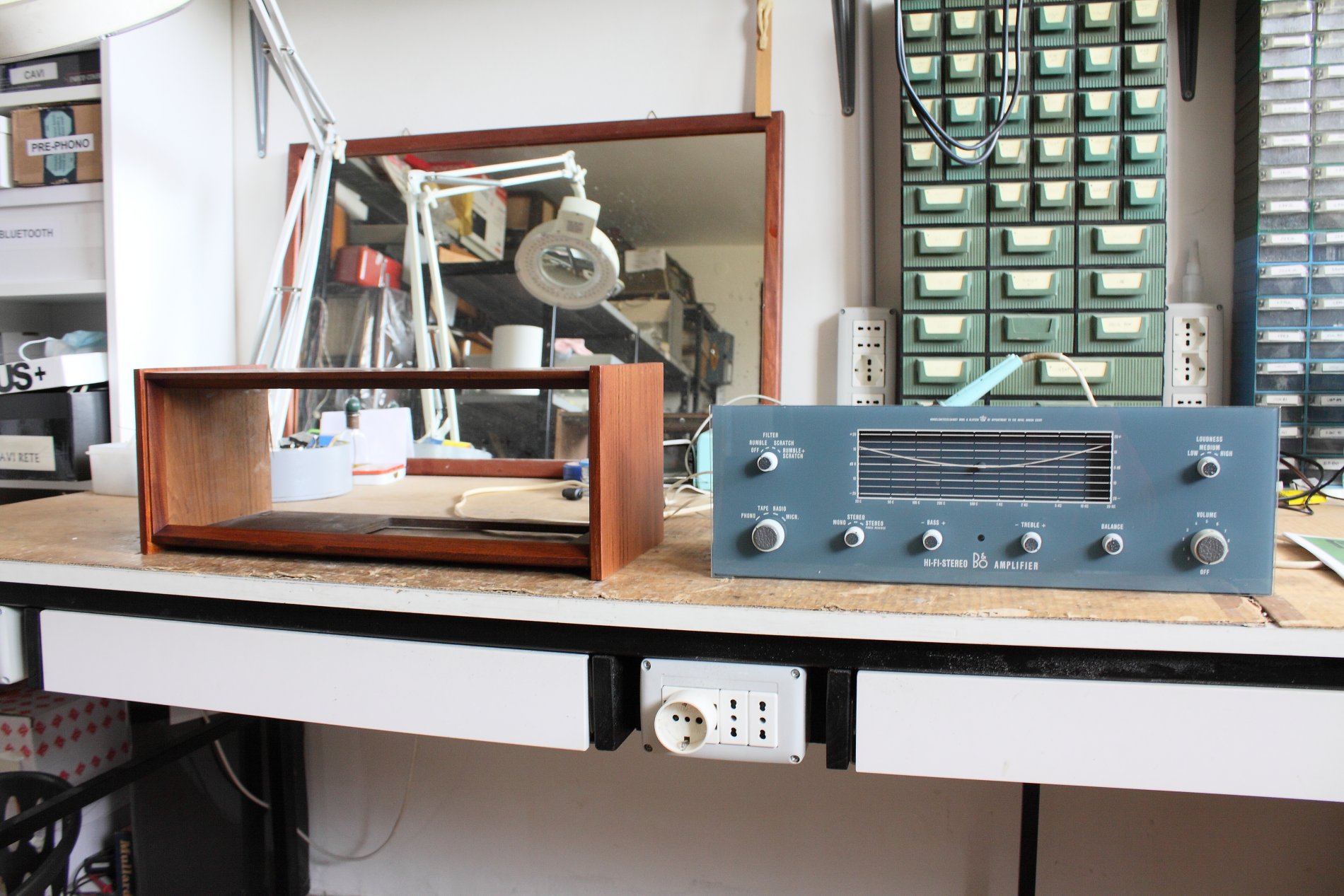
The High Fidelity Stereo Amplifier 608 was produced from 1961 to 1964 and it's the first Hi-Fi stereophonic amplifier by Bang & Olufsen; that explains its great value, both historical and economic.
The second series had a dark gray front panel but no significant technical changes and together with the Grand Prix receiver it marks a groundbraking step  for the Danish firm's design.

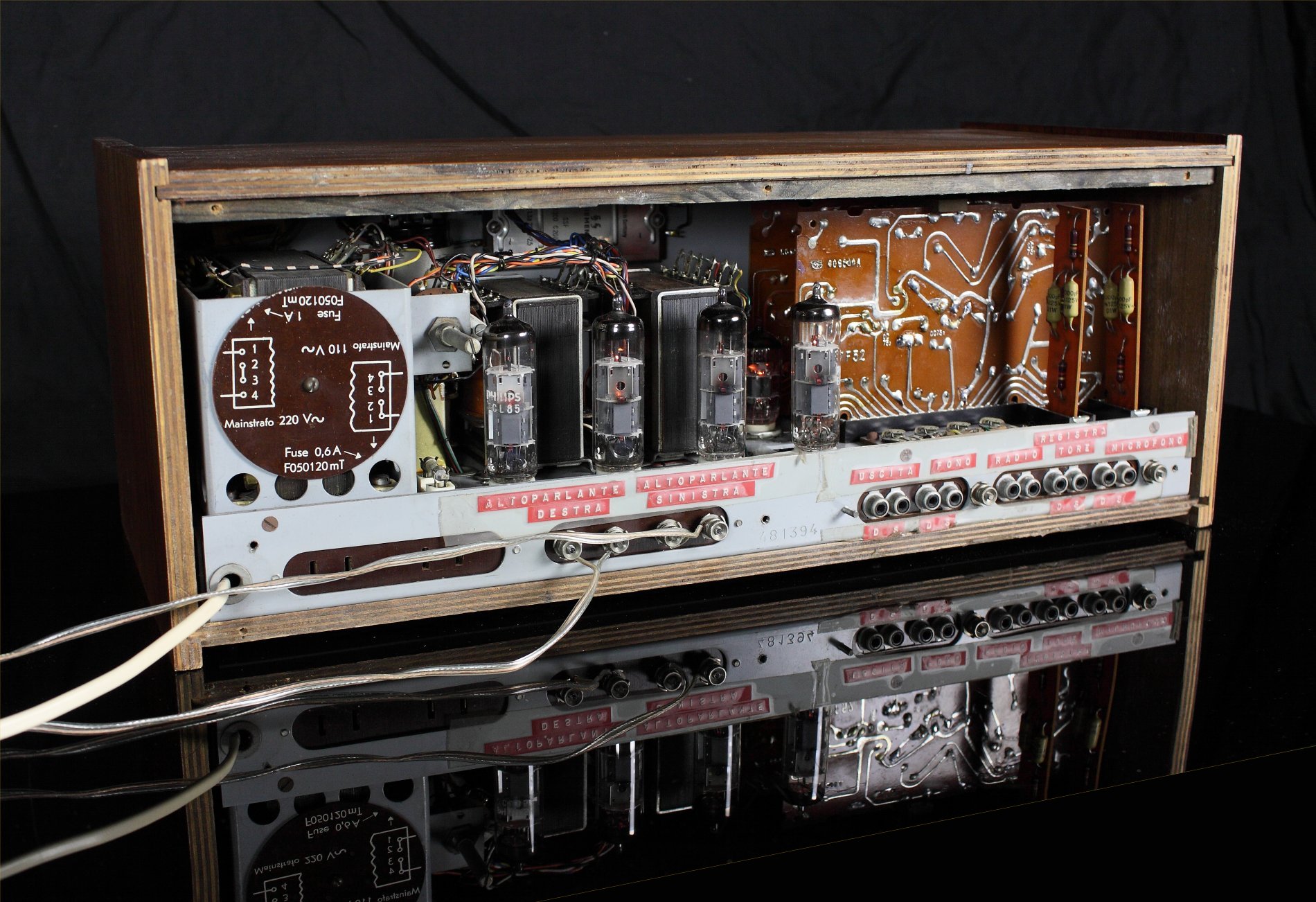
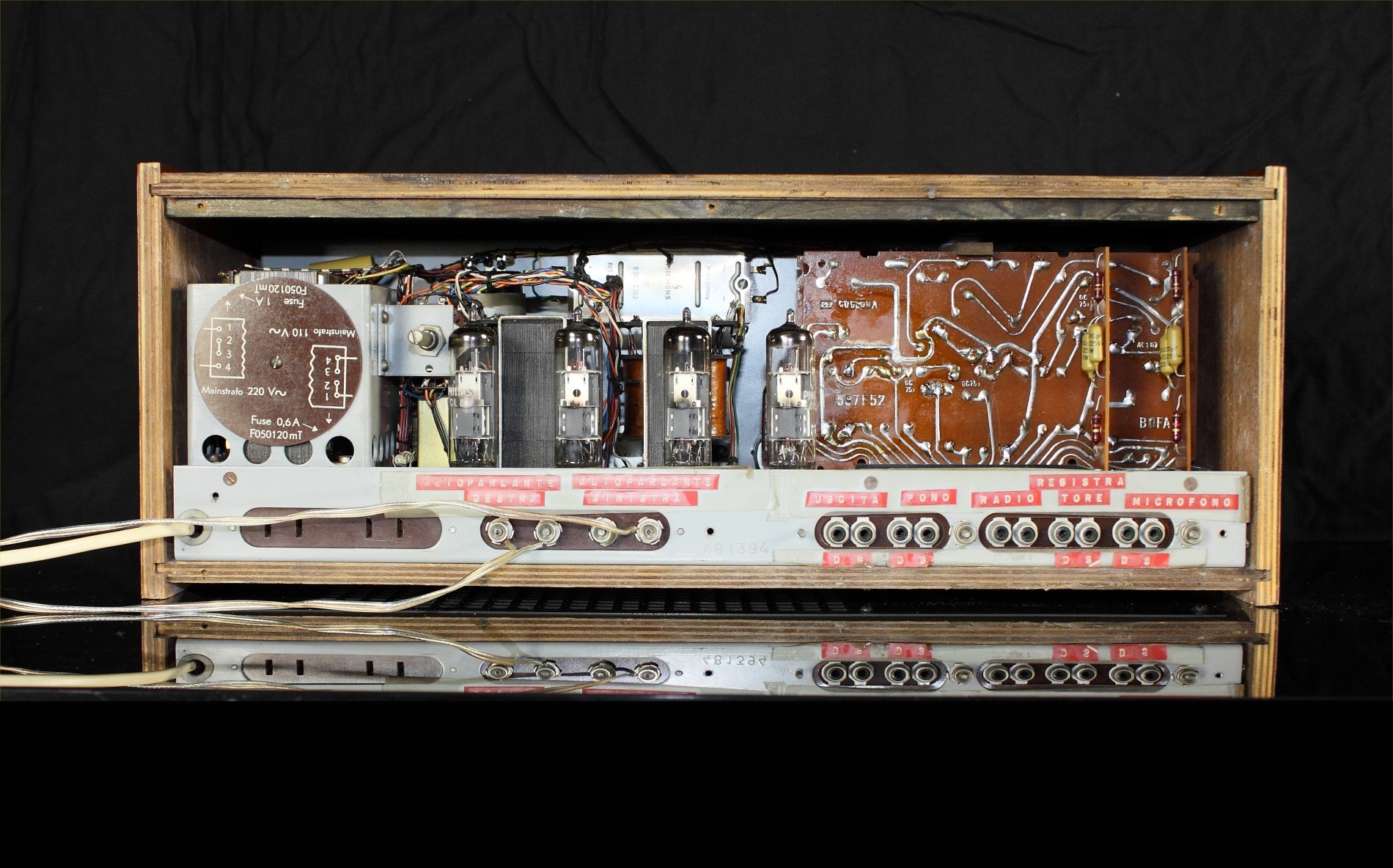
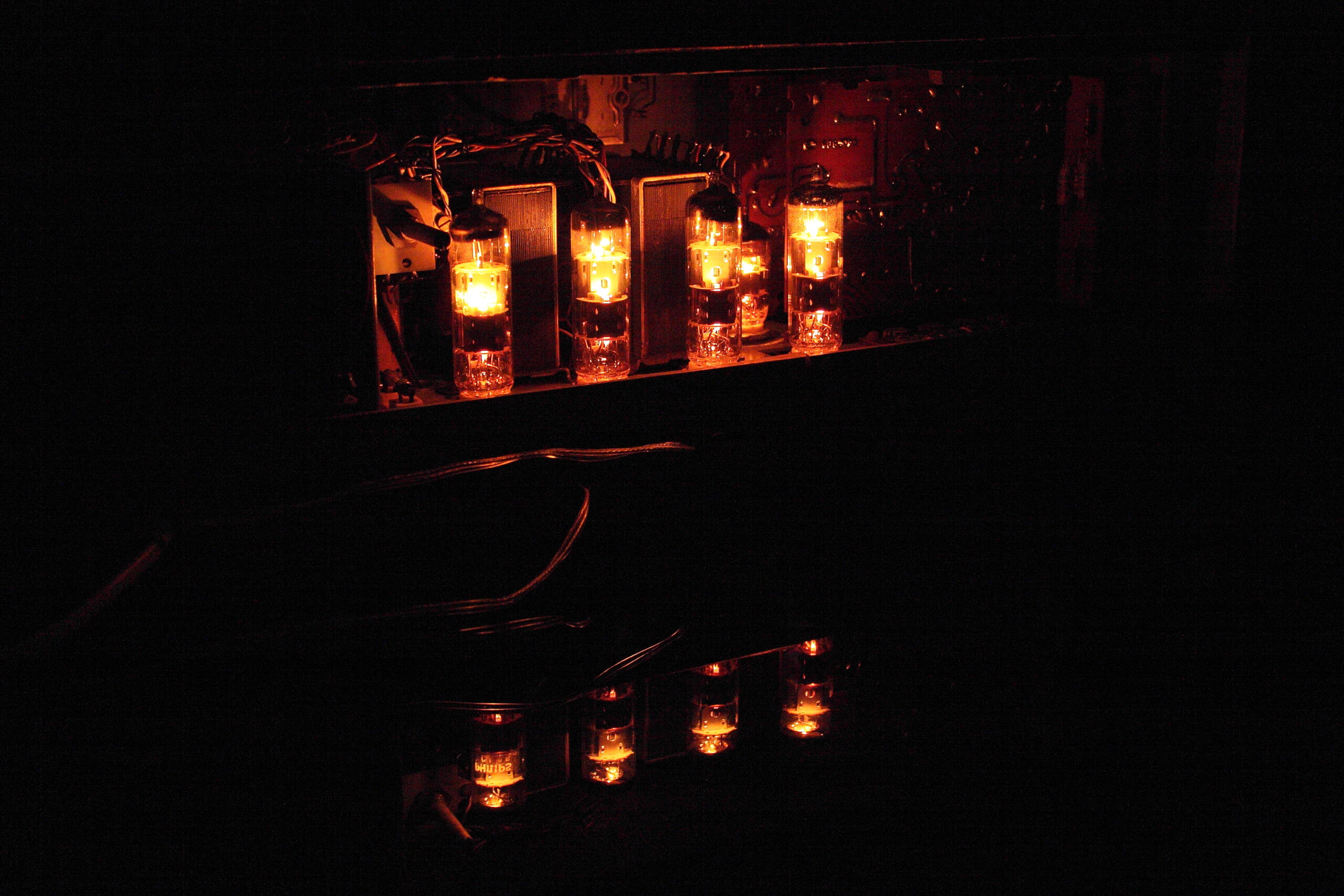
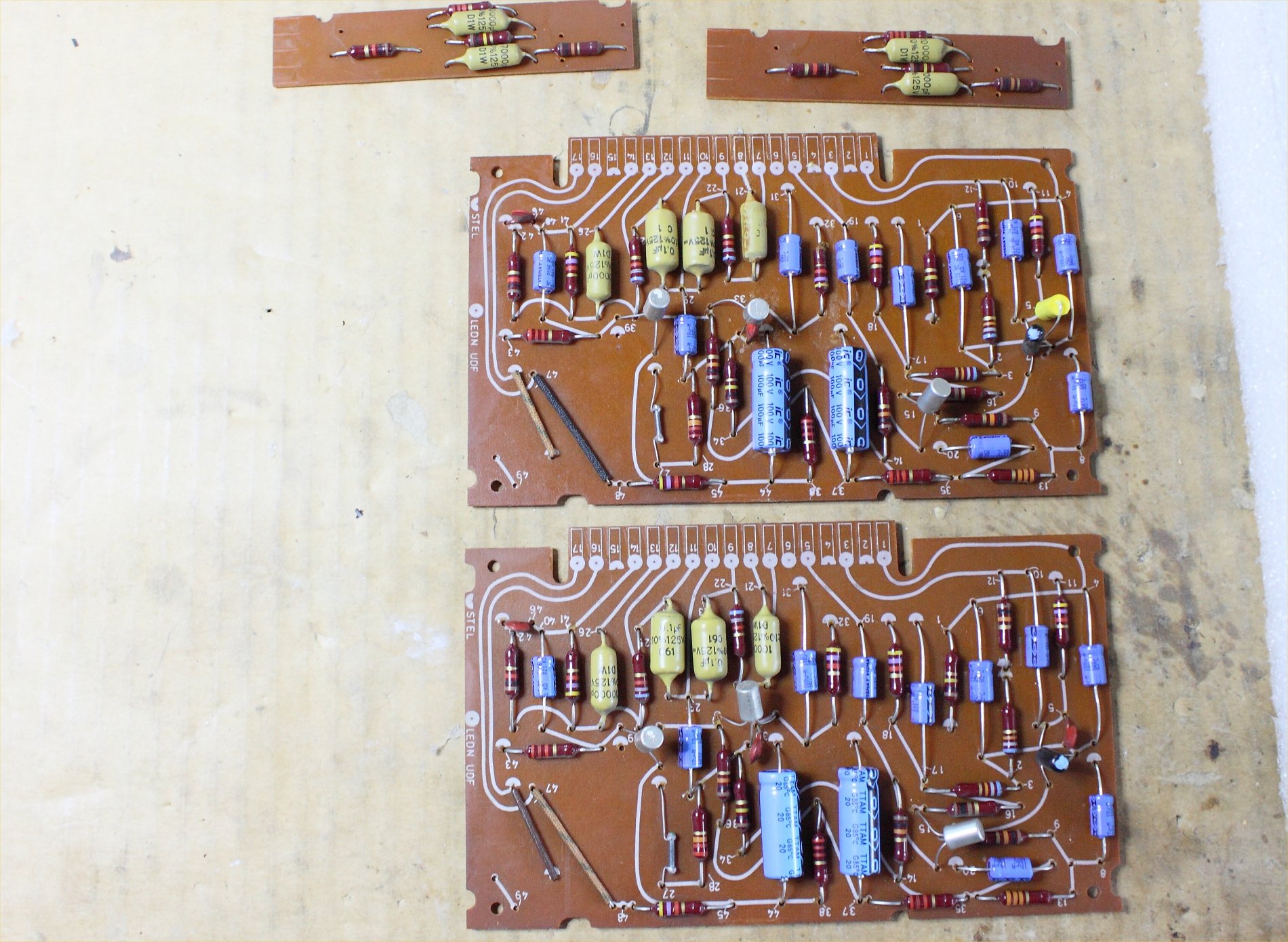
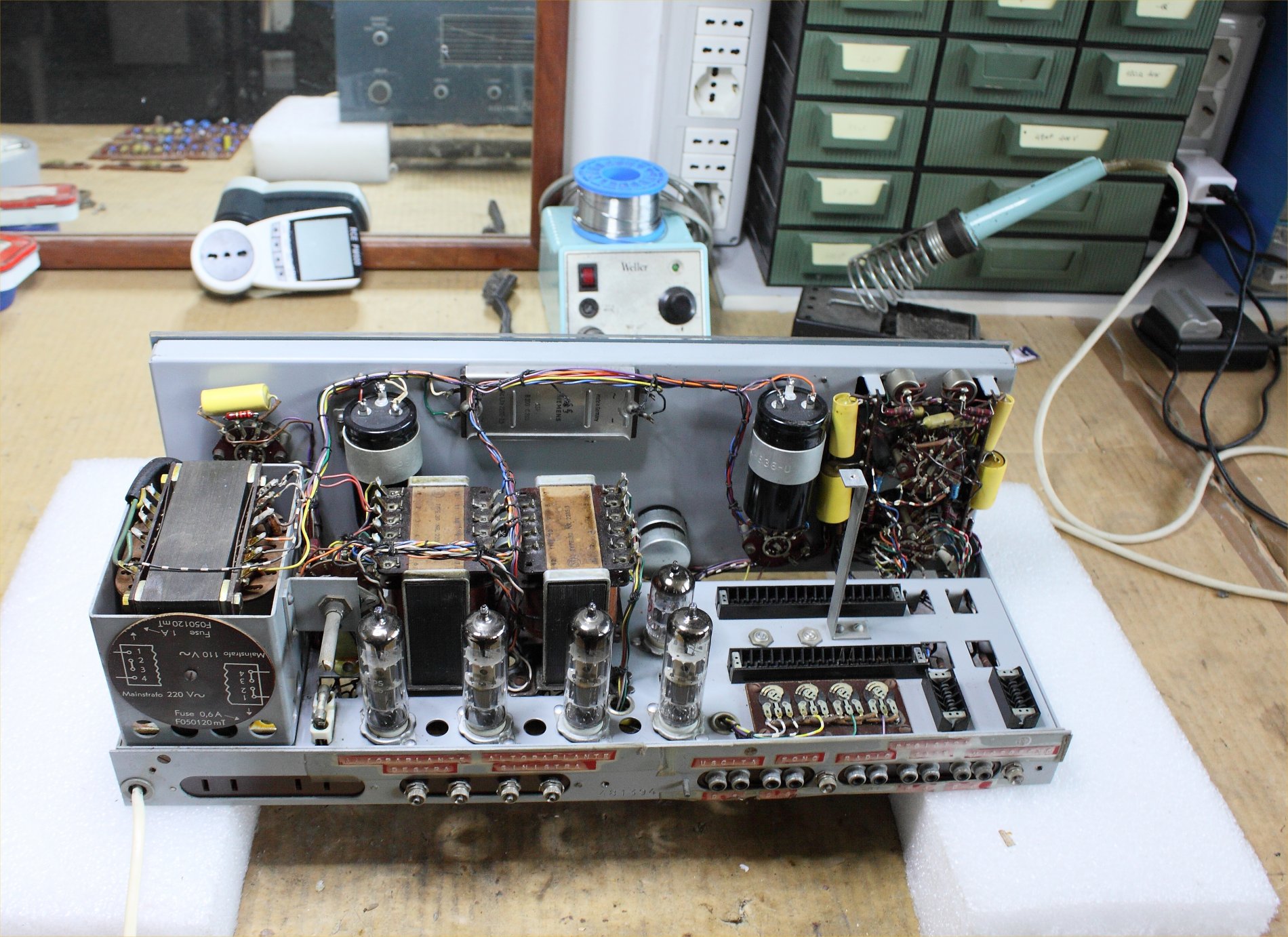
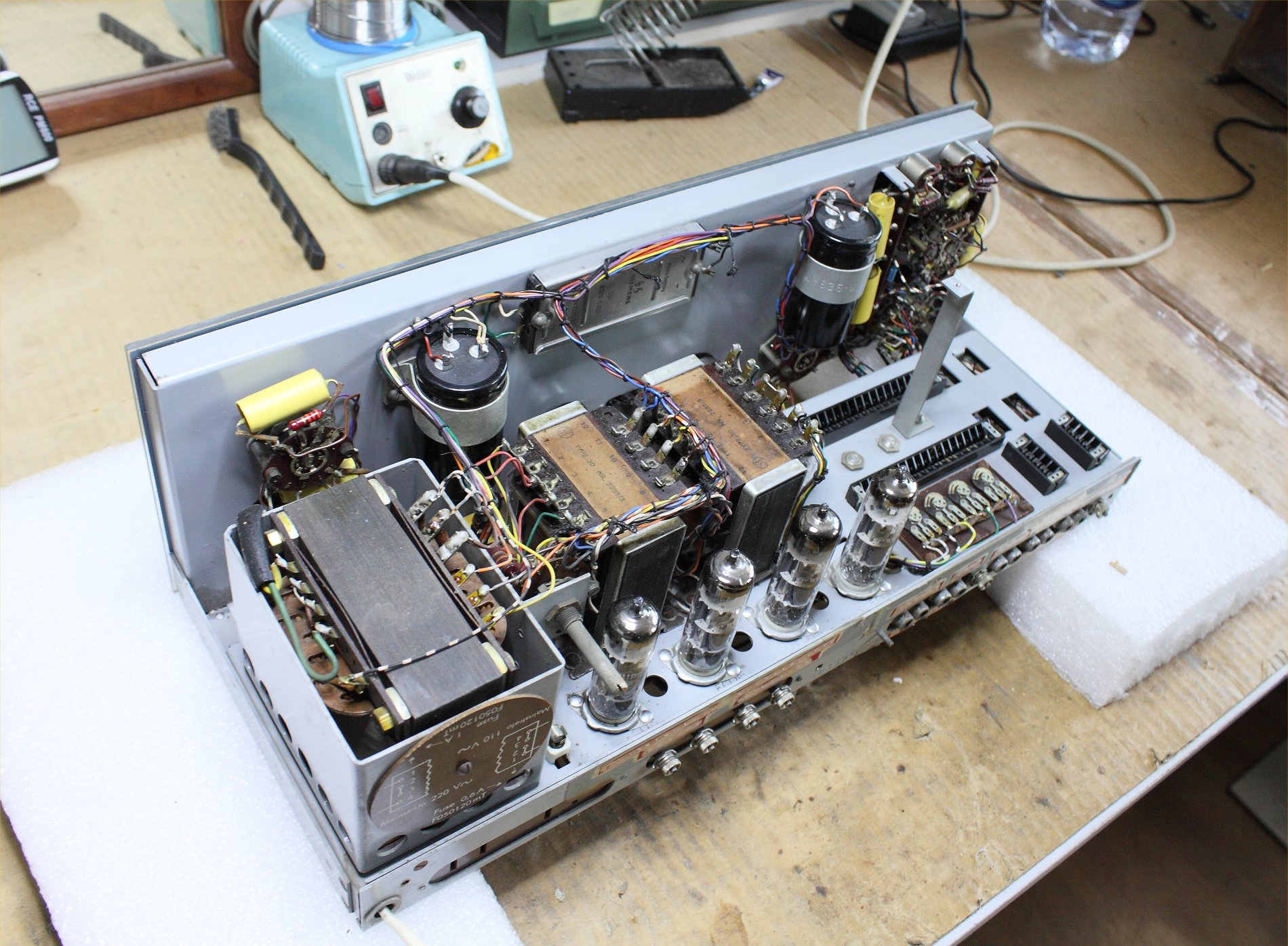
The inner set up is a masterful piece of work: cables are put in order and wrapped in a waxed twine binding to create a solid unique body. The power tubes’ polarisation is fixed and each of them has an accurate Bias' control by specific trimmers, as shown in the restoration's photos.
The circuit is very stable due to a 22pF capacitor parrallel connected to a 100 kOhm resistance avoid auto-swinging. The feedback rate is very low.
The power tubes’ set up is ultralinear.
The direct coupling (no capacitors) between the voltage amplifier anode ECC83 and one of the two tubes for the phase splitter is another device's distinctive trait.
A differential circuit realise the phase reversal, in this way a perfect half - waves' symmetry and a remarkable voltage's gain are achieved.
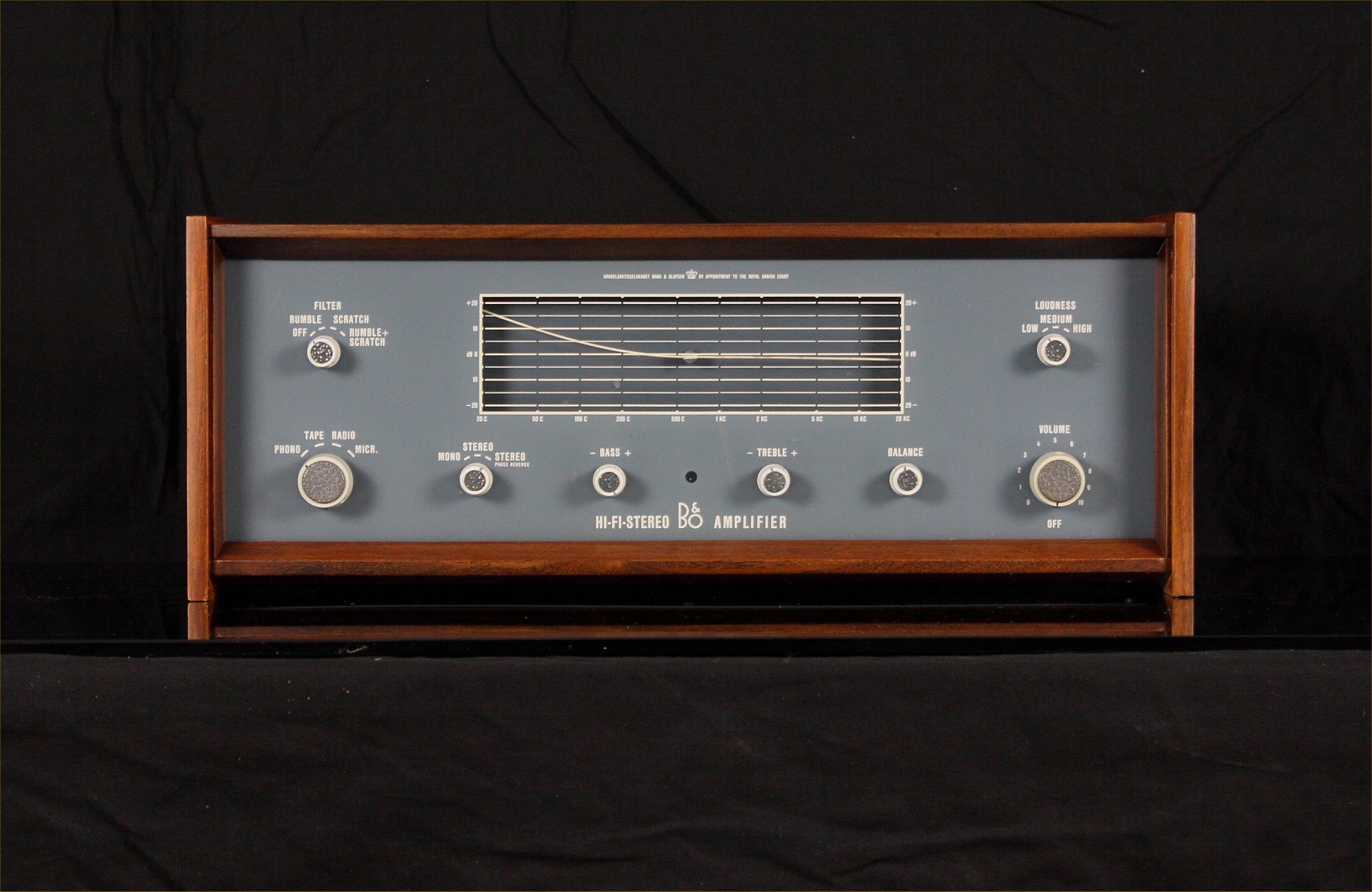
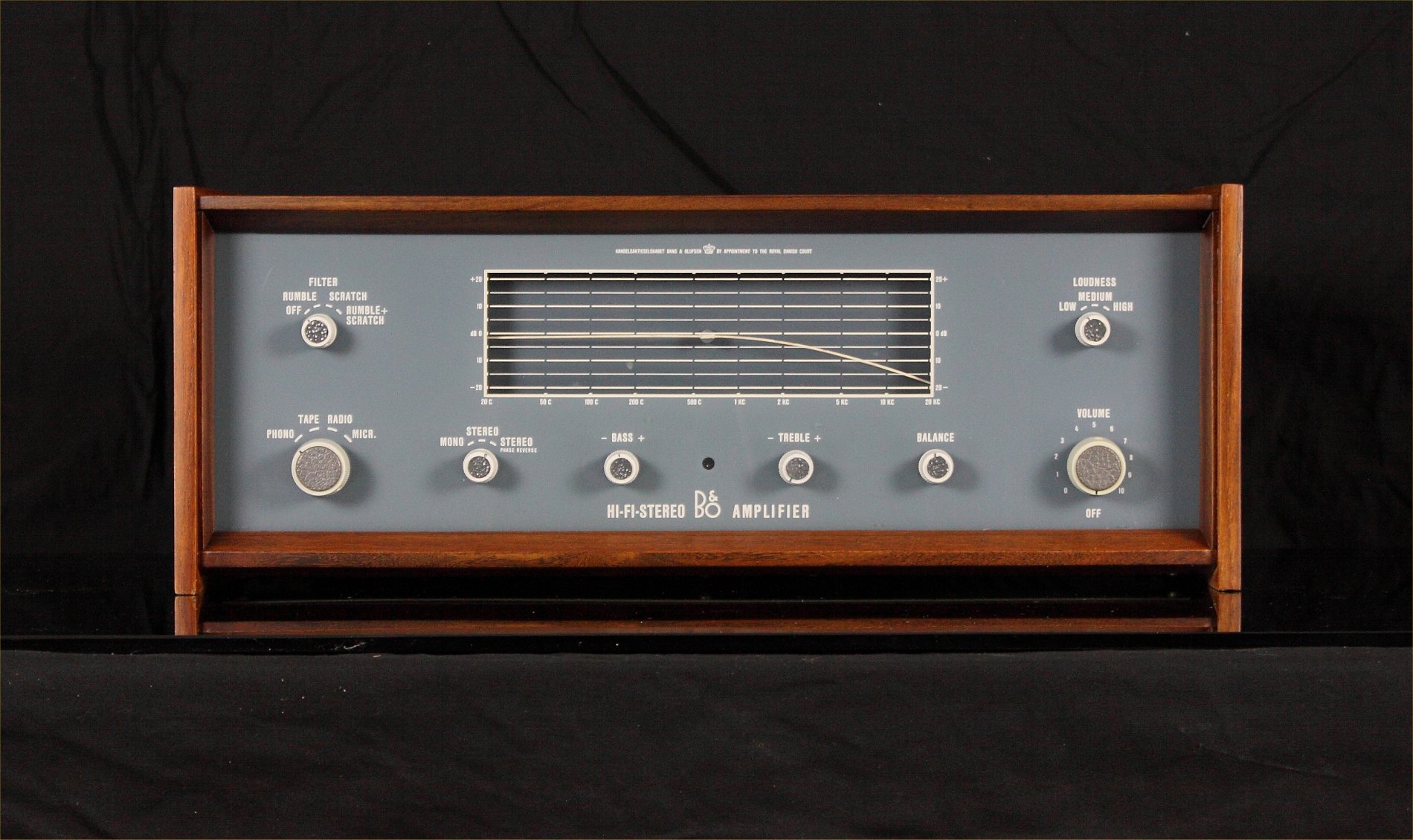
The tones control circuit is a Baxandall, making symmetrical regulation curves (keep scrolling for answer's curves pictures).
Each final stage (two in all) is made up of an ECL85 (so, in total, there are four ECL85). The ECL85 is velvety like ECL86 but more powerful, indeed the rated output is highed than the same series' receiver Grand Prix Moderne Stereo 608.
It's very appreciable the chance to switch right and left speakers phase: if they were connected without paying attention the exact phase can be restored thanks to a switch on the frontal panel. The result, with the speakers in phase, is substantial; voices and solo instruments are clearly distinguishable and the scene take shape.
Not by chance, B&O became the official supplier of the Danish royal house.

This device, designed in an extremely sophisticated way, does not disappoint the listener's expectations: at first a well-finished and sweet sound can be gathered but by turning the volume knob and loudness switch (below in this page) its strengh and intensity are revealed.
A refined design, the charm of an old fashioned and expansive object, a precise and powerful sound and, last but not least, a small number of models, are all features of this fantastic device.

Designer: Architect Ib Fabiansen (1928 – 2009)

Fabiansen started developing modular units for radios and televisions complementing each other with the house forniture and establishing a pleasant surrounding.
In 1958 he made some cardboard models and presented them to Bang & Olufsen management, that immediately approved its production. So he started sketching the Beolit series and other B&O devices, including Hi-Fi Amplifier 608.
In 1962 he designed Beocord Belcanto recorder, Horizont television and so on, until his last creation for B&O, the gramophone TV/radio Beovision 2000RG.
In the last years working for B&O, he cooperated with architecs Henning Moldenhawer an Jacob Jensen.
".. there was a time when it was far from a certainty that a radio from Bang and Olufsen was a study in good design..It was horrible, simply horrible” sayed back then Fabiansen.
Ten years later Jacob Jensen would become the company's chief designer.


To make the most of this device I chose four songs. The first one is “Una ragione di più” by Ornella Vanoni, a beautiful song with lyrics by Franco Califano, Ornella Vanoni and Luciano Beretta, music by Mino and Franco Reitano. Presented in 1969 on the tv show “Senza rete”, the song is about a woman questioning her relationship, and her hard choice between leaving her partner and trying to revive their love from ashes. Ornella's voice is warm, deep and with a great vocal range, which the B&O 608 conveys in all its richness.

The struggle of a love song counterpoints the struggle for exile and oppression is in the second song I propose. It's of an Angolan songwriter, José Adelino Barceló de Carvalho aka Bonga. The title of the song is “Mona Ki Ngi Xica” ad it was written in 1972, while Angola was under Portuguese rule and the author had to flee to the Netherlands because of his politics involvement to free his nation. The lyrics are in Kimbundu, an Angolan dialect. Here, too, a rough and peculiar voice is reproduced in its wholeness by the 608.

Going on with love sufferings (that's the mood of the day), the third track is about a young man and his love, not returned by the girl he loves. It's the well-known song “Say Say Say” by Paul McCartney and Michael Jackson, recorded in 1983 before their quarrel. It seems that McCartney was quite afraid of dancing together with Jackson in the song's videoclip (we can't blame him), but still a true friendship was born, until Jackson bought the Beatles' recording royalties for 47,5 million dollars, snatching them from McCartney and Yoko Ono.

The fourth and last track is Mahler's Symphony N. 5, written between 1901 and 1902. Its theme, sentimental and painful, turns away from the preceding four symphonies, which are about medieval german poetry. The mighty first movement is driven by trumpets and the vigorous orchestral cue does not scare the 608. It's important that the speakers are properly in order.


Ornella Vanoni - José Adelino Barceló de Carvalho (Bonga)

  • BLUETOOTH

    Bluetooth receiver embed

    READ MORE >

  • MULTI PLATFORM CONNECTION

    Each radio is equipped with a cable for connection to any digital device.

    READ MORE >

TUBESOUND IMPROVEMENT

- Bluetooth receiver embed - The unit is equipped with a BLUETOOTH receiver powered directly by the receiver power supply. This makes it possible to control the amplifier from any external digital device as an IPAD, a Smartphone, or a sophisticated multimedia station. So you can hear your preferred web station or your lossesless file without cables on the room. Wireless Receiver can be equipped upon requests.
- Multi Platform Connection - A customized adaptation cable to connect any digital device as Iphone, Smartphone, Laptop, CD Player etc. will be provided with this radio. This special cable suits the different impedances between the modern equipment and the receiver. Furthermore the two stereo channels flow into one without increasing the load to the input unit.

B&O Grand Prix Moderne 608

B&O Grand Prix Moderne 608
BEOLIT 39

HISTORY

1925 - Two Danish engineers, Svend Olufsen and Peter Bang, start the production of radio equipment in the attic of the Olufsen family, in Struer.
1927 - The first device, called the “Eliminator” (as it allowed to eliminate the battery power and to connect the device directly to the power grid), is commercialized.
A production plant is built in Struer.
1929 - The "Five Lamper" model (five valves) is marketed and is a great success.
1938 - The beautiful Master 40 model arrives, which allows to memorize stations from the keyboard.
1939 - Beolit ​​39 is launched, the first radio with a  bakelite cabinet. From this moment on, the prefix “Beo” will be used for the most prestigious products of the brand.
1941 - During the German occupation, B&O puts on the market the Grand Prix 42CH which has the characteristic of having a tambour door that covers the scala parlante when it is not used.
1945 - The B&O factory is completely destroyed.
1948 - After a rapid reconstruction of the factory, the production of the Grand Prix 48 CH mobile radio is started, the first high-fidelity radio of the Danish company.
60's - A revolution at B&O. The designer Ib Fabiensen designs the new line of devices, Hi-Fi Stereo Amplifier 608, Grand Prix 608 Moderne, Dirigent 609. Also the Beogram 42 turntable is commercialized. It is with these models that the legendary design of B&O devices begins.
70's - In the 60s and 70s, the devices that make B&O famous in the world are produced. The Beomaster 1200 and 3000, the Beogram 1200 and the Beogram 4002, the beautiful giradischi tangenziale. The devices are designed by Jacob Jensen.
80's - The evolution of design continues with the different Beocenter units and the Beogram cd players.
90's - The company decides to market its products through a network of its own exclusive stores. It expands its interests with the production of mobile phones and Mp3 players.
2008 – It suffers considerable losses and a staff reduction and in the following years it returns to devote itself exclusively to the production of High Fidelity devices.
2015 - B&O becomes a partner of HP.

B&O Grand Prix Moderne 608


B&O Grand Prix Moderne 608

MAIN FEATURES

Year of production: 1961-64

Power supply: 110-220 V - 75W

Loudspeakers: Screw Plugs for External 4-16 ohm loudspeakers

Output power: 15W each channel
Distortion: <0.5 % a 10W, <2 % a 15 W
Channel separation: - 50 dB
Noise level: - 60 dB
Frequency response: 20-20,000 Hz <1 dB
Min. input level:
Magnetic Pickup 2 mV, DIN 45547  RIIAA equalized
Piezo Pickup:  50 mV
Aux: 100 mV,
Microphone: 160 mV
Tuner: 50 mV

Measurements (LAP): 465 x 180 x 208 mm / 18.3 x 7 x 8.2 inch
Net weight: 10.5 kg / 23 lb 2 oz

5 Tubes: ECC83 ECL85 ECL85 ECL85 ECL85
8 Transistors: 2xAC107, 6xAC126(OC75)

Controllo toni

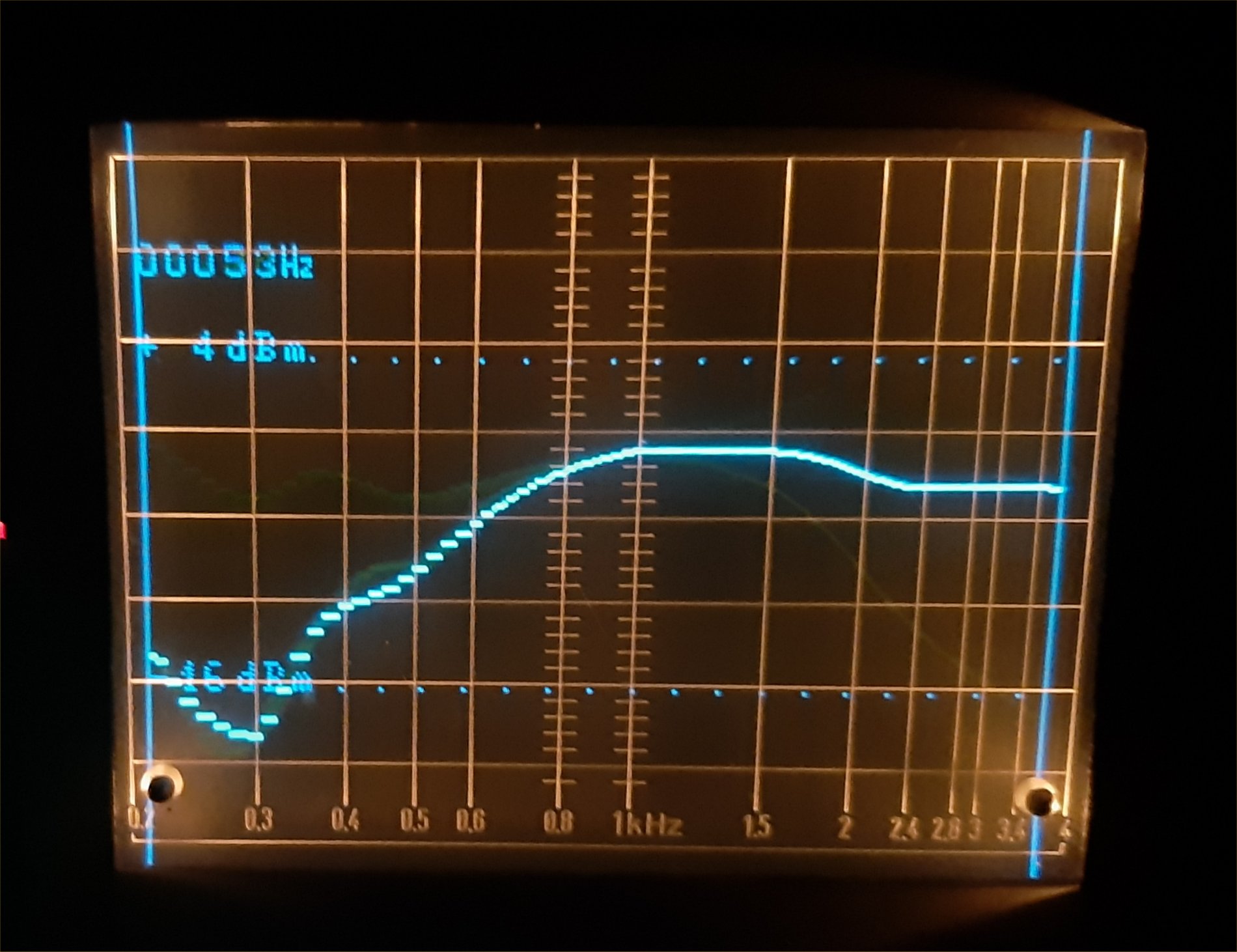
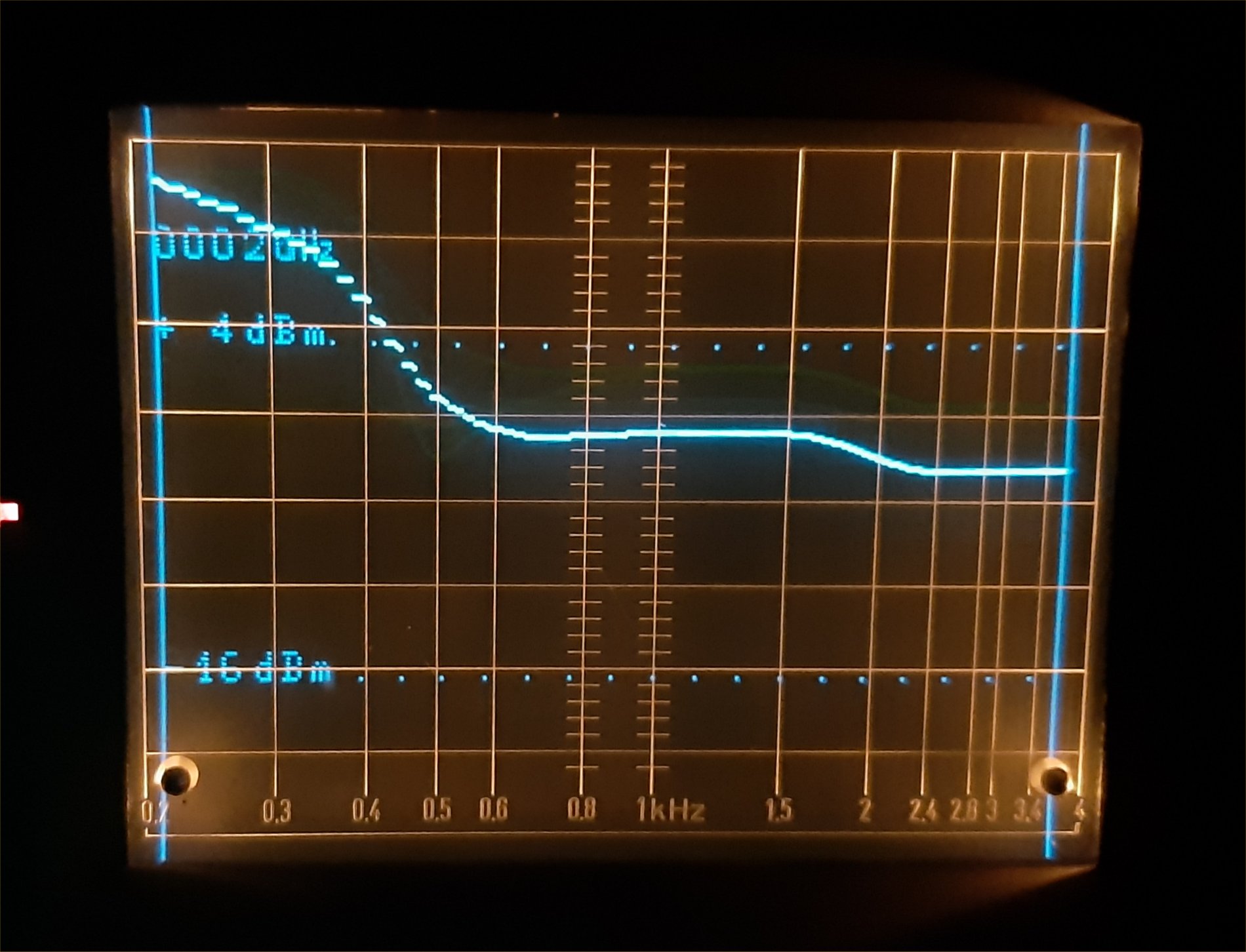
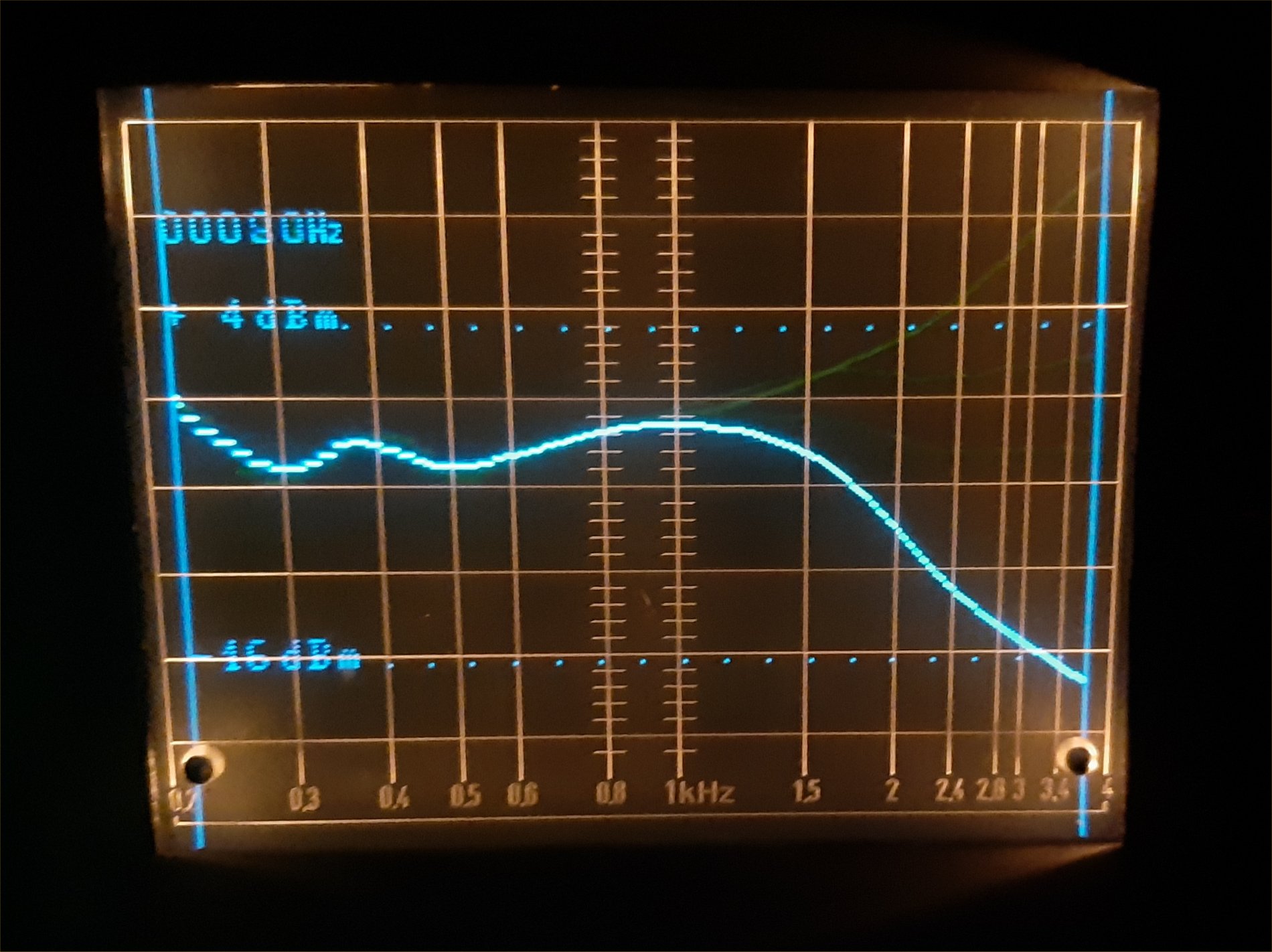
In these pictures we can see how much the tune's control system is efficient: in the ones above there's the controls' position in the amplifier, in the ones below the real response curve measured with Wandel&Goltermann WM-20 wobbulator. Measurament done on 4 ohm resistive load.
In the first two pictures on the left we can see the tunes in Flat position: the answer, from 20 to 20000 Hz, stays between ± 1 dB. Others pictures explain themselves.

LOUDNESS CONTROL

The device has a remarkable loudness control system. We know that our ears, listening at low volume, perceive better medium frequencies, losing the low and high ones. If low frequency sounds are emitted, medium frequencies are easily perceptible by human ear than low, very low and high ones. That's why, for these listening levels, manufacturers implemented automatic mechanism to amplificate low and high frequencies.

Today this control practice is seen as a forced sound's alteration and is not implemented in amplifiers. Sometimes is not inserted at all, but if it's stil present there's the possibility to exclude it with a knob on the front panel.

On B&O Hi-Fi Amplifier 608 there is a switch for low, medium, high, referring to the listening volume.
With the switch on LOW, loudness control (exalting low and high frequencies) applies at 10 Phon on the Fletcher – Munson curve; with this setting, sound level acheivable operating on volume knob is gentle and is suitable for listening at a low volume.
Putting the switch on MEDIUM, loudness control applies at 50 Phon; low and high frequencies are slightly exalted, you can get a higher sound level and it's good for listening at a medium volume.
With the switch on HIGH there's no more loudness control and response is linear on all frequencies but sound level you get operating on the knob is not maximum. Thanks to this setting you reach amplifier's full power and it's right for listening at its highest volume.

Bang & Olufsen – Grand Prix Moderne 608K

LOUDSPEAKERS

This stadio amplificatore  is gifted with noticeable transparency and detail.
The coupling with high-efficiency loudspeakers with neutral tone is therefore very suitable to enjoy these peculiarities to the fullest.
The loudspeakers must be connected with banana plugs on the outputs, respectively:

Højre - Right channel
Venstre - Left channel

The Bang & Olufsen loudspeakers, designed to be coupled to the Grand Prix Moderne Stereo 608, were the Type S (left) and Type L (right) models.
The recordings I posted on this page were made with TRIO-KENWOOD KL333 loudspeakers. I chose these speakers for their efficiency and the very high cut-off frequency that makes them sound almost like full-range speaker.

Bang & Olufsen – Grand Prix Moderne 608K

Beginning from the left in the upper part, the first knob you meet is that of inserting the filters. The switch has 4 positions.

OFF - No filter is active - Linear response
RUMBLE - Very low frequencies are attenuated to avoid reproducing the mechanical noises of the turntable
SCRATCH - The high frequencies are attenuated to attenuate the defects of damaged discs when listening.
RUMBLE + SCRATCH - Both filters inserted
Attentions! The RUMBLE filter introduces a 45 degree phase shift at the cut-off frequency and both filters proportionally attenuate all the frequency band of the respective working range. Avoid using them if possible, better couple the amplifier to a good turntable and treat the records with care.

Below we find the INPUT SELECTOR
PHONO - Turntable with magnetic head
TAPE - Recorder / AUX
RADIO - Tuner / AUX
MICR - Microphone

Then we find the MONO / STEREO / PHASE REVERSE switch
This last position of the switch allows to invert the phase of one of the low impedance outputs (loudspeakers) to have all the movements of the cones in phase.
Still to the right the two tone controls LOW and HIGH. Above the tone controls is the display that indicates their position by highlighting the response curve of the amplifier.

Still on the right we find the BALANCE between the two channels, right and left.
The largest knob is the VOLUME knob with built-in ON / OFF switch. Turning the knob clockwise turns on the amplifier.
Above we see the 3-position LOUDNESS switch.

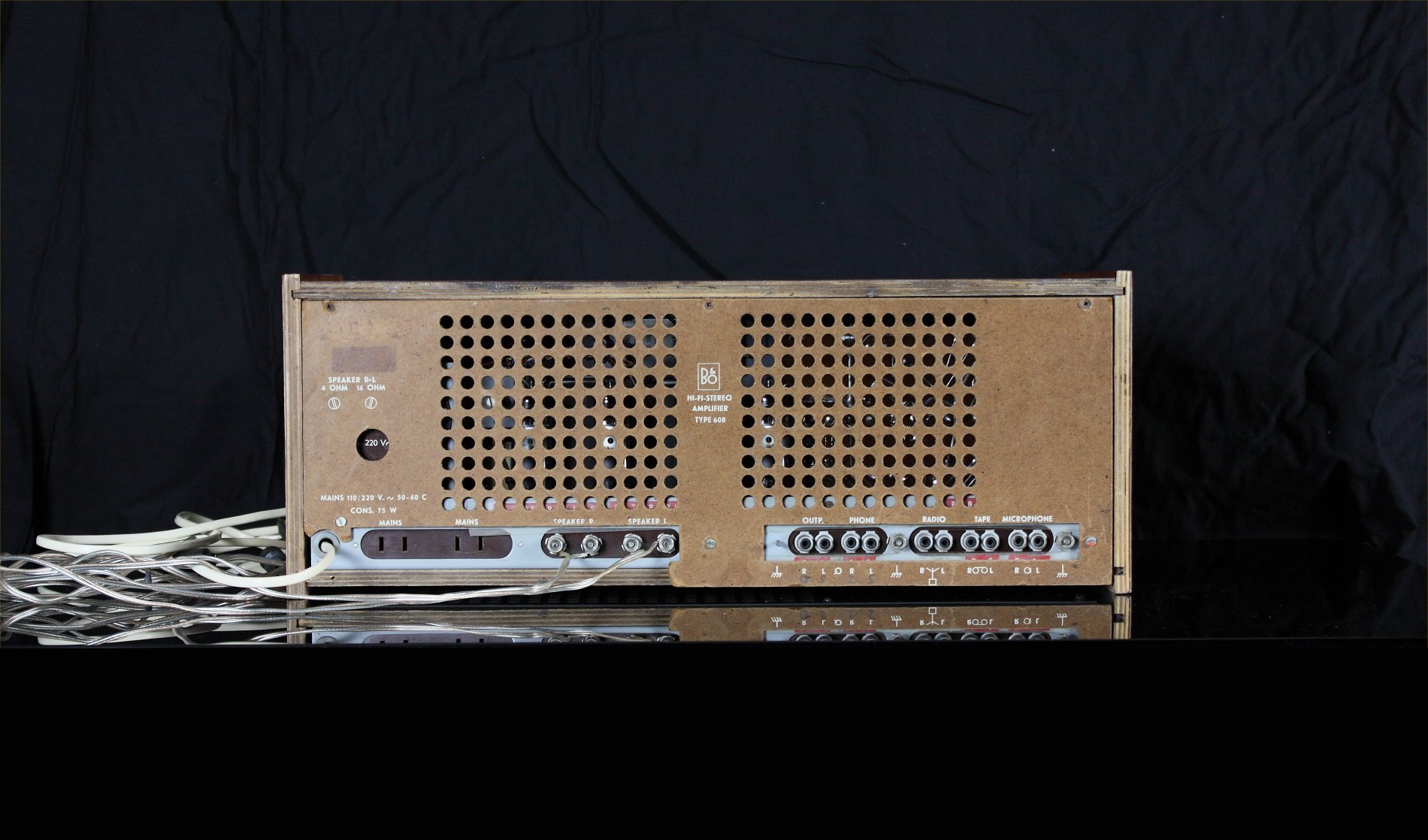
REAR SIDE

110V-220V voltage change
Switch Speaker Impedance 4 Ohm - 16 Ohm

OUTPUT

2 x additional US type mains voltage sockets (220-110V)
Screw connectors for left and right speakers
2 x line signal RCA sockets (e.g. for recording)

INPUT

2 x RCA plug - Pick-up
2 x RCA plug - TUNER/AUX
2 x RCA plug - TAPE RECORDER/AUX
2 x RCA plug - Microphone

RESTORATION STEPS

THE USUAL AMAZING LAST IMAGE